By Gauri Daniels
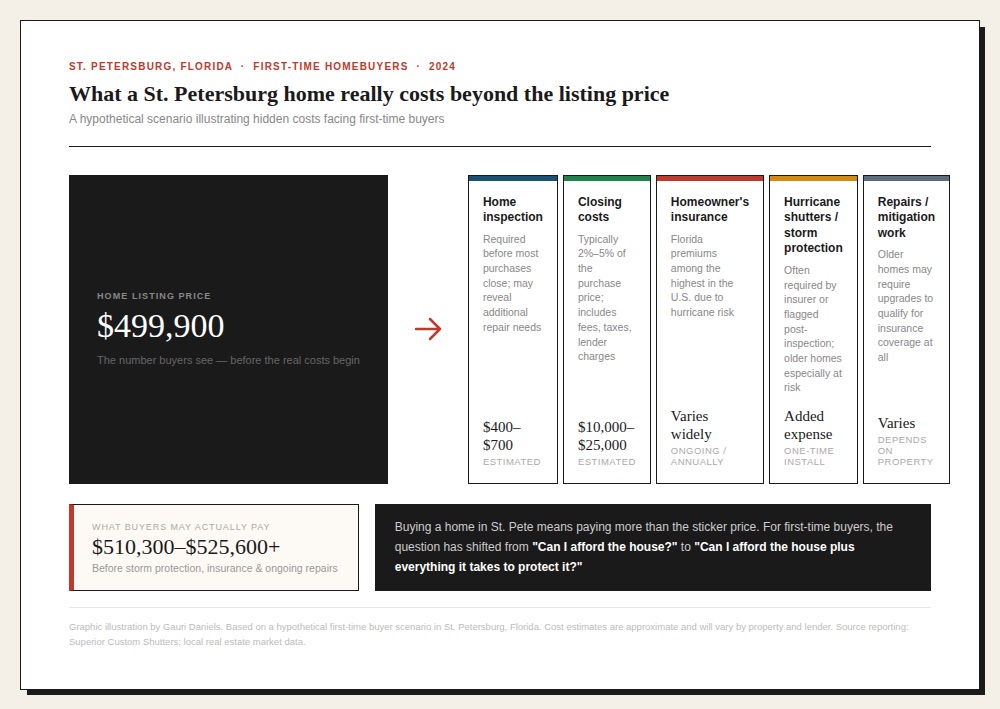
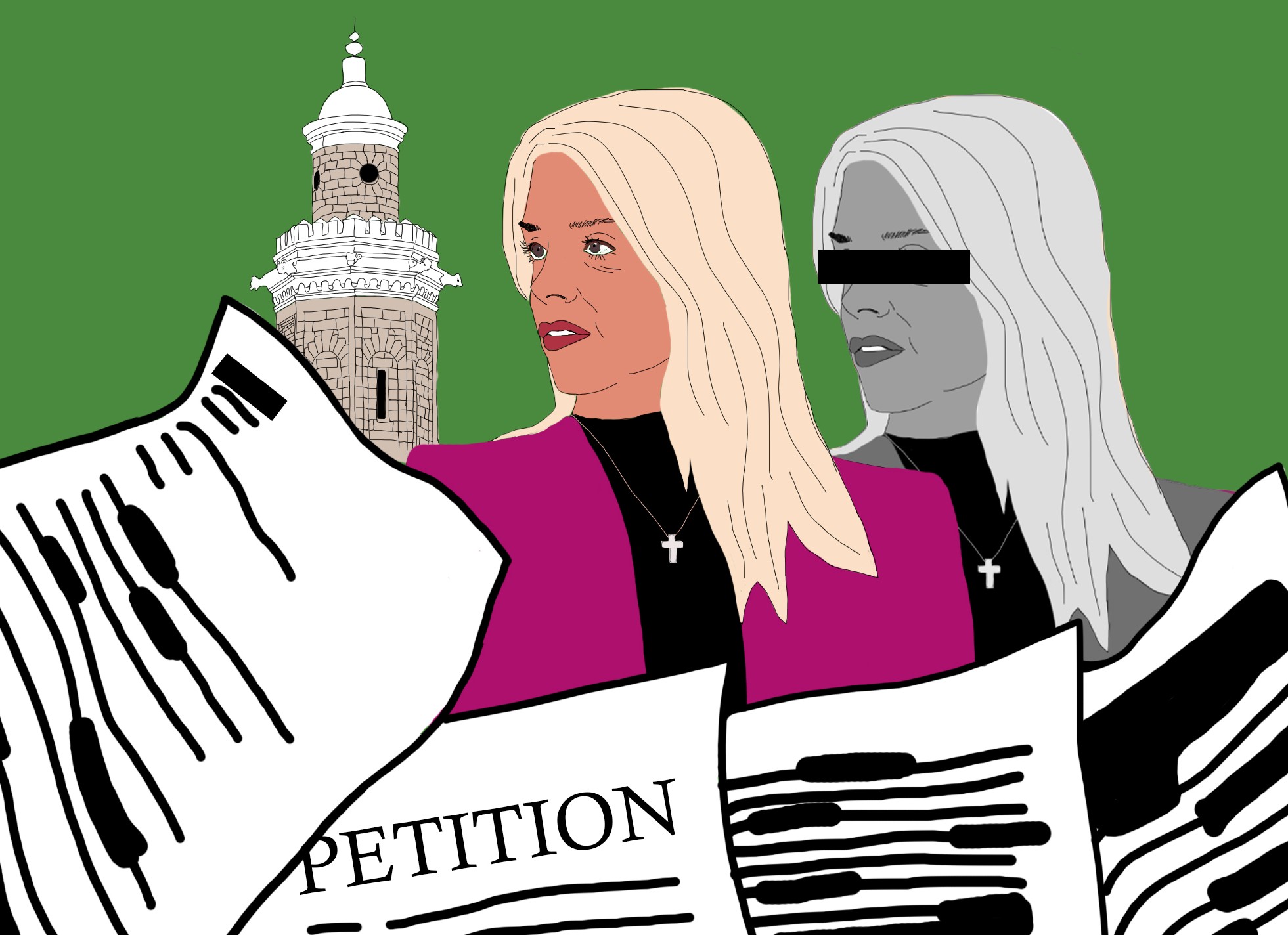
protection upgrades. (Graphic by Gauri Daniels)
First-time homebuyers in St. Petersburg faced mounting hidden costs beyond listing prices in 2024, turning what appeared to be attainable purchases into financial burdens that pushed homeownership further out of reach.
St. Petersburg’s housing market remained difficult for first-time buyers in the spring. In March 2026, the median sale price in St. Petersburg was $499,900, according to Redfin. That figure exceeded Florida’s statewide median sale price of $417,100 for the same month.
Recently married and hoping to settle down with his wife in St. Petersburg, Ryan Christopher expected buying a first home would be difficult. He did not expect that a year into the search, the process would still feel farther out of reach than he had imagined.
“I thought the hardest part would be finding a house I liked, but the harder part was realizing the price on the listing was only the beginning,” Christopher said.
For Christopher, the challenge was not just finding a home he and his wife could picture building a life in. It was the added cost of inspections, repairs, insurance expectations and storm-protection upgrades that could turn an already expensive home into one that no longer felt affordable.
Christopher said the process changed the way he thought about affordability.
“I went into it with a number in my head that already felt high for me, and then every house seemed to come with extra costs that made it even less realistic,” Christopher said.
He said those costs added up fast. Inspections, possible repairs, closing costs and storm protection all compounded the financial pressure beyond the mortgage itself.
“Even if the mortgage looked manageable at first, the total cost did not feel manageable by the end,” Christopher said.
Gloriany Ramos, a St. Petersburg real estate agent who has worked with first-time buyers across Pinellas County, said the gap between listing price and total cost had become one of the most common sources of frustration for younger clients.
“A lot of first-time buyers come in with a budget based on the listing price, and by the time we get through inspections and closing costs, the number looks very different,” Ramos said. “It can be a hard conversation to have.”
Ramos said younger buyers in particular are often unprepared for the costs tied to older homes, which make up a significant portion of the St. Petersburg market.
“When you are buying an older home in Florida, you have to think about what it will cost to insure it and what upgrades the insurer may require,” Ramos said. “That is not always something buyers are thinking about when they fall in love with a house.”
Ramos said she now makes a point of walking buyers through the full cost picture before they got too far into the process.
“My job is not just to find someone a house,” Ramos said. “My job is to make sure they understand what it is going to cost them to actually live in it.”
Storm protection emerged as one of the highest and least expected costs for buyers in the region. Daruka Das, owner of Superior Custom Shutters, a shutter installation company that services homes across Florida, said buyers often did not think about storm protection until they were already deep into the homebuying process.
“A lot of people do not think about shutters until they are already serious about the house,” Das said. “By then, they are not just asking whether they can afford the purchase. They are asking whether they can afford the upgrades that come with it.”
Das said his work across the state had shown him how often storm-readiness costs became part of the affordability conversation, especially for first-time buyers looking at older homes.
“With older homes, it is more common for buyers to find out they need additional protection or improvements,” Das said. “That can be a surprise, especially for someone buying for the first time.”
Das said awareness has grown among buyers in recent years due to increased hurricane risk and stricter insurance requirements.
“People are much more aware now of what storms can do and what insurance companies may expect,” Das said. “That has made more buyers think about protection costs earlier, but it has also made some of them more hesitant.”
Some assistance programs are offered for eligible buyers in Pinellas County. Pinellas County offered up to $75,000 in the form of an interest-free, deferred loan through its down payment assistance program. The county’s Housing Finance Authority offered $10,000 in down payment and closing cost assistance through its Home Key Plus program. The county also maintained a disaster recovery homebuyer assistance program that offered up to $80,000 for some income-eligible, storm-impacted residents seeking to transition from renting to homeownership.
Ramos said those programs helped some clients but did not eliminate the affordability gap for many young buyers.
“The assistance is there for people who qualify, and it can make a real difference,” Ramos said. “But for a lot of young buyers, even with help, the total cost of getting into a home in St. Petersburg is still a stretch.”
For younger buyers with limited savings, those added expenses narrowed the path to homeownership. Even when assistance existed, the gap between the sale price and the true cost of owning a home remained one of the biggest barriers to getting started.
Christopher said some homes became harder to justify once he looked past the asking price.
“There were houses I liked until I started thinking about what it would take to actually maintain them and protect them,” Christopher said. “That was the part that made homeownership feel farther away than I expected.”