By Kelly Garcia
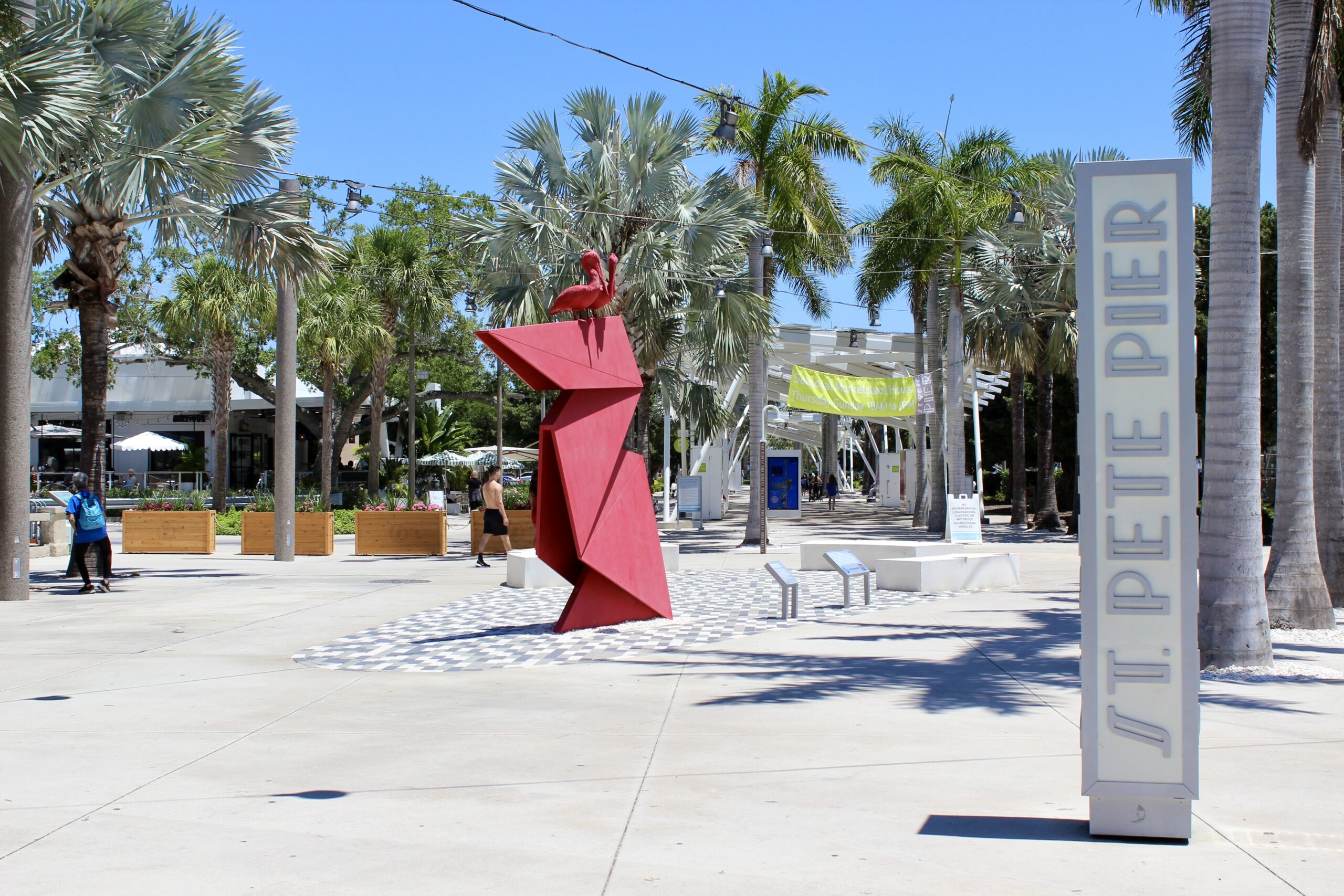
Walking down the streets of St. Petersburg, residents and visitors can encounter a variety of art installations. Whether it’s murals on Central Avenue or the red pelican sculpture that welcomes guests to the St. Pete Pier, the city is bustling with artists’ work.
In an effort to support the local art and culture community, the city of St. Petersburg recently opened applications for the City of the Arts Grant on April 1. The grant is intended to provide up to $20,000 to local art and culture-related 501(c)(3) non-profit organizations.
To Helen French, the executive director for the St. Petersburg Arts Alliance (SPAA), funding is one of the biggest struggles that individual artists face.
“I think when an artist is looking to create something, one of the hardest things to come by is unrestricted funds, meaning there’s no expectation that you’re going to create something specifically to match the funding source,” French said.
According to French, grants can be vital to the funding and function of bigger organizations like SPAA.
“For some of these organizations, it’s going to be a pretty big part of their budget to help them carry out really needed community events or just general operating,” French said.
French is a local artist who was born, raised and dance-trained in St. Petersburg. After attending The Juilliard School and dancing in New York for years, she eventually made her way back to St. Petersburg.
From personal experience, she knows the importance of funding being provided to artists by the city.
“I received an individual artist grant from the city last year,” French said. “I was able to create a new work and show that. So, I was able to create a dance work and continue to invest.”
Not only can grants support the artist, but it also supports other artists and businesses. When French earned hers, the money went to a variety of things, such as a rehearsal space and a costume.
“So just in that little bit of seed money, I was able to spread it around,” French said. “An organization would do the same thing depending on their specific programming. For example, a theater, if they got a grant and it was for a specific play, those artists would get paid as well. So, it works as a support mechanism when you get city grants.”
While French noted the importance of funding from the city, she acknowledged that funding is also a group effort with private donors and philanthropists in order to support the art community.
“We call ourselves the city of the arts. We’re not a city that has arts, we’re a city of the arts. So that type of investment is important,” French said.
From being a child and seeing a limited amount of artistic opportunities in St. Petersburg to being able to see something new every day, French said her long-term involvement in the art community has allowed her to witness its evolution over the decades.
“There’s so much variety,” French said. “You could argue that there’s something for everyone, which I think is true. I drive by the same mural every day when I take my kids to school, and every day I notice something different. The mural might be the same, but I’m not when I pass it, and there’s something really beautiful about living in a city where you can keep rediscovering something about yourself surrounded by public art.”
The St. Petersburg Arts Alliance is one of many organizations in the area that works to support and amplify the voice of artists. Aside from their educational and advocacy services, SPAA puts together events to shine a light on local studios and artists, such as the SHINE Mural Festival and the Second Saturday ArtWalk.
Unlike the SHINE Mural Festival, which is an annual event, the Second Saturday ArtWalk is a year-round program that takes place every month.
“What we try to do is support galleries and draw attention to spaces so people will visit, but galleries really have so much freedom to put their best foot forward,” French said. “Galleries can be as creative as they want to kind of highlight what they might have going on that month, and every month is going to be different.”
One of the local studios that takes part in the Second Saturday ArtWalk is Creative Clay, a 501(c)(3) non-profit organization that provides accessible art spaces and opportunities to individuals with disabilities.
“A lot of people are just curious about what Creative Clay is,” Shane Hoffman, the development coordinator of Creative Clay, said. “So, we take them on a little tour, explain who we are, what we do, and we show them all the different rooms where the artist’s work and what different art projects, art-type things happen in those rooms.”
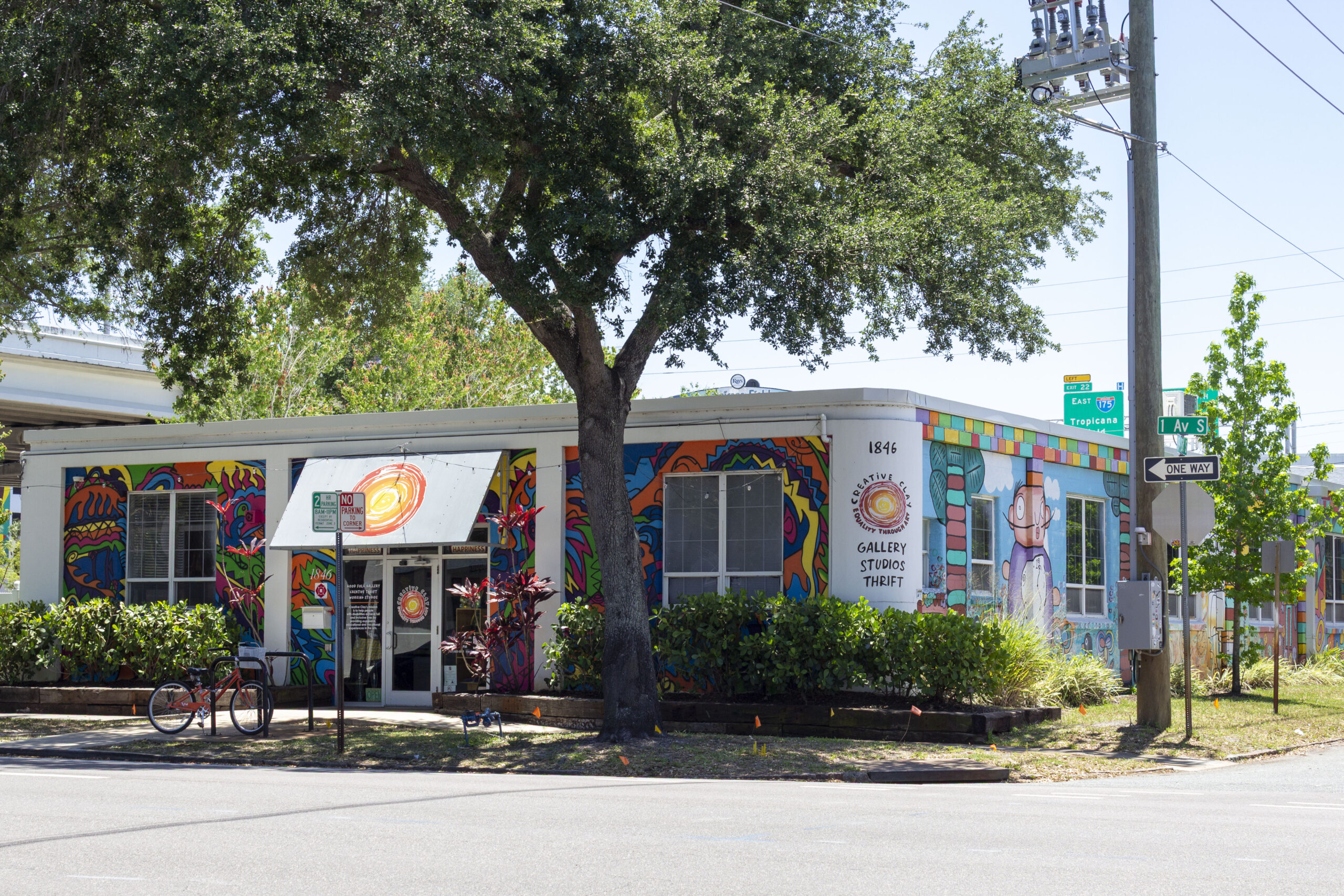
For the artists of Creative Clay, the ArtWalk provides them with the opportunity to profit from their work by signing up to do portraits of those who visit the studio.
“So, the artists are very excited about doing that,” Hoffman said. “They get paid right away, and they feel a sense of pride and belonging.”
Hoffman said he joined Creative Clay in 2018 because of the organization’s dedication to include their artists in the community, which he said past organizations he worked for weren’t doing much to reach out.
“One of the things that we pride ourselves on is how involved we are in the community,” Hoffman said. “We make it a point to be involved in the art community.
This effort has landed Creative Clay and their artists in multiple partnerships with local businesses, museums and organizations, such as the Dalí Museum, where seven of their artists’ pieces are sold as greeting cards.
“Making the arts accessible to all is kind of, you know, it’s not necessarily easy,” Hoffman said. “But I think since St. Petersburg is such an art-oriented town, and such an accepting town, I think that it makes for an easier pathway for us to make those connections and to do those things with all of those organizations.”
Hoffman said his hope for the future of the art community is that it doesn’t get stifled by development and that it maintains its viability and vibrancy.
“When you come to St. Petersburg, as of now, you can tell that it’s an art-forward city,” Hoffman said. “You can tell that there’s a good support structure there for the arts, and you can tell that there are a lot of great artists in St. Pete just by driving down the road.”
For Erica Sutherlin, a multi-hyphenate (an individual who holds multiple professions, roles, or skills simultaneously, typically in creative or entertainment industries) who has been in the arts and entertainment industry for over 25 years, she believes the art community in St. Petersburg can provide residents and guests with a “renewed sense of self.”
“I think when you have an artistic experience, that it changes something inside of you, that it breathes something new inside of you, that it moves you, whether it is in comfort or discomfort, but you are changed, whether you wanted it or not, whether you knew you were seeking it or it came subconsciously, you know, it is a renewed sense of self,” Sutherlin said.
Sutherlin has been the artistic executive director at The Studio@620 for two years and is currently responsible for curating the artistic experience and maintaining the organization’s financial sustainability.
The Studio@620 is another non-profit that opened in 2004 and works to provide artists with a space to explore and express themselves.
“Right now, we focus on emerging professional artists and making sure that they continue to have a space to explore, create a safe space to fall on their face, get up and figure it out before they bring it to the community for performance,” Sutherlin said.
For Sutherlin, she also believes that it is important to invest in the arts, as it creates a different culture and feel to those who are surrounded by it.
“There’s a stark difference just in the coloring of itself,” Sutherlin said. “The vibrancy of the area, and I think that all communities need that. We need that vibrancy, even when it gets hard, because then we can just, we are in a world that is showing us the beauty, the possibility of tomorrow or the next moment, right?”
Sutherlin is also serving in her first term as the Chair of the Arts Advisory Committee for the city of St. Petersburg, where she works to support the art community and their needs. One form of this support comes as grants.
Sutherlin said there are three grants coming from the city that are working to show the local art community that they are supported: the City of the Arts Grant, the Individual Artist Grant and the Level Up Art Grant.
“The city itself is interested and hears you and wants to support art in our area,” Sutherlin said.
Sutherlin said that there are two different types of grants offered to artists and organizations. Operational, which allows the recipient to spend the grant money in any way that seems “fit for operations, daily operations.” Meanwhile, project-based grants are for a specific project where the money is “restricted.”
“It is important that we have a balance of those grants in the world,” Sutherlin said. “Operational grants are hugely important, and a lot of people don’t realize that because without the operations, you cannot facilitate and execute programs.”
No matter the size or budget of the organizations, Sutherlin said that those grants are important, and when they’re missing, it can hurt.
“Money’s going to always be a thing because you’re asking people, artists, to art, to create, and also to maintain their own livelihood,” Sutherlin said. “When we can live in a world where we, that our art is our business, that is that’s simpatico. That’s beautiful. That is everything that we desire. Most of our artists can’t do that, right? Most of our artists do their art on the side and work to sustain their day, and that in its own right is taxing, and that’s different.”
Sutherlin hopes that as financial support continues to come from the city, it reaches a wide range of artists with different voices and stories to tell. So, when people decide to come to St. Petersburg, it’s not just for the beaches but because of the art that adorns the city.
For French, she wishes that as St. Petersburg continues to grow in all ways, it is done with kindness, clarity and intentionality.
“Everyone always says we’re better together, or stronger together,” French said. “I do really, honestly believe that, and I think St. Pete is, you know, nicely poised to be intentional and supportive as our art community grows.”