By Kelly Garcia
On Feb. 11, the FBI released a special report titled “Domestic Relationships and Violent Crimes, 2020-2024” that reported an increase in violent crimes involving domestic relationships from 25.6% to 27.5%.
The data collected using the FBI’s National Incident-Based Reporting System (NIBRS) showed that, within the years during and after COVID-19, a total of 11,466 individuals were murdered, and 1,109,797 people experienced violent crimes in a domestic relationship.
This report sheds light on why people and non-profit organizations within Pinellas County and the city of St. Petersburg have made it their mission to support those who have or are currently experiencing domestic violence.
One of those people is Melissa Stelzle, founder and executive director of Heels to Heal. After personally experiencing sexual assault, Stelzle found that it was difficult to find quality counseling services.
“I was actually living in St. Petersburg and driving over the bridge to the Tampa side to meet with a counselor there that was able to help me with the trauma that I experienced,” Stelzle said. “And through my healing process and journey, I recognized that there wasn’t a lot of options for victims of sexual assault or domestic violence in the St. Petersburg area where it would be free.”
This motivated Stelzle to open the doors of Heels to Heal in 2009, which now offers survivors of domestic violence and sexual assault a Crisis Counseling Program.
However, the road to providing people in the community with these services wasn’t always easy, especially with the cost of counseling today, which Stelzle said could be upward of $150 to $250 an hour.
Stelzle said that this cost is another challenge for survivors when they have to pay on their credit card or if their insurance plan doesn’t cover services.
That is why Stelzle was dedicated to finding counselors who were willing to work at a discounted rate for her organization.
“Sometimes it’s challenging to find counselors who are willing to give up 10, 15 hours a month to be able to help these individuals in our community,” Stelzle said.
Another hurdle that Heels to Heal and other non-profits might face is finding reliable funding. While Heels to Heal has received grants over the past few years, Stelzle said they can be time-consuming to apply for and are not always guaranteed.
“Some organizations completely rely on grants, and they do very little fundraisers,” Stelzle said. “The challenge with that is if it’s a government grant and funding gets cut off for that grant, they may be out of business next year.”
The importance of finding a balance between grants and fundraising to support those in the community is what brought the Heels to Heal Fashion Show Fundraiser to life.
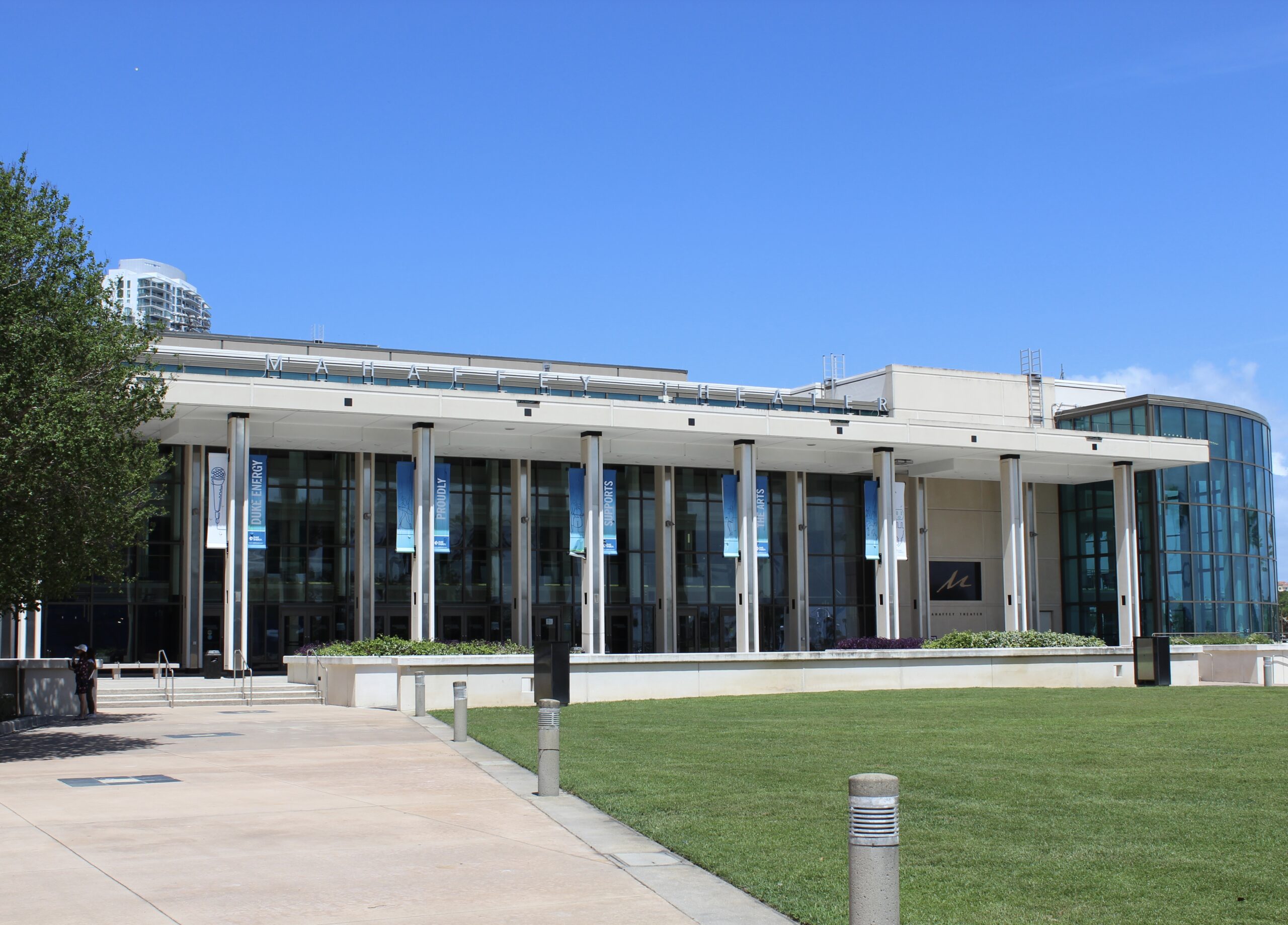
The fundraiser is a cultivation of both Stelzle’s passion for Heels to Heal and fashion, and the work of 35 to 40 volunteers working to bring the event together. All for a night where the community can come together to not only watch a runway show of designers and local boutiques, but also to raise money for the non-profit’s counseling program.
Stelzle said that the main message of the fundraiser is that unaddressed mental illness “creates a negative impact on our community” and that those who are not receiving the support needed could lead “to other issues like drug abuse and suicide.”
“Nobody is expected to handle their trauma alone, and nobody should suffer in silence,” Stelzle said. “And that is a big message for us, is making sure that no victims suffer in silence and that they know that they can come to Heels to Heel and get access to quality counseling services.”
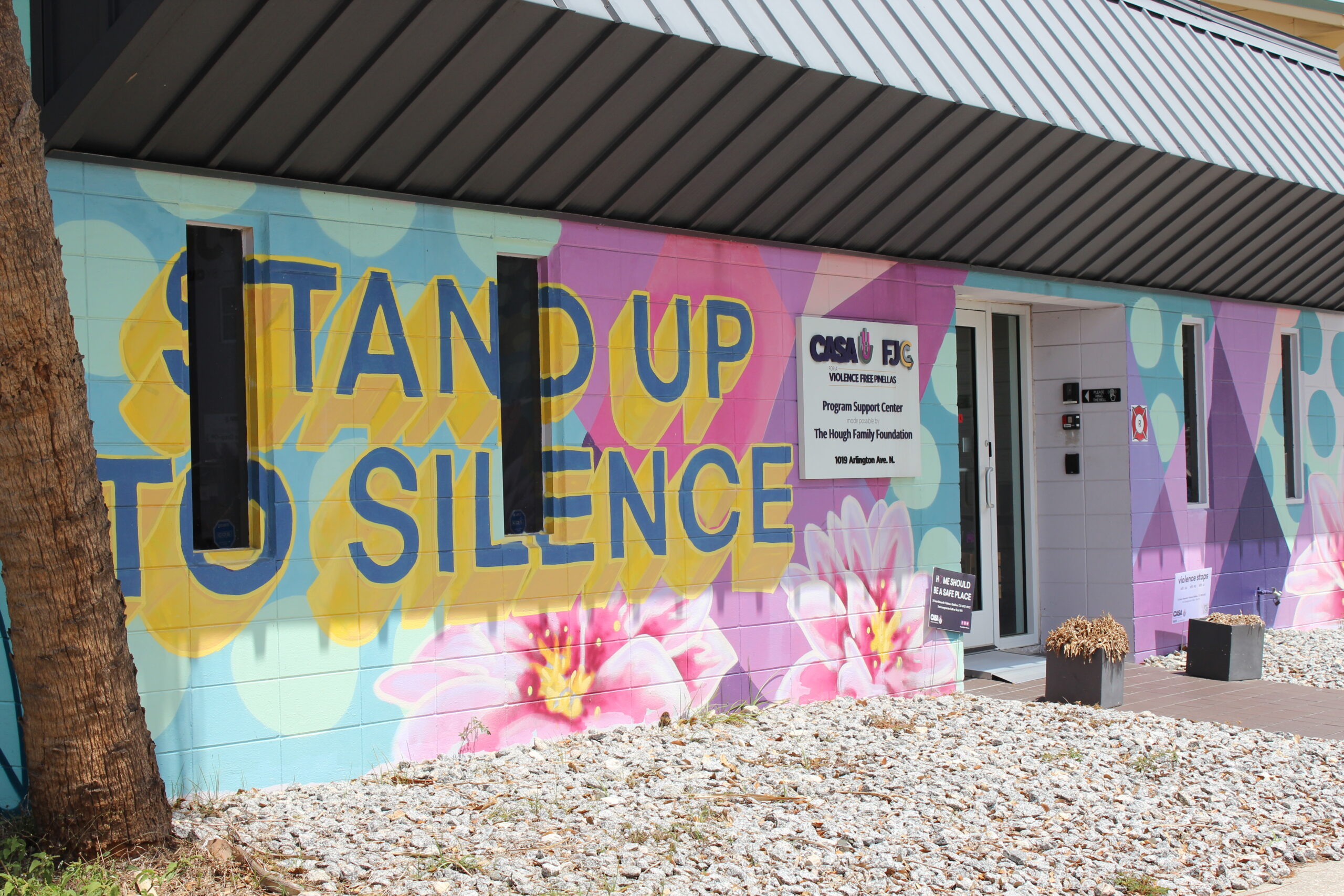
For Zuleika Gonzalez, a community and staff engagement specialist at Community Action Stops Abuse (CASA), the FBI’s reported increase in domestic violence was not a surprise.
“What COVID did was, it just shined a spotlight on what was hiding in the shadows,” Gonzalez said. “Domestic violence is a cancer in our society that has been there for a long time.”
For Gonzalez, the topic of domestic violence is a personal one because it was present in a past relationship and brought her to the doors of CASA.
“I was being battered,” Gonzalez said. “I didn’t know I was being battered because there wasn’t any physical violence present. But everything else that comes with domestic violence outside of physical violence was present.”
During this time, Gonzalez was referred to CASA by an individual. Having a feeling that something was not right, she sought help from the non-profit without an appointment and met with an advocate.
After completing a lethality assessment with Gonzalez, the advocate told her a chilling reality: that physical violence is not an if, but a when.
Together, they made a safety plan, something that Gonzalez credits for saving her life when her abuser attempted to take it.
“The night that he attacked me, her safety plan that she planned, audibly went through my head, Gonzalez said. “I executed everything she told me in that safety plan.”
Years later, Gonzalez returned to CASA as a volunteer, eventually was taken on by the non- profit to work as an advocate at the Pinellas County Courthouse, and has since grown into different roles.
From her own experience of not recognizing domestic violence in her relationship, Gonzalez emphasized the importance of properly educating individuals on what domestic violence can entail, outside of the most recognized forms.
“There’s a whole gamut of symptomologies that are present before you see all that stuff, and we ignore all that stuff,” Gonzalez said. “Does it mean that domestic violence isn’t present because we don’t see it? It may rise to physical violence, but sometimes it may never. It may never rise to physical violence, and those are the people who stay trapped.”
CASA was originally founded in Pinellas County in 1977 and has evolved its services throughout the years, which Gonzalez was able to witness during her time as a client and employee.
Gonzalez said that when she first came to CASA for help, she was lucky that a law enforcement officer happened to be there to take her report of the abuse she was experiencing.
Now CASA has become a “one-stop shop” that has multiple services available to those who seek help, such as medical healthcare, childcare, legal aid and the presence of law enforcement and Pinellas County Schools.
“In the past, survivors would come to us, and there would be no childcare,” Gonzalez said. “So, survivors would have to make an appointment when they didn’t have their kids. Just imagine if you’re under a lot of control and you don’t have the kids and you try to sneak off. That’s very difficult to do, your batterer is going to be like, ‘Well, where are you going? Who are you seeing?’”
To Gonzalez, the fact that CASA provides these services and completely stands alone as an organization is powerful, because in turn, it can work to protect survivors from other issues like homelessness while breaking the cycle of abuse or further violence.
With the Florida Senate passing Bill 1224 in 2024, which requires law enforcement to complete a lethality assessment and refer domestic violence victims to services, Gonzalez is optimistic that it will not only spotlight domestic violence and provide a space for more funding, but also help more people who are experiencing domestic violence.
However, Shelly Wagers, a current University of South Florida associate professor of criminology with over 25 years in the domestic violence field as an advocate, law enforcement officer and researcher, believes more should be done to help survivors. Especially when it comes to policies passed that are meant to help those experiencing domestic violence.
One policy that Wagers finds controversial is mandatory arrests, where officers are mandated to make at least one arrest on a domestic violence call.
“When I go on a case, I can’t use the historical pattern to make an arrest decision off of the incident I’m investigating that day,” Wagers said.
Wagers emphasized that in cases where victims hit first due to signs that violence from their abuser is imminent, they may be the ones to get arrested by police due to the signs shown only in that moment.
“I don’t think we should have mandatory arrests because you take too much discretion from officers, and we could revise the preferred arrest that allows officers a little more discretion,” Wager said.
However, even then, Wagers said that mistakes can be made and signs of domestic violence can be missed, such as in the case of Gabby Petito.
“I could watch the body cam footage from that patrol officer stop and tell you I knew she was being strangled,” Wagers said. “I can tell because I’m an expert in this field. Not all officers are experts in identifying everything in domestic violence, so they have to learn and know a lot of things.”
For Wagers, the biggest recommendation to aid those experiencing domestic violence is the collaboration between researchers, law enforcement and corporations to drive education.
“The key group I see constantly missing and not invited or truly understood are scholars, or academics, or faculty that could really come in and add that true knowledge of research and layer it in and work collaboratively to be able to get better data from the field to truly answer the types of questions the field is trying to answer to make better policy,” Wagers said.
To Wagers, blame is also on researchers when it comes to a lack of collaboration.
“We’re as much to blame because the universities today— for example, U.S. News and World Report— how we get rankings is off of these metrics of impact factors on journals that are peer-reviewed,” Wagers said.
The standard that academics have to publish in order to promote or keep their tenure, and that the best of those published are of the highest impact, is what Wagers says causes pressure.
“Well, those impact factors are really just driven by what other scholars are reading,” Wagers said. “They’re published, then all our findings are published in these journals that, unless you can afford to pay for a costly subscription to that, you can’t access that work and then they’re written in our jargon.”
In turn, Wagers said this creates a gap where academics and researchers are not doing their job in “translating that knowledge back to the community.” Despite this, she believes that more collaboration between the three different fields is possible.
“I see a movement right now where we’re all starting to at least recognize we need each other and trying to come back together again and figure out how we can work together,” Wagers said. “But it’s a slow go because you’re dealing with a shift in two major institutions. One, the systems framework institution of how we respond to domestic violence, both law enforcement and non-profits, and two, our university institutions.”
While Wagers’ research now primarily focuses on human trafficking, which she notes has very big distinctions from domestic violence, she sees that there is an overlap between the two fields conceptually.
For Wagers, this could also provide space for all individuals and organizations in these different fields to work together, especially when accounting for limited funding.
“I think the anti-trafficking space, the DV space, and the sexual violence space need to start coming together a bit more, be a little less siloed, and do cross-training, because we have such a lack of services,” Wagers said.
Ultimately, Wagers’ goal is to use her research as a way to make new policies and practices in order to better aid those who live in their community, much like Stelzle and Gonzalez.