By Irena Mesa
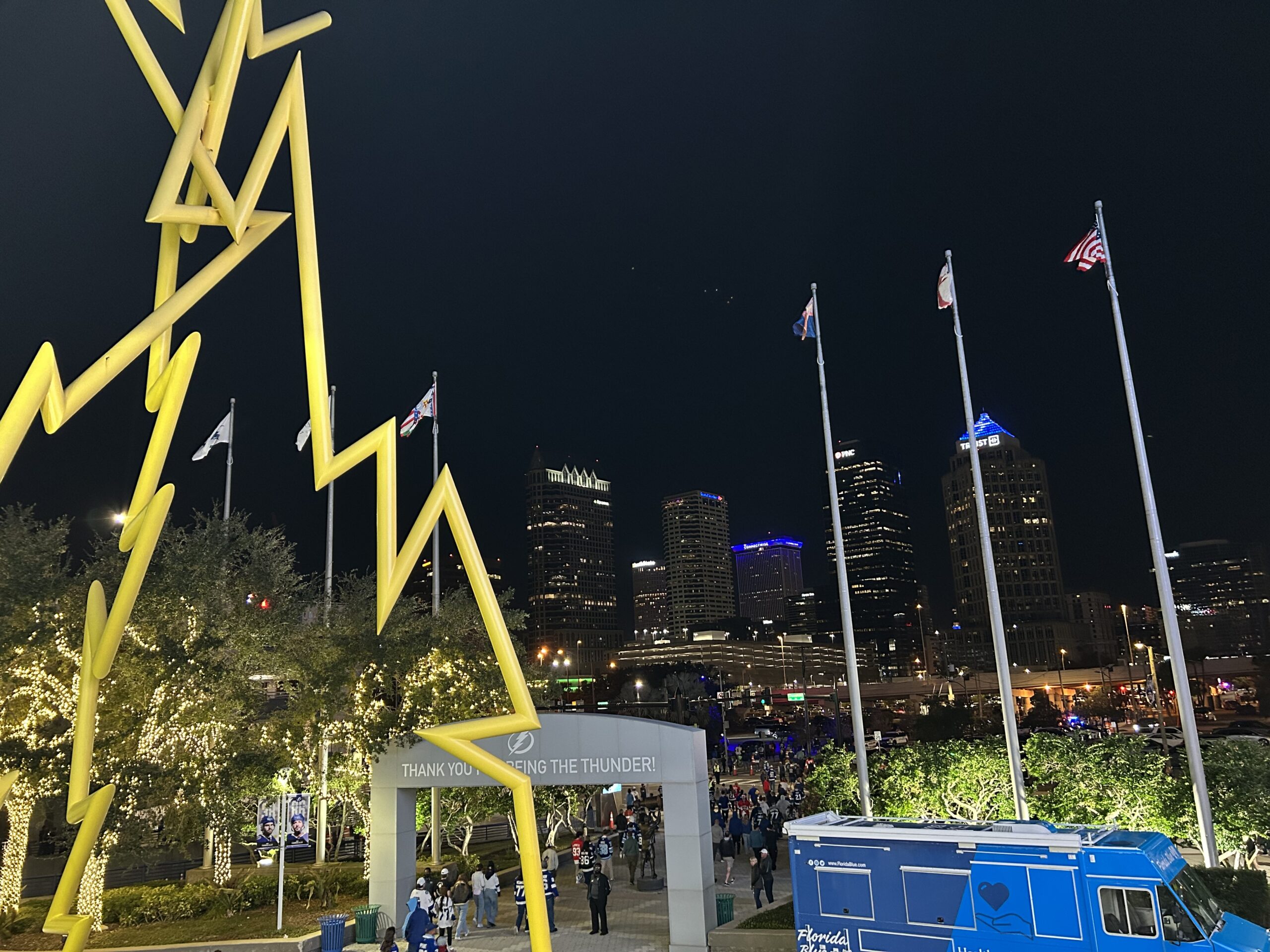
Ice hockey at the NHL level in Florida was completely unheard of until Phil Esposito brought the Tampa Bay Lightning to the area in 1992. Even with the momentum and excitement of a new franchise, it took time for the city to fully embrace the young team.
“Fans didn’t just adopt the team. They grew into the sport together,” Laura Garcia, a Tampa resident and longtime Lightning fan, explained. “Many Lightning fans didn’t inherit hockey knowledge. They learned it collectively in arenas, watch parties and through shared explanation.”
Garcia and her friend Eva Milan have been following the team since they played at Expo Hall at the Florida State Fairgrounds in 1992 for their inaugural season. Milan cheered for them at games, but didn’t quite understand the sport at first, while Garcia was hooked right away.
Even though Milan didn’t take to the team as quickly, she still says that the team makes her feel connected to the area.
“I’ve been here most of my life, so I cheer for all things Tampa, but the Lightning have really brought an excitement to this town – especially in the downtown area – that makes you want to be a part of it,” Milan said.
It took many years for that growth to happen, and Dave Mishkin, who is the team’s radio play-by-play announcer, credits a lot of it to Jeff Vinik, who bought the team in 2010. He explained that the brand was not in a good place, with the team missing the playoffs for three straight years and having low attendance numbers at games.
“Winning helps, but I think the team did not connect as much with the community as Mr. Vinik felt that it could. So, when he bought the team in 2010, there are a few things that he did right off the bat, which was to start the Community Heroes Program,” Mishkin said.
Through that program, a community hero is nominated and chosen for every single home game, and $50,000 is given to the charity of the community hero’s choice. After fourteen seasons of the program, $34.07 million has been donated to 709 non-profits in the Tampa Bay area.
“That will go a long way to connecting the community because you’re doing it in a very tangible way,” Mishkin said.
Mishkin also explained that Vinik’s financial background, combined with the reach of a major league sports team, allowed him to amplify his philanthropic interests as well.
“You’re doing it in a building in front of 20,000 people every single home game. So, the profile of the team allowed him to have a huge impact,” Mishkin said.
Other community programs, such as the Lightning School program that started in 2015, are especially important to Garcia as a teacher in Hillsborough County. Team alumni and staff visit a school for the day to introduce them to ball hockey and provide the school with the necessary equipment.
“It makes me proud of the interest they are taking in the children in the Tampa Bay area,” Garcia said.
Those efforts, along with success on the ice, helped to grow the brand and make the team more visible in the community.
“When you drove around town in 2009 or 2010, you really didn’t see Lightning logos around town. Now, they’re everywhere – on buildings, murals and people have flags or license plates,” Mishkin said.
The growth of the fanbase helped them fill 64,617 seats in Raymond James Stadium for the Stadium Series game, which was an outdoor contest against the Boston Bruins held on Feb. 1.
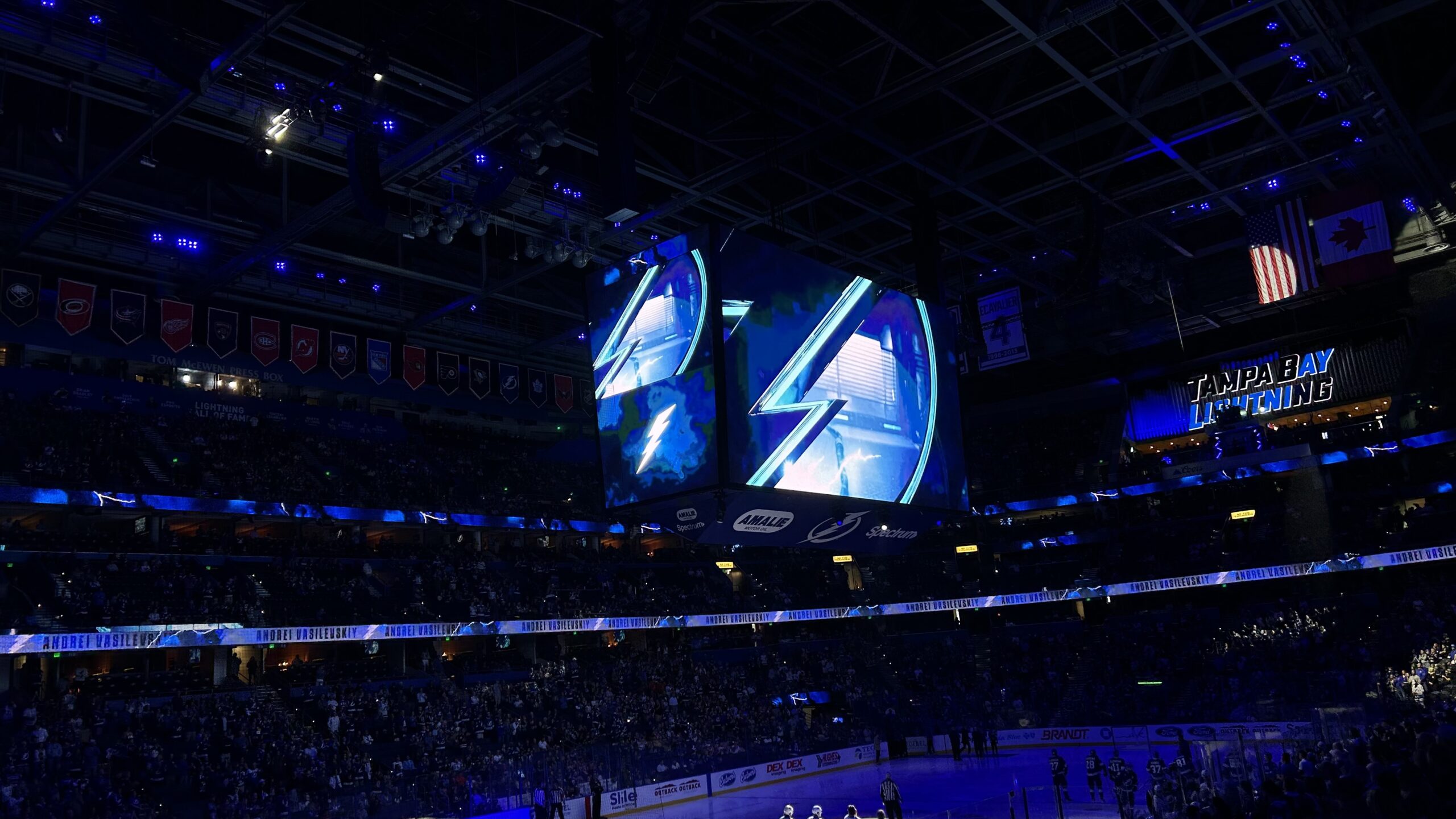
The Lightning rallied to come back from a four-goal deficit to win 6-5 in a shootout. The game was nothing short of wild, with the first goal occurring just 11 seconds in and a brawl between goalies Andrei Vasilevskiy and Jeremy Swayman sparking a comeback from the Lightning. Milan said the game was one of the best experiences she’s ever had in Tampa.
Games like that are one of the many reasons why Mishkin believes sports are so compelling to fans.
“It brings people together, rooting for a common cause and interest. A fan may not share a lot in common with you outside of the sports team, but you can connect in your fandom for the sports team,” Miskin said. “The other part is that sports are dramatic – they’re unscripted. We don’t know how a game is going to go – we might have an idea … but it is really unscripted. So, you have a common group of people cheering and pulling in the same direction with the uncertainty of what is going to happen, which I think adds to the emotion and the drama of it.”
Analeese Sommer, who started following the team this season, was quickly drawn in by the emotion and drama that Mishkin referenced.
“I love the fandom and the energy in the stadium during games. I’ve never enjoyed sports, but the Lightning became a quick favorite,” Sommer said.
Sommer works as a 911 dispatcher in Polk County. Attending the first responder’s night held on March 26 against the Seattle Kraken was a fond memory for her.
“It was nice to be recognized, and to feel the love, support and energy in the room for a thankless job,” Sommer said. “Even the players on the opposing team showing love to everyone in the room during the opening games is something that I will never forget.”