By Hannah Shub
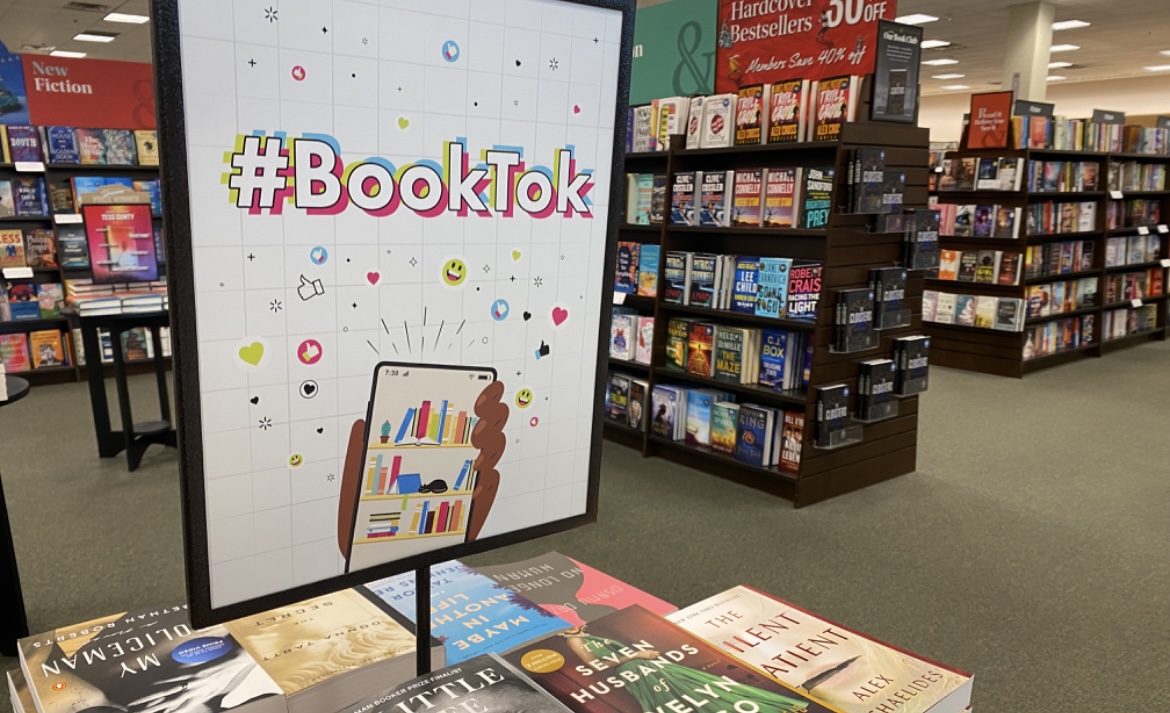
What started off for avid readers as a scroll on TikTok often ended in a trip to the bookstore. Across Tampa Bay, readers were turning viral “BookTok” recommendations (a TikTok community centered around sharing and reviewing books) into real-life purchases, fueling a renewed interest in physical bookstores after years of decline. From TikTok trends to in-store displays, BookTok is reshaping how readers discovered books, and how bookstores adapted in response.
“BookTok is a big thing I use when curating displays. What’s popular is constantly changing,” said Sara Logan, a social media manager at the Barnes & Noble Tyrone location in St. Petersburg.

Logan said the platform directly influenced what customers bought. “BookTok was a major factor in what became popular and what sold. I tried to keep up with what people were talking about so I could build displays and recommend those titles to customers.”
After years of decline driven by online retailers and e-books, brick-and-mortar bookstores began showing signs of a comeback. National data reflected that shift. Barnes & Noble operated more than 700 stores nationwide, up from fewer than 600 locations in 2023, according to reporting by ABC7 Chicago. In 2025 alone, the company opened more stores in a single year than it had between 2009 and 2019, with plans to launch at least 60 new locations across 17 states.
Print book sales also increased slightly. According to the U.S. Chamber of Commerce, citing Publisher’s Weekly, unit sales of print books rose 1% in 2024 to 782.7 million copies after two years of decline. Industry experts noted bookstores were leaning into personalization, “indie” aesthetics and social media-driven communities like BookTok to attract customers and build loyalty.
Data from Placer.ai supported those trends, showing visits to Barnes & Noble locations increased 20.6% month-over-month and 9.7% year-over-year, eflecting a rise in in-person bookstore traffic. Additional reporting from the U.S. Chamber of Commerce, also citing Placer.ai, found that visits lasting 45 minutes or more increased from 24% in 2021 to 27% in 2024, suggesting customers were not only simply returning to bookstores but spending more time inside.
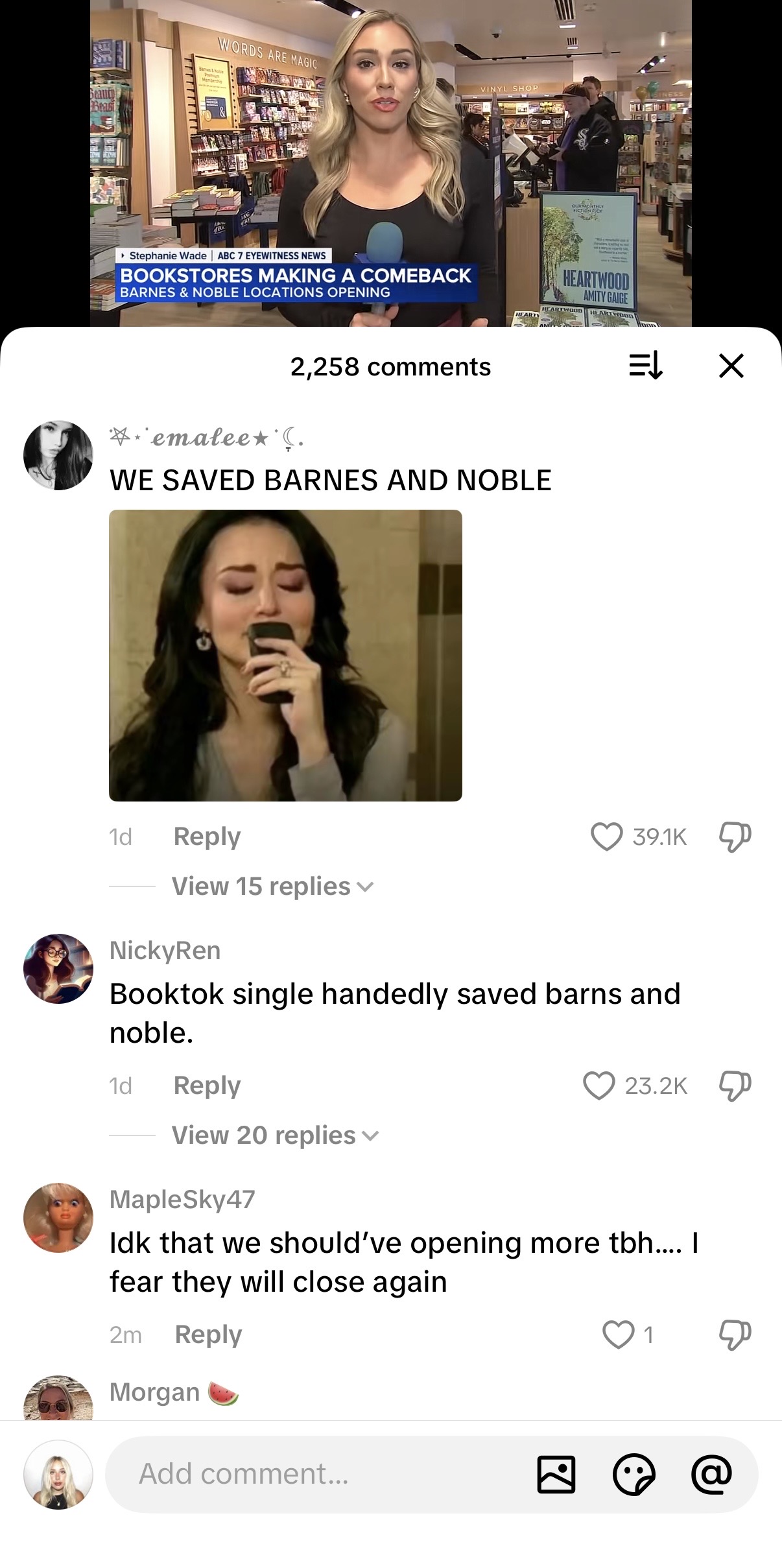
At the store level, employees observed those trends in real time. Logan said BookTok directly influenced how books were displayed and marketed in-store, with staff frequently adjusting front tables and end caps based on trending titles.
“I definitely saw books get big from social media and who’s reading them,” Logan said. “When something went viral or had a show adaptation, stores couldn’t keep up with the demand.”
Logan also noted that customer behavior varied depending on the time of day and season, with younger audiences often visiting in the evenings and older readers earlier in the day. Seasonal periods such as holidays and summer months typically brought higher foot traffic.

But for readers, BookTok was not as simple as it looked.
Eloise Celine, a BookTok user and reader, said she often used the platform as a starting point but did not fully rely on it.
“I don’t fully trust BookTok recommendations because a lot of creators are paid to promote Books. So, I always do my own research,” Celine said.
Still, Celine said BookTok played a significant role in shaping her reading habits and introducing her to books she might not have otherwise considered.
“I read the entire Off-Campus series because of BookTok when I first got into reading,” she said. “Everyone (on BookTok) said they were great, easy reads, which made me want to try them.”
Combined with rising in-store traffic, the trend suggested BookTok’s influence extended beyond discovery and into how readers engaged with books.
Celine said, “It made me read more. I like jumping between genres, so having BookTok as a resource helped me see what people were loving or not enjoying.”
BookTok’s influence didn’t stop at discovery or the For You page. It also shaped how readers chose and evaluated books, both online and in-store.
“BookTok expands globally and has a large community dedicated to finding and sharing good books,” she said. “Recommendations from friends are different because they’re based on personal bias and reading preferences, which may not align with yours.”
Celine said she had also gone to bookstores specifically to find titles she first encountered on BookTok (through TikTok).
“I saw Fourth Wing on BookTok and already knew I was going to buy it based on what I saw,” she said.
Experts said this pattern reflected broader psychological and social trends. Professor Stephen Song, a University of South Florida professor who conducts research on the psychological effects of social media on individuals, said trust in platforms like BookTok could be tied to how users relate to online communities.
“If BookTok provides a sense of community, people are more likely to trust the recommendations,” Song said.
Song also noted that digital engagement could lead to in-person experiences, including visiting bookstores.
“Assuming that Booktok creates a good selection of books, people might want to read the book. Under the same assumption, people may want to bond with other people, which may lead to in-person experiences,” he said.
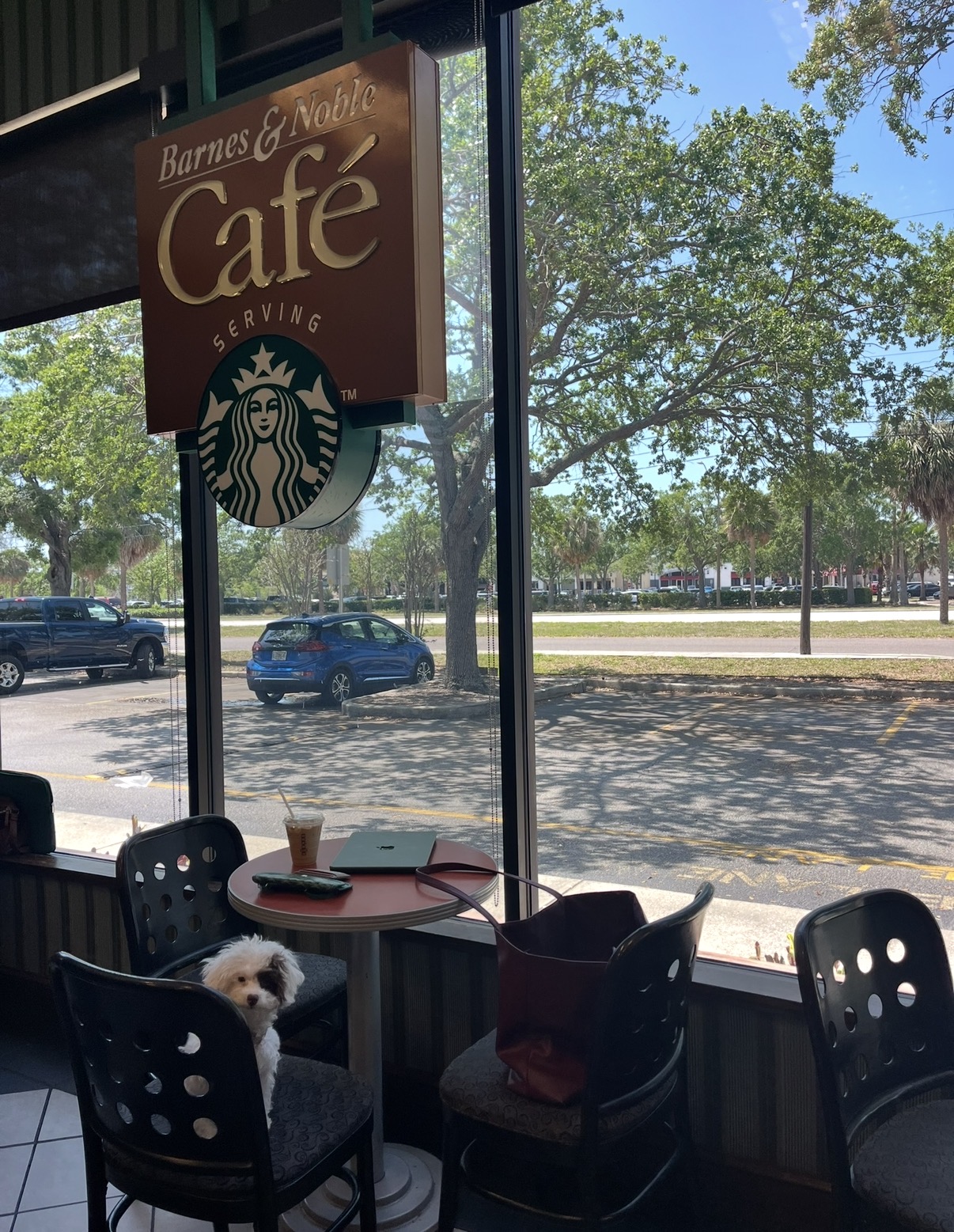
Inside bookstores, that connection often took the form of what many described as a “third space”–a place outside of home and work where people gathered, studied, and spent time. Logan said Barnes & Noble locations, particularly those with cafés, naturally encouraged that type of environment.
“Our café brought people of all ages in to study, work, and even hold book club meetings,” Logan said. “It was common to see people sitting and reading throughout the store.”

As BookTok continued to shape reading trends, bookstores adapted their strategies to meet shifting demand. Logan described how individual locations tailored displays based on local customer interests, a process referred to internally as “localization.”
“Our store was big in mystery and fantasy. So when we saw a boom in a title, we created displays for that author or title,” she said.
The relationship between BookTok and bookstores appeared to reinforce both online discovery and in-person engagement.
At the same time, not all customers approach bookstores with a specific purchase in mind. Logan said some visitors came for the experience itself.
“Some people like the pride in finding a book in person, while others just enjoyed wandering the store or wanted to support bookstores,” she said.