By Stephanie Broton, Julia Metz, Carolina Rabboni, Chas Wain-Nye and Shakur Yeshitela
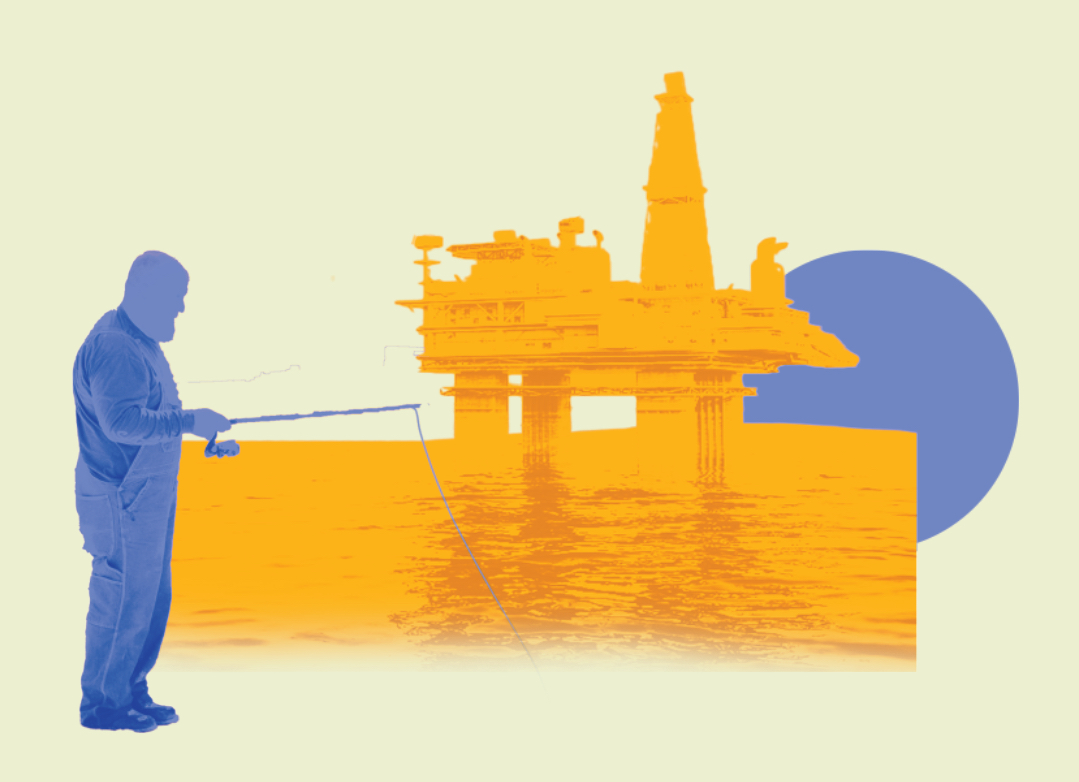
The U.S. Department of the Interior, under the guidance of the Trump Administration, has advanced a proposal that could affect Florida’s Gulf Coast by potentially opening the eastern Gulf of Mexico to offshore oil drilling.
The Deepwater Horizon oil spill is the last major oil rig incident to affect Florida. Although the platform was off Louisiana’s coast, the spill caused major losses for Florida’s fishing economy, according to the National Oceanic and Atmospheric Administration.
Nearly 16 years later, the industry has mostly rebounded but is now faced with uncertainty.
On Nov. 20, 2025, Interior Secretary Doug Burgum signed Secretary’s Order No. 3445, “Unleashing American Offshore Energy,” directing the Bureau of Ocean Energy Management to take steps to accelerate oil and gas production.
The order responded to the Biden Administration’s 2024–29 National Outer Continental Shelf Oil and Gas Leasing Program, which set a limited schedule of Gulf of Mexico lease sales to balance energy production goals with environmental considerations.
President Donald Trump called the program restrictive and directed the Interior Department to expand lease sales to the entire outer continental shelf in the 2025 order. That expansion included portions of the eastern Gulf of Mexico, a move that immediately drew attention from stakeholders in Florida’s fishing industry.
The Charter Fisherman’s Association, a network of federally certified for-hire fishermen and women, chose not to take a position on the matter.
“As an industry, we have decided not to publicly go for or against [the proposal],” Capt. Dylan Hubbard, vice president of the association, said. “Many of our members on the west side of the Gulf live off the oil and gas industry.”
Florida is the only Gulf state without offshore oil rigs. Most platforms are located off Louisiana and Texas. However, some say retired platforms can benefit the fishing industry.
The Bureau of Safety and Environment Enforcement reported that studies show retired oil rigs can become marine habitats, functioning as artificial reefs. This can attract abundant game fish which supports commercial and recreational fishing.
Other than fishing benefits, economic advantages are pointed out by those in favor of the offshore drilling expansion. The American Petroleum Institute recently joined a coalition of more than 80 business and manufacturing organizations that endorsed the Interior Department’s order.
“Expanding leasing, exploration, and development of U.S. offshore oil and natural gas resources can drive economic growth and energy production, further strengthening American energy leadership,” the coalition wrote.
In 2018, a study by the American Petroleum Institute projected that offshore drilling in Florida could generate more than 56,000 jobs and produce up to $1.3 billion in annual revenue within two decades of development.
While some point to the potential economic benefits, those arguments have done little to ease broader concerns. People all over Florida reacted in different ways to the renewed push to expand oil and gas production.
For many fishermen along Florida’s Gulf Coast, the possibility of offshore drilling is overshadowed by memories of past spills and the uncertainty they brought to coastal communities.
“If we have oil drilling out here, my livelihood is over,” Capt. Dustin Pack said in an interview with Fox 13. “A lot of these businesses – most of these businesses – one spill can wipe all this out in one day.”
Pack’s concerns echo those of some Florida lawmakers who have also spoken out against expanding offshore drilling. Among them is U.S. Rep. Anna Paulina Luna, whose district includes part of the Gulf Coast and who has publicly opposed the proposal.
“Florida and our residents do not want ugly drilling rigs off our coastlines,” Luna said on Jan. 23 in a post on X, formerly known as Twitter. “When I served on Natural Resources, I put the legislation and study in place that prohibited the Biden administration from drilling off our coastline, and my position has not changed. I will happily work alongside my Florida colleagues to block any efforts to drill off our coast.”
Luna’s stance highlights wider worries about the potential effects of offshore drilling, as many recall the lasting impacts of the 2010 Deepwater Horizon spill.
“Businesses can recover – animals can’t,” Bruno Falkenstein, former St. Pete Beach City Commissioner, said.
For him, the marine environment is his main concern.
“Once you start looking at the effects on wildlife, it’s earth-shattering,” Falkenstein said.
Beyond personal concern and political debate, scientific analysis offers further insight into how such disasters reshape marine ecosystems.
Cameron Ainsworth, professor of oceanography at the University of South Florida, examined the effects the spill had on Gulf fish populations.
“Many open water fish that were caught here showed lesions and elevated stress hormones,” Ainsworth said. “There was also a temporary loss to fish recruitment, or, in other words, fewer babies born.”
In 2020, a University of South Florida study found that levels of polycyclic aromatic hydrocarbons (PAHs) slowly increased among different fish populations in the Gulf of Mexico since Deepwater Horizon, although they are still well below public health advisory levels. Higher levels of PAHs were also found in fish in regions of increased oil and gas activity, over the course of the decade following 2010.
For an industry that depends largely on the marine ecosystem, an oil spill can be harmful. Shortly after the Deepwater Horizon oil spill, federal waters in the Gulf were closed while beaches across the coast faced an oiled shoreline, triggering a domino effect that had the fishing industry next in line for damage.
“The greatest impact on fisheries was loss of consumer confidence in the seafood products,” Ainsworth said.
For Florida, while oil mainly touched the shoreline of the panhandle, the idea shook communities across the state’s coast. St. Petersburg’s real estate values even fluctuated primarily due to the social stigma.
Beyond economic losses, the human toll was significant. PBS reported that, while hundreds of restoration programs totaling over $5 billion were approved, many cleanup crew members involved in the Deepwater Horizon response have since experienced arduous health complications, including respiratory problems, skin rashes, dizziness, headaches, and other long-term illnesses.
This particular stigma after the oil spill resulted in a severe decrease in Florida’s biggest consumers: tourists. Tourist-driven fishing drives the fishing economy, with it historically netting $5 billion, according to a 2013 Florida TaxWatch study.
Falkenstein stressed the unique importance of tourism in Florida’s economy, emphasizing how other states aren’t as dependent on the tourist industry as Florida is.
Tourism quickly rebounded in the years following the spill, but it served as a stark reminder of how much Florida’s industries depend on it. As Falkenstein noted, any significant drop can be compared to the economic impacts of a hurricane’s aftermath.