By Marcella Copeland, Lilly Kennedy, Noah Perez, Jaden Taylor and Laura Troyer
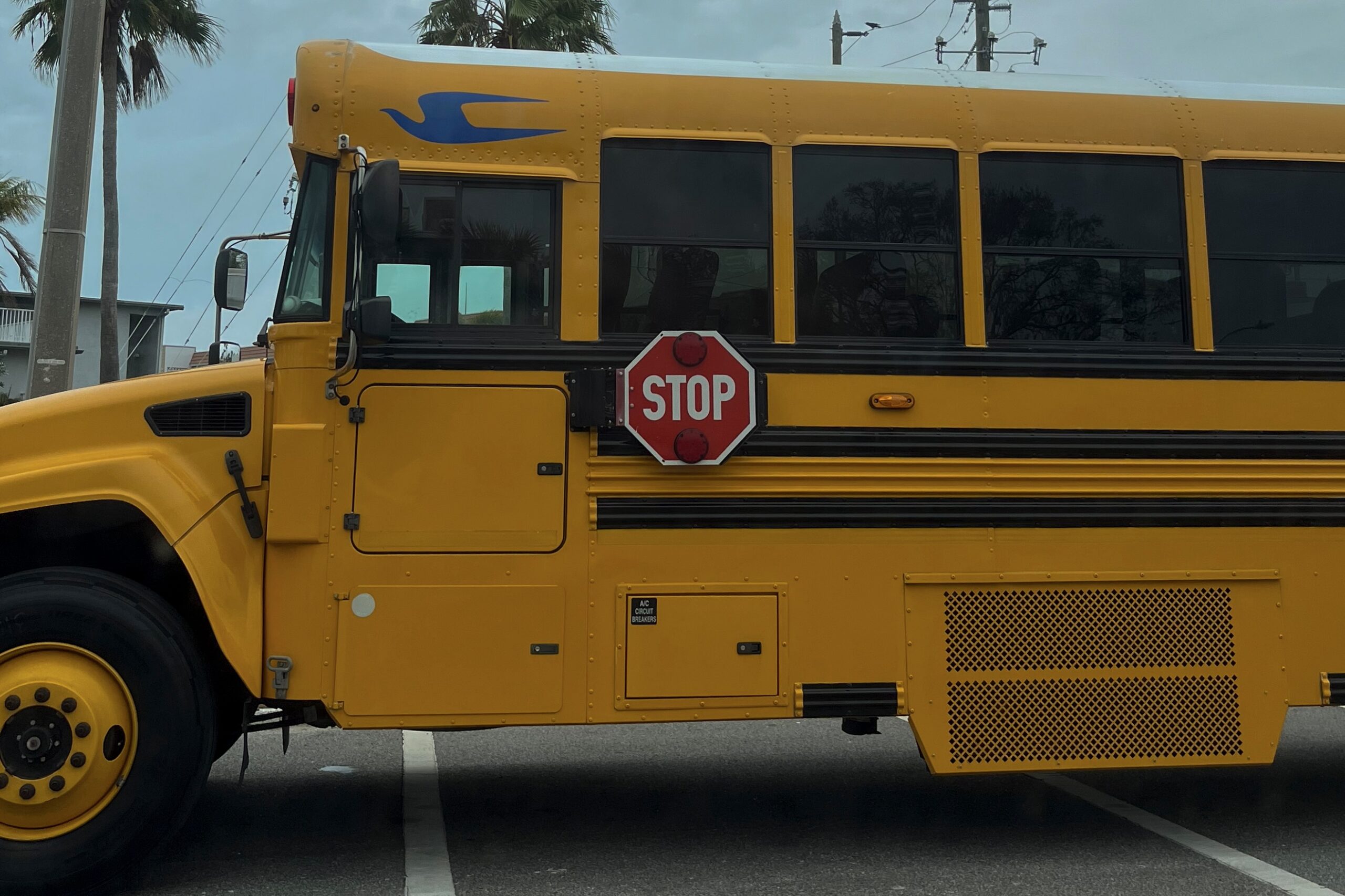
At 10:52 p.m., the bus doors folded open and the driver told Danaee Williams it was the last stop. She was 15, balancing two diaper bags and lifting her 11-month-old twin daughters from their stroller.
For hours, she had ridden the route back and forth through Tampa, watching the city lights blur past the windows, hoping the motion would buy her time. She walked into a nearby Denny’s with no money and two babies, praying no one would ask how long she planned to stay.
“We were riding the bus because we didn’t have nowhere to go, so we slept at Denny’s,” Williams said. “I was really depressed at that moment, because I’m like, ‘OK, what do I even do now?’”
That night in 2022 was not abnormal. It was the start of a years-long stretch of hotel rooms, emergency shelters and temporary beds after her mother lost housing that December—a story reflecting a broader crisis unfolding across Pinellas County: youth homelessness.
According to the Florida Department of Education, 78,277 students experienced homelessness during the 2021-22 school year in Florida—a 23% increase from the year prior. In Pinellas County, approximately 4% of enrolled students were identified as homeless between August 2024 and January 2025.
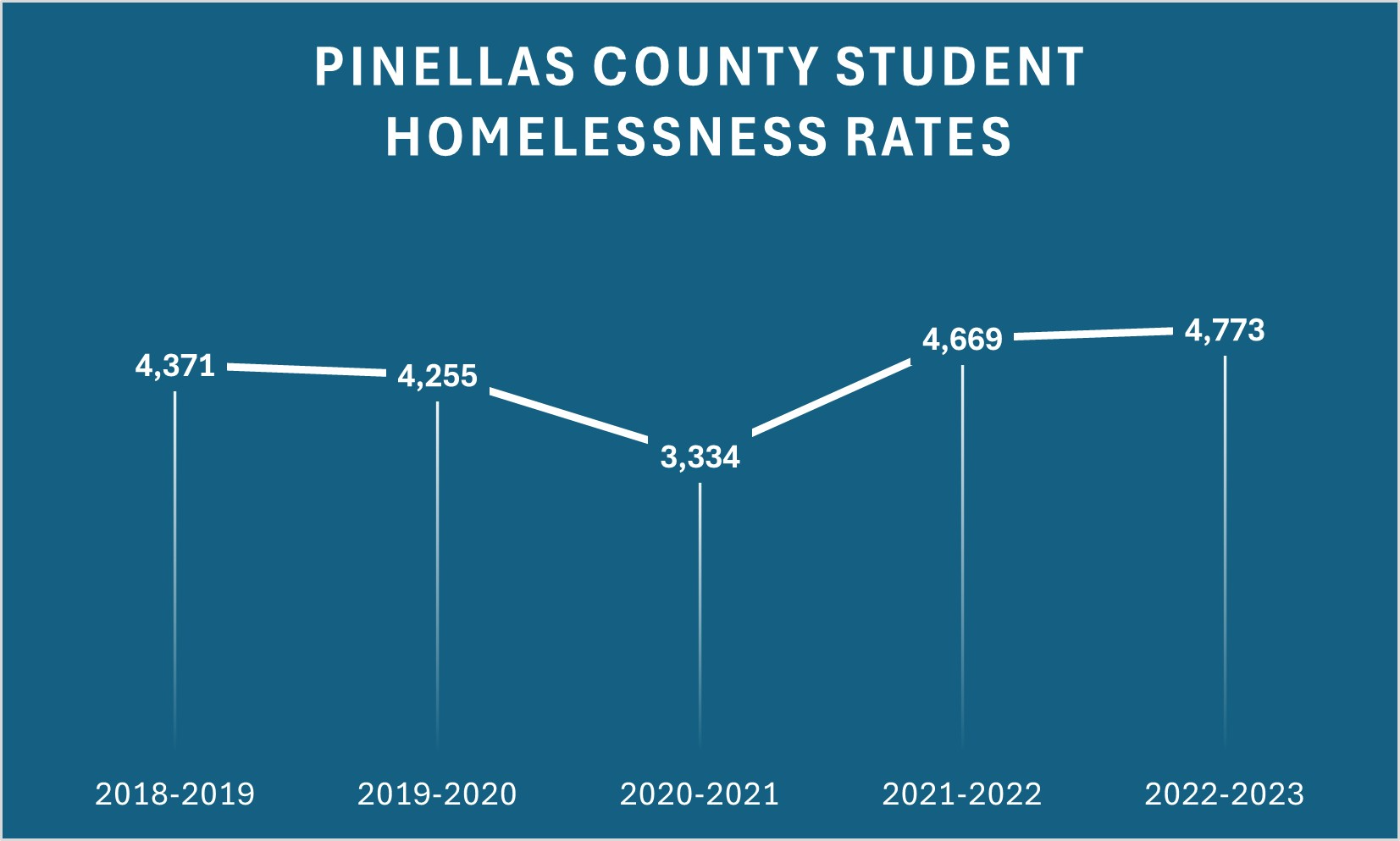
Experts caution that the true number is likely higher. Hsun-Ta Hsu, an associate professor at the University of North Carolina at Chapel Hill School of Social Work, said official counts likely underrepresent the scope of youth homelessness.
Among these counts is one of the primary sources of data on homelessness: the Point-in-Time count. This mandated census from the U.S. Department of Housing and Urban Development (HUD) gathers a broad data set by recording sheltered and unsheltered individuals experiencing homelessness on a single night in January.
“Because of the current definition, the point-in-time count systematically excludes a large number of youths,” Hsu said.
Hsu attributed a severe lack of affordable housing as the primary cause of homelessness for adults.
National data reflects that strain. The National Alliance to End Homelessness reported that only 35 affordable and available rental homes exist for every 100 extremely low-income households.
According to United Way Suncoast, in Pinellas County, the average rent for a two-bedroom apartment was $1,699 in 2023, while the median household income hovered around $57,000.
“There’s a gap between rent and earning increases that causes people to have less residual income to spend on transportation, food and other necessities,” Hsu said.
Hsu said for youth, homelessness is just a way of life—an experience not far off from the patterns present throughout their childhood.
“It’s kind of an extension of what they have experienced; it’s just that they’re now getting older,” Hsu said. “They left their parents, relatives and guardians, and they’re now unaccompanied, experiencing homelessness.”
Pinellas Hope event coordinator Jeff Plooster and other staff members see that pattern play out daily in Clearwater.
“A lot of our younger folks come from broken homes,” Plooster said. “Mom and dad are homeless, so, like poverty, it becomes a cycle in a family. The kids get pregnant, they have kids, they’re homeless. It’s a cycle.”
Williams described that instability not as an observer, but as a lived experience. As a minor with twins, she was repeatedly told that to receive certain services, she might have to enter foster care. “I didn’t understand that,” Williams said. “I was very confused on why me and my kids would have to be put in the system just to get help.”
Hsu said unaccompanied minors frequently face bureaucratic barriers.
“Youth are unable to sign up for housing, social services and health care if they are unaccompanied,” Hsu said. “The supportive net is not solid enough to prevent them from being homeless.”
Williams’ experience rotating between relatives, shelters and short-term hotel stays illustrates how easily young adults and teens slip through the cracks. Paula Beard, a counselor at Gibbs High School in St. Petersburg, said that at schools, the effects often surface quietly.
“A lot of students that do go through homelessness are not completely identified, because many of them might stay with a relative,” Beard said. “Some students, you would never know—there’s nothing they are showing that would give that impression.”
According to data from Schoolhouse Connections, nationally, students experiencing homelessness had a 68% graduation rate compared to 87% overall.
In Pinellas County, more data from United Way Suncoast showed that unhoused students in Pinellas were three times more likely to drop out of high school than their peers.
“Attendance can be a big indicator,” Beard said. “If there’s instability at home, school may not be a priority at that time. It’s finding a place to stay.”
Beard said fear and stigma often prevent students from asking for help.
“It’s hard for students to ask for help,” Beard said. “The biggest thing for us is finding out who those students are, because not all of them are very forthcoming.”
Race and identity still shape risk at a broader level, experts said. A 2017 study from Chapin Hall foundBlack youth faced an 83% higher risk of reporting homelessness compared to white peers, and Hispanic, nonwhite youth faced a 33% higher risk.
LGBTQ+ youth were also disproportionately affected.
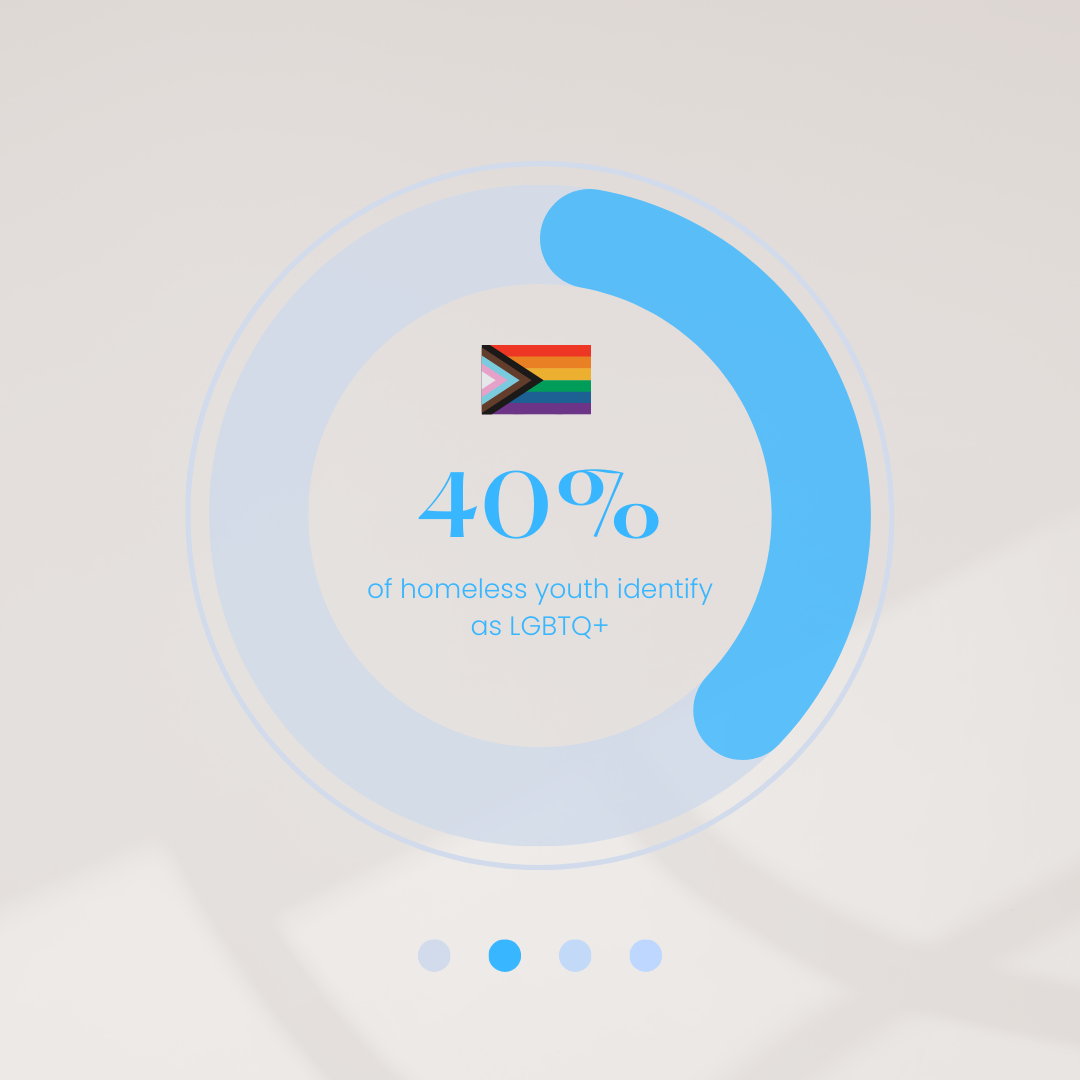
“About 40% of youth experiencing homelessness are LGBTQ+, and many service providers are just not designed to address that,” Hsu said. “They don’t feel like they’re being supported.”
Hsu said shelter rules could also deter young people from seeking help.
“You may need to be sober, you cannot bring pets, you need to adhere to certain rules, and that creates a sort of barrier,” Hsu said. “When youth need to choose between their pets and emergency shelters, they will choose their pet.”
Hsu said platforming youth voices, not just data, is essential to understanding the crisis and getting to the root of the issue.
“These programs cannot fix the systemic issue of affordable housing—we have to address the housing supply,” Hsu said.
For Williams, the broader issue came down to something simpler.
“When you’re homeless, you’re in survival mode all the time,” Williams said. “You have to be, in order to survive.”