By Valeria Ramos, Makenna Wozniak, Nicole Benjamin and Isabel Vega

As young voters prepared for Florida’s midterm elections, some said finding clear information about candidates and ballot issues remained a challenge.
The city’s “St. Pete Votes” campaign distributed election information through local businesses, community events and digital outreach, according to David Thompson, director of government affairs in the St. Petersburg mayor’s office. Student organizations such as USF Democrats also provided opportunities for young voters to learn about candidates and government.
We’ve found that some of the biggest barriers to people participating in our democratic process are the lack of information, lack of access, schedule conflicts, and not growing up in a civically minded environment,” Thompson said.
Interviews with young voters revealed different levels of confidence in their knowledge of elections. While some said they struggled to find information about local candidates, others felt prepared after researching the elections on their own.
Young voters parse the election scene
USF senior Emily McHenry commented on her voter knowledge, or rather lack thereof.
“I’ll see people’s signs in the grass for mayors, and I have no idea who they are,” she said. “I only saw ads and videos about the governor.”
USF junior Ean Pennypacker shared the sentiment with McHenry on the lack of knowledge for the current candidates.
“I do not feel like I have heard much from the candidates,” Pennypacker said. “There hasn’t been any formal debates yet that I have been aware of and for the most part their social media presence isn’t huge.”
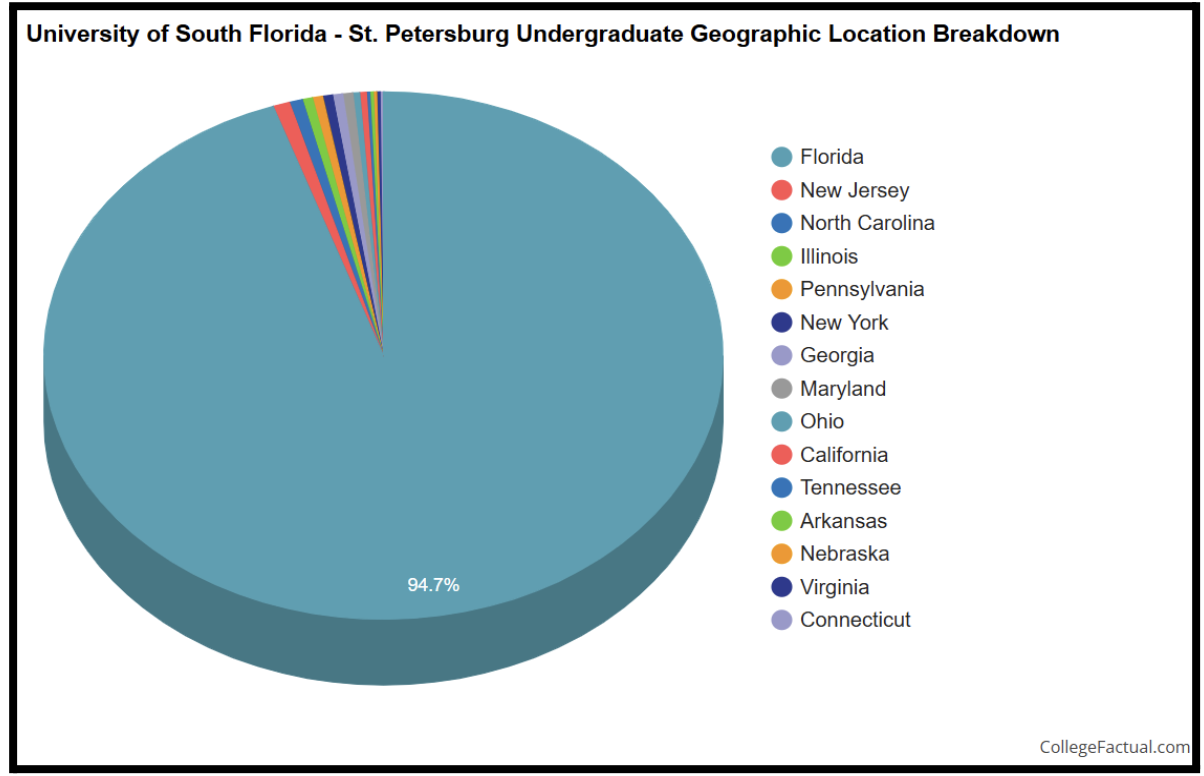
Despite 94% of USF St. Petersburg students being in-state voters, many use mail-in ballots for a variety of reasons. Most students are registered to vote in their hometown and cannot partake in the St. Petersburg election.
McHenry spoke from experience as an out-of-state student who uses a mail-in ballot to vote in her home county.
“I also find it much more calming to my mind because I can really look into what candidates are doing and what they intend to do,” McHenry said.
Outside the university, 24-year-old St. Petersburg resident Paula Leal said she had already voted but had not researched every candidate extensively.
“To be honest, I didn’t do a lot of research because my focus was on voting for Democrats, whose values match mine,” she said.
Leal said she primarily relied on social media for election information but had not experienced difficulty finding information about candidates or ballot issues.
Although the young voters interviewed had different levels of knowledge about the elections, several said they still believed participating was important.
McHenry said she planned to continue voting even when election results did not reflect her preferences. She said candidates who addressed issues affecting working people and Florida’s environment would make her feel more represented.
USF junior Robert Kordon said he believed in the importance of college students engaging civically.
“I think voting is very important,” said Kordon. “Especially as a college student, I think certain issues like education and the economy really affect us directly every single day, so it’s so important for us as young adults to make our voices heard at the polls.”
Leal offered another explanation for why some young adults may be less engaged in elections.
“I think it’s a privilege. Many young people feel that current issues don’t directly affect them, so they don’t feel inclined to vote or learn about the candidates. When the consequences aren’t felt in their daily lives, it’s easy to tune out,” Leal said.
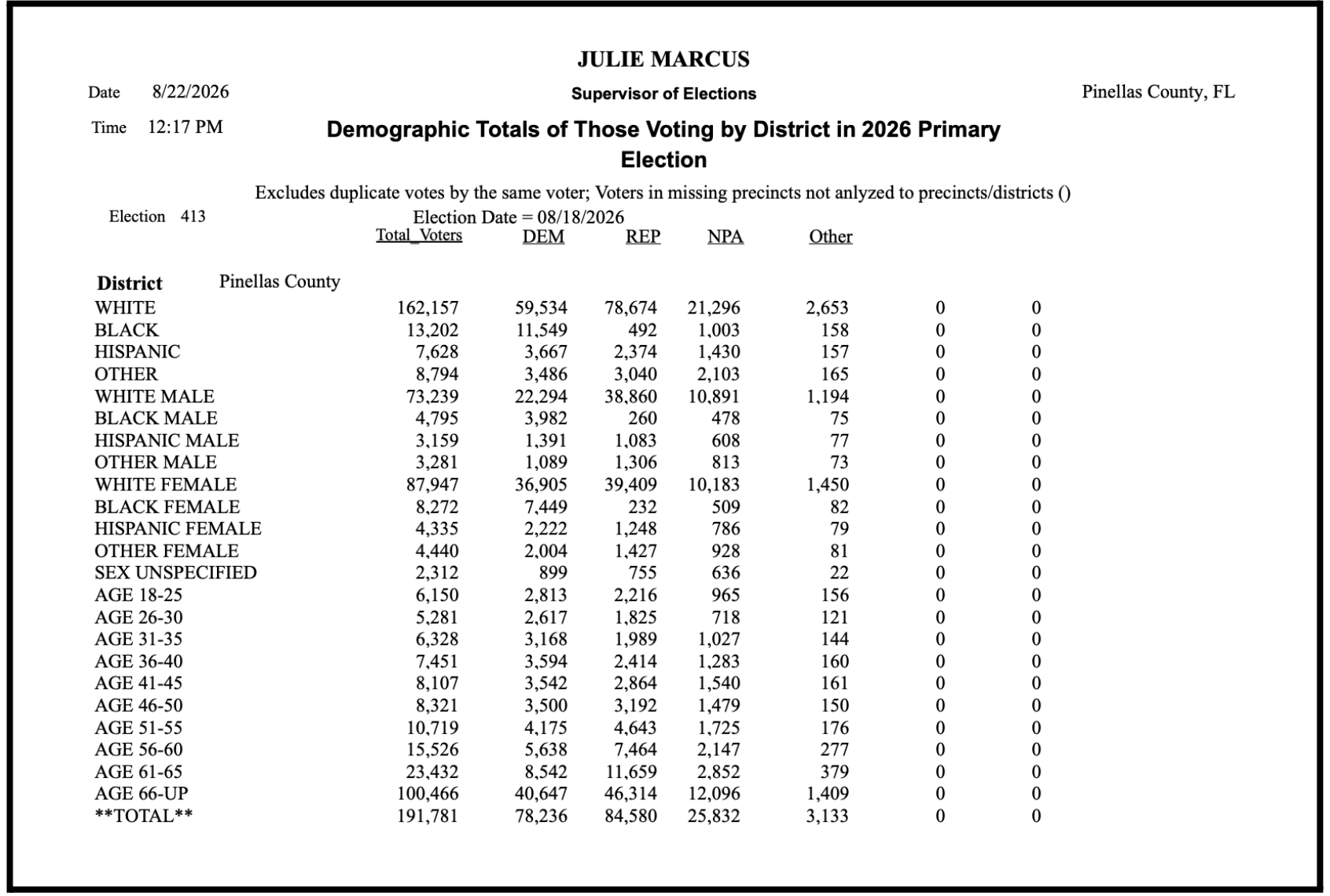
Out of the 10 age groups of Pinellas County voters in this year’s primary election, the youngest age group (18-25) received the second-lowest voter turnout, just ahead of the second-youngest group (26-30).
State policies reach college classrooms
Decisions made by Florida’s elected officials affected public universities, including the courses students take and the topics discussed in classrooms.
Julie Buckner Armstrong, a professor of English and literature program coordinator at USF St. Petersburg, said state higher education policies have affected courses and programs at the university.
“The policies affect most every course that I teach, because my work focuses on topics related to race, gender, and other aspects of diversity,” Armstrong said.
Armstrong said her teaching had changed only slightly, but she has added material about current political debates and their historical backgrounds. She said changes to general education have also limited students’ exposure to some diversity-related subjects. According to Armstrong, USF eliminated upper-level general education courses, including some that focused on diversity.
“A censored education is ultimately a sub-par education,” Armstrong said.
Armstrong said Florida’s governor has significant influence over public universities, including decisions involving curriculum and university administration.
Her experience illustrates how state policies affected students’ education, making higher education one of the issues young voters may consider when evaluating candidates for governor.
Voter education provides a response
Local organizations offered voter education programs to help residents better understand elections and participate in the voting process. The Pinellas County Supervisor of Elections offers voter registration and education events, including presentations and voting demonstrations. USF also provides voting information and resources to students through BullsVote.
David Thompson, director of government affairs at the St. Petersburg mayor’s office, said the campaign began in 2024 to inform residents that municipal elections had been aligned with state and federal elections.
“We’re focusing heavily on sharing information digitally, in print, and sharing voter information at events happening in the community,” Thompson said.
Thompson identified a lack of information, limited access and scheduling conflicts as barriers to voter participation. He said the city addresses these challenges by sharing election dates, voting locations and transportation options.
Beyond providing information about voting, Thompson emphasized why participation in local elections matters to young adults.
“Many of the issues young people care the most about happen at a local level. In recent years, the most significant changes to housing, transportation and health care have all happened at a local level,” Thompson said. “Don’t count young voters out.”
At USF, BullsVote provides events to the student body to help educate on civic engagement and share knowledge on voting. The program holds events and educational panels with speakers from the Hillsborough County Supervisor of Elections.
Student political organizations also provide opportunities for young voters to learn about elections. Jared Nunley, president of USF College Democrats, said the organization uses campus events, social media and meetings with candidates to help students understand political issues.
Nunley said the organization tracked attendance at its events and voter registrations during tabling activities. He reported increased interest in voter registration and meeting candidates over the past year.
Although Nunley reported increased interest, he did not provide specific registration figures to show how much participation had changed.
The president of USF College Republicans was contacted but did not respond for comment.
However, some students said there are still ways voter education could improve. Pennypacker said students could benefit from resources that explain candidates and ballot issues more clearly.
“I think if there were a non-partisan course, club, or other organization dedicated not just to register student voters but also helping students understand what each candidate stands for and what each amendment means in plain English,” Pennypacker said.
Building a more informed generation of voters
Even with voter education programs available, some young voters reported not having enough information about elections or candidates. Student interviews also showed that some students felt more informed about certain political races than others.
These responses suggest that making voter information available may not always mean students are seeing or using it.
Despite the gaps in voter education, some voters still felt hopeful that their vote would make a difference.
“I really do feel like my vote matters,” Kordon said. “Sure, I may not be the sole vote that makes my candidate win, but that’s not the only thing on the ballot. Amendments, local circuit judges, school boards – these are the elections where our votes really count. And of course, top ticket races need our votes as well; I just think those aspects of election day are always so overlooked.”
Thompson said reaching people earlier and continuing voter education could help address some of these challenges.
“We also have been reminding young people that they are voting for their futures and they shouldn’t let their futures be determined by people other than themselves,” Thompson said.