
By Chas Wain-Nye
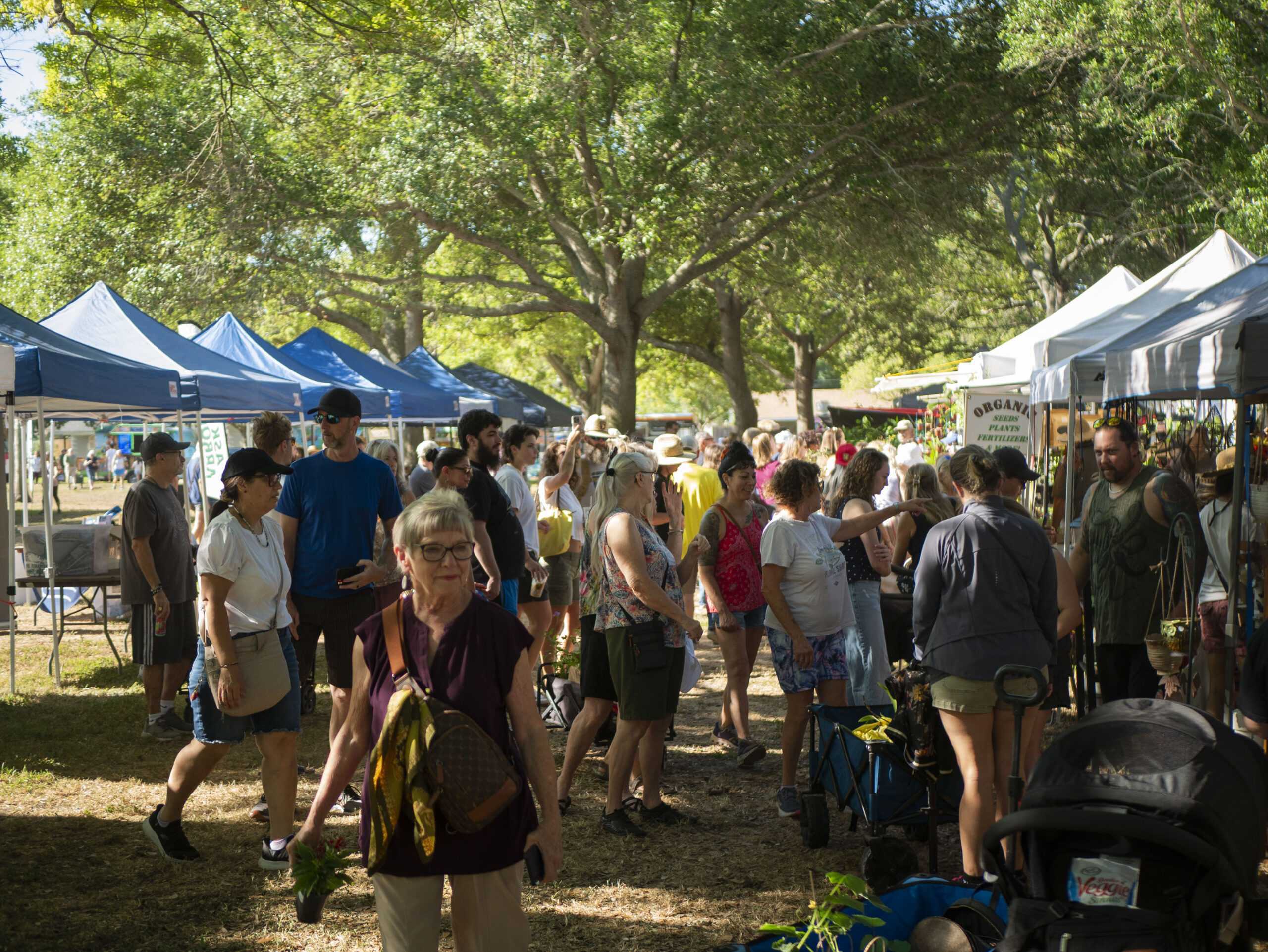
Every year, the Green Thumb Festival aims to promote sustainability practices through a weekend full of exhibitions, workshops and a flower and garden vendor market. While the festival emphasizes eco-friendly practices, it also relies on elements like food trucks, generators and single-use waste that complicate those efforts.
Lynn Gordon, City of St. Petersburg Parks and Recreation manager, framed the Green Thumb Festival’s environmental footprint as a tradeoff — one where education outweighs impact.
“The educational impact the event provides to the thousands in attendance is far greater than the emissions emitted by the food trucks that attend,” Gordon said.
The city evaluates the festival’s environmental impact while balancing the needs of the event, emphasizing educational opportunities such as “Ask an Arborist” and plant, soil and water diagnostics.
Organizers also said vendors are required to use paper straws and are encouraged to avoid Styrofoam containers, while recycling bins are placed throughout the festival space.
However, events of this scale can have a measurable environmental footprint. According to City of St. Petersburg Parks and Recreation, the festival features more than 120 garden, plant and flower vendors, alongside food trucks and workshops.
Large events of this scale can generate substantial waste — over 1.2 tons daily — according to Prime Dumpster.
Emissions are also a factor. The Regional Air Quality Council reports that a food truck running for eight hours with a gas generator can emit 165 pounds of carbon dioxide. This year, the festival featured six food trucks, suggesting that while the event promotes sustainability, its operations still contributed to environmental impact.

At the festival, those impacts are not just theoretical. Food vendors — including tent-based setups and mobile kitchens — relied on visible gas-powered generators to run equipment throughout the day, even as some trucks appeared to operate independently. Lines formed steadily, with customers receiving food in paper-based packaging, reflecting the festival’s push away from Styrofoam.
But much of that waste still ended up in garbage bins rather than recycling, underscoring the gap between environmentally conscious materials and how they are ultimately discarded.
Still, many vendors said they are actively working to minimize their environmental footprint. Monica Going, co-owner of Oh 4 Succ’s Sake, said most of the business’s plants are locally sourced, with anything not grown in-house coming from within Florida. The shop also focuses on repurposing materials, like using thrifted and reused items as planters instead of buying new ones.

“Anything that’s hollow and we like is a pot to us,” Going said. “We try not to use brand new. We shop all over for different types of planters.”
Going said sustainability is part of the appeal for customers as well.
“Plants are good for the environment,” she said. “It’s a good addiction to have.”
Having attended multiple garden shows across the country, she said the Green Thumb Festival stands out.
“We’ve been to shows that are considered the mecca,” she said. “But this one is the best.”
Other vendors echoed similar efforts to prioritize sustainability. Diana Ferguson, an employee at Wild Root, said many of the plants sold at the booth are sourced from local farms, primarily in Central Florida. The business also uses environmentally friendly packaging, with pots that can be recycled or returned to local nurseries.
Ferguson said events like the Green Thumb Festival can remain sustainable if managed properly.
“I think they can keep this very green,” she said. “This area is normally a green space. Nothing is permanent — everyone packs up and leaves.”
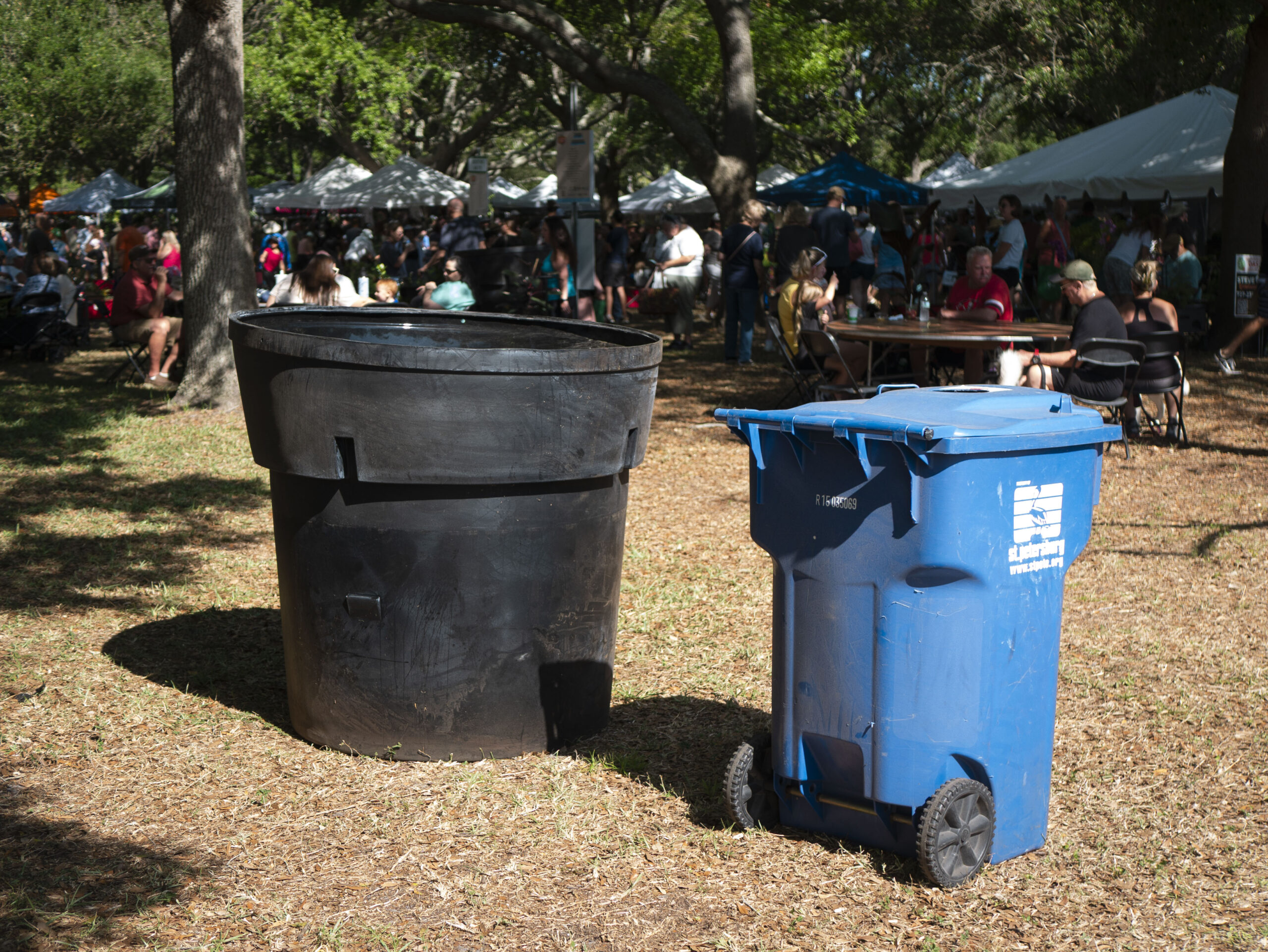
Even so, waste patterns at the festival suggested a more uneven outcome. While recycling and garbage bins were placed throughout the festival, the garbage bins were more accessible. Recycling bins were covered with lids with small openings, while garbage bins remained open, making them easier to use. Many recycling bins were only partially filled, often with leftover materials from event setup rather than attendee waste. Meanwhile, garbage bins filled quickly, frequently with paper and plastic items that could have been recycled.

That contrast was also reflected in how visitors viewed the event. Mardee Ingham, a festival attendee, said she returns each year for the experience.
“We come every year, for the food, for the flowers, for the butterflies,” she said.
Many visitors echoed that sentiment, pointing to the variety of plants and attractions as the main draw. Few, however, mentioned environmental education as part of the experience. Ingham also questioned how environmentally friendly an event of that scale can be.
“I don’t think too many things that have this many people can be too friendly,” Ingham said. “They have plants to propagate, and they do clean up, and I think it helps offset.”
As the festival continues to promote sustainability through education and community engagement, its environmental impact remains more complex, shaped not just by intention but by how those practices play out on the ground.