By Jordon Pfeiffer
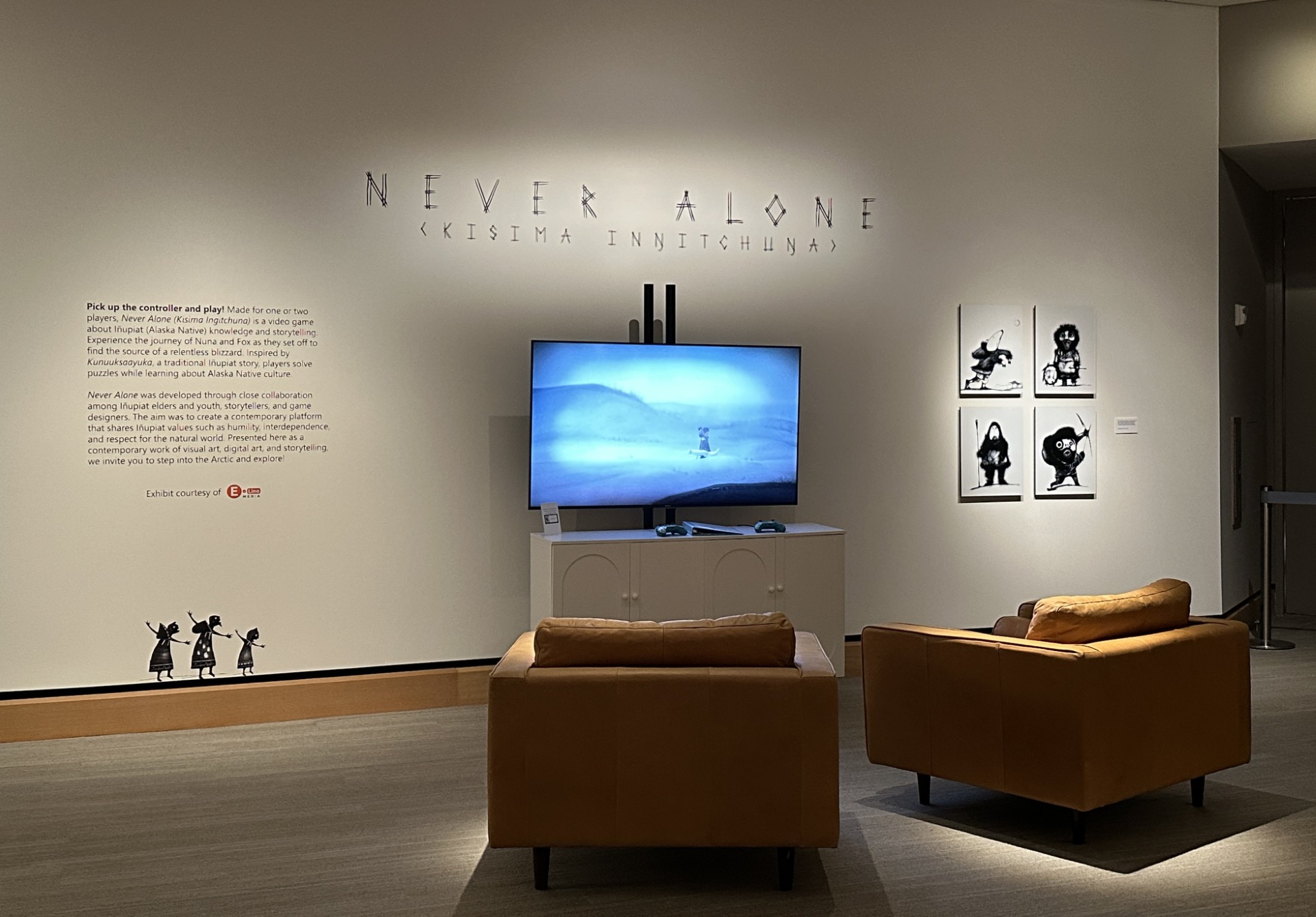
Wildlife Art. (Photo by Jordon Pfeiffer)
The James Museum of Western and Wildlife Art in St. Petersburg debuted its brand new video game exhibit on March 14. Based on a traditional Iñupiat tale, the puzzle-based video game “Never Alone (Kisima Ingitchuna)” features an abundance of Alaska Native storytelling and artwork.
Designed for two players, the game follows the journey of Nuna and Fox as they fight a perilous blizzard and search for the source of the storm. With the help of spirit guides, the two must navigate a frozen landscape and escape folkloric monsters.
Caitlin Pendola, the associate curator at The James Museum, described the new exhibit as an educational opportunity for the St. Pete community.
“In Florida, we rarely see any type of indigenous art,” Pendola said. “So I think doing any type of show about American art and culture is just such a great opportunity to educate the community. And bring art that they might not otherwise get to see or experience. Just bringing lesser-known stories to the community is a big part of our mission and vision.”
Pendola explained “Never Alone” had first popped up on her radar a few years ago when she was researching an artistic movement known as Indigenous Futurism.
“Indigenous artists are beginning to move into making video games,” Pendola said.
From there, she reached out to the game developers and asked for permission to showcase their video game in the museum. They granted it, telling Pendola that only a few other museums around the country had displayed it.
As a result, Pendola designed a small pop-up exhibit on the second floor of The James, complete with a flatscreen television, two game controllers and a rulebook for beginners.
“I tried to showcase it as artwork, so hopefully the people who aren’t as familiar with video games might start looking at them as a new art form,” Pendola said. “The artistry of it is really prioritized. Just the idea of this video game being based on an Alaskan Native story is something that’s really uncommon and the video game format is so new and refreshing. Hopefully people see all those things and appreciate it.”
As a fan of the game himself, Dr. Csaba Osvath, an assistant professor of instruction in the department of language at the University of South Florida and an expert in the realm of video games, described “Never Alone” as very different from anything else he has played.
“I think for me what made this story and this game different is the connection with the Native American storytelling, the emphasis on it,” Osvath said. “It just touched on so many issues, both emotionally and intellectually.”
Like Pendola, Osvath noted the importance of the video game’s ability to share traditional Iñupiat culture and myths.
“There’s this rich narrative embedded in the game,” Osvath said. “It has that very rich layer of narrative storytelling and the indigenous voice.”
Despite Florida and Alaska being miles apart, Osvath noted the relevance of the exhibit to the St. Petersburg community.
“The problems or the challenges or the catastrophes that play out in the game, you can look at them through a symbolic lens, like this could happen to any community,” Osvath said. “It empowers this interconnectedness. You could actually design the same game taking place in Saint Petersburg. I think with this game all you have to do is just change the stage like in the theater and it would be just as powerful.”
Rachel Porter, director of research and programming at the Florida Historic Capitol Museum in Tallahassee, shared similar sentiments to Osvath and Pendola regarding the mission of the “Never Alone” exhibit.
“The artwork in games is still art and that has a place in collections,” Porter said.
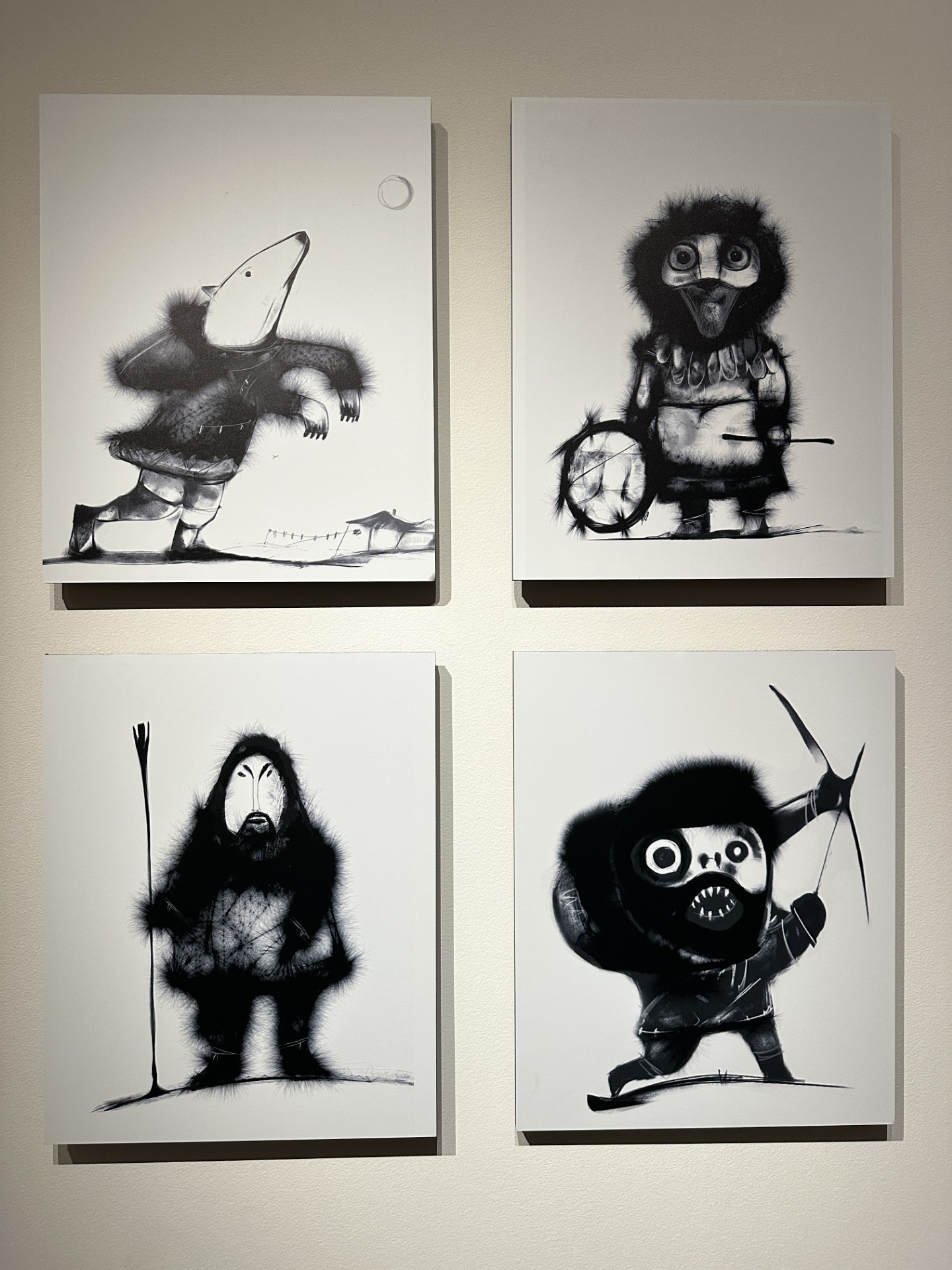
Porter described the ability that a video game exhibition holds in capturing the attention of a wider demographic. She explained that in focusing on a multigenerational audience through unique exhibit choices, The James Museum is successfully sharing artwork and culture with a larger portion
of the community.
“The art within the game — developed through a collaborative artistic process — is as much part of this exhibition as the game product,” Porter said. “There are so many opportunities to reach that multigenerational audience if the curators interpret this unique game on several levels. In addition, by centering the game as the main part of the experience, the curators are also centering the younger voices, which in the case of ‘Never Alone’ includes young Iñupiat artists and storytellers in a twenty-first century context.”
For Pendola, Osvath and Porter, the museum world is constantly evolving, and in the age of technology, it translates into new and novel exhibitions.
“I really think that video games are such a powerful storytelling medium,” Osvath said. “And I love that video games are now the cultural artifacts making it into museums.”