By Chas Wain-Nye

Every year thousands flock to St. Petersburg to watch the Firestone Grand Prix since the IndyCar Series began in 2005. The crowds naturally bring the promise of profit, but for some small businesses, that promise rarely crosses the finish line.
The race has historically generated more than $60 million for St. Petersburg and draws more than 100,000 visitors. Centered in the city’s Waterfront Museum District, the course winds through streets including 1st St. S and Bayshore Drive SE, benefiting businesses, especially restaurants and bars, closest to the track.
Localz Sports Bar and Grill St. Pete is one of those businesses.
“It’s the best weekend of the year. After all, we’re right at the front door,” owner Peter Czajkowski said. “Business during the weekend even doubled from last year since they’ve added the NASCAR Truck Series with a whole new fanbase and demographic.”
2026 marked the inaugural year of the NASCAR Craftsman Truck Series which expanded the Grand Prix weekend beyond its traditional IndyCar base. For restaurants and bars positioned along the race route, that broader audience can translate into significant gains. Czajkowski noted that the added NASCAR fans tend to drink more.
For businesses outside of walking distance, the Grand Prix is less of a driver for profits. At Schakolad Chocolate Factory, it’s just another weekend.
“Business was average during the Grand Prix,” owner Jane Rakestraw said. “It’s close enough to spring break where we get an influx of people regardless, and the Grand Prix is also over there where it’s self-contained with their own vendors. We got only a little bit of foot traffic.”
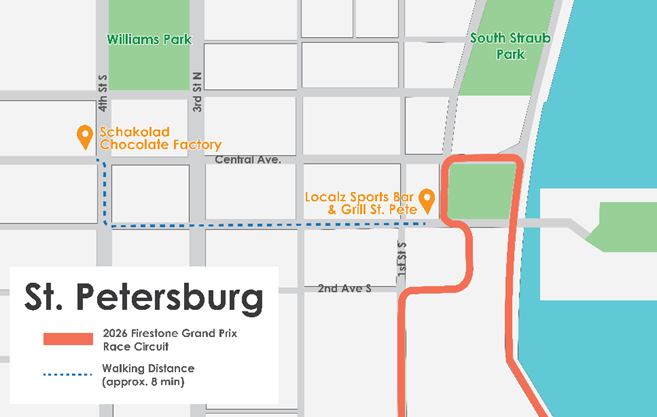
Rakestraw’s experience mirrors that of many businesses located farther from the racetrack. Retail shops, especially, saw little benefit, often citing store hours that conflicted with race-day schedules. By contrast, restaurants and bars with later hours enjoyed a boost as Grand Prix crowds lingered into the evening.
“Often with these events, if regulars and locals don’t think they can find parking, they don’t come,” Rakestraw said.
Road closures during the Grand Prix in St. Petersburg are common, disrupting normal street parking. Dedicated parking at Tropicana Field costs about $30 per day during the event, while parking garages run for about $25 per day. By comparison, regular street parking typically costs about $1 per hour.
While some businesses see little to no increase, the Grand Prix still delivers a significant economic impact for St. Petersburg. Liza Fleming, owner of z·aa dress up studio, likens the race to an “engine” that boosts the entire city.
That citywide boost is echoed by business leaders who see its effects starting well before race weekend. Chris Steinocher, CEO of the St. Petersburg Area Chamber of Commerce, emphasized those benefits begin when crews arrive to prepare the course.
“Just think about all the folks that come in here, they spend their money in our community and those cash registers ring,” Steinocher said in an interview with WUSF. “And those aren’t even the race fans yet — those are people building this racetrack.”
That early wave of spending is just one part of the Grand Prix’s broader economic impact. Brian Lowack, the CEO of Visit St. Pete Clearwater, said the revenue generated during race weekend extends far beyond individual businesses, helping fund projects and services across St. Petersburg.
“The St. Pete Grand Prix gives us the opportunity to re-invest those funds back into the community on major capital projects, like the Dali Museum, Palladium Theater, Morean Arts Center, and beach nourishment,” Lowack said. “Additionally, the sales tax paid by tourists gets pumped directly into the community to pay for infrastructure and general services our residents rely on.”
While much of that revenue supports large-scale projects and public services, its effects are less direct for small businesses, many of which see uneven returns during race weekend. Still, some business owners, like Fleming, say the Grand Prix’s value goes beyond profits.
“It adds a lot with a level of visibility that is more than just local,” Fleming said. “Anything that is new, different, or vibrant impacts businesses positively by adding to the character, to the flavor, of St. Petersburg.”