By Kelly Garcia, Elizabeth Bostick, Breanna Burrell, Kendall Bulkiewicz and Robin Iden
The Pinellas County School Board held a final vote on Feb. 24 and approved the Planning for Progress Initiative that was introduced by Superintendent Kevin Hendrick on Jan. 20.
The initiative aims to improve Pinellas County schools for students by making changes to six schools, including Baypoint Elementary and Middle School, Oldsmar Elementary School, McMullen-Booth Elementary School, Disston Academy and Cross Bayou Elementary School.
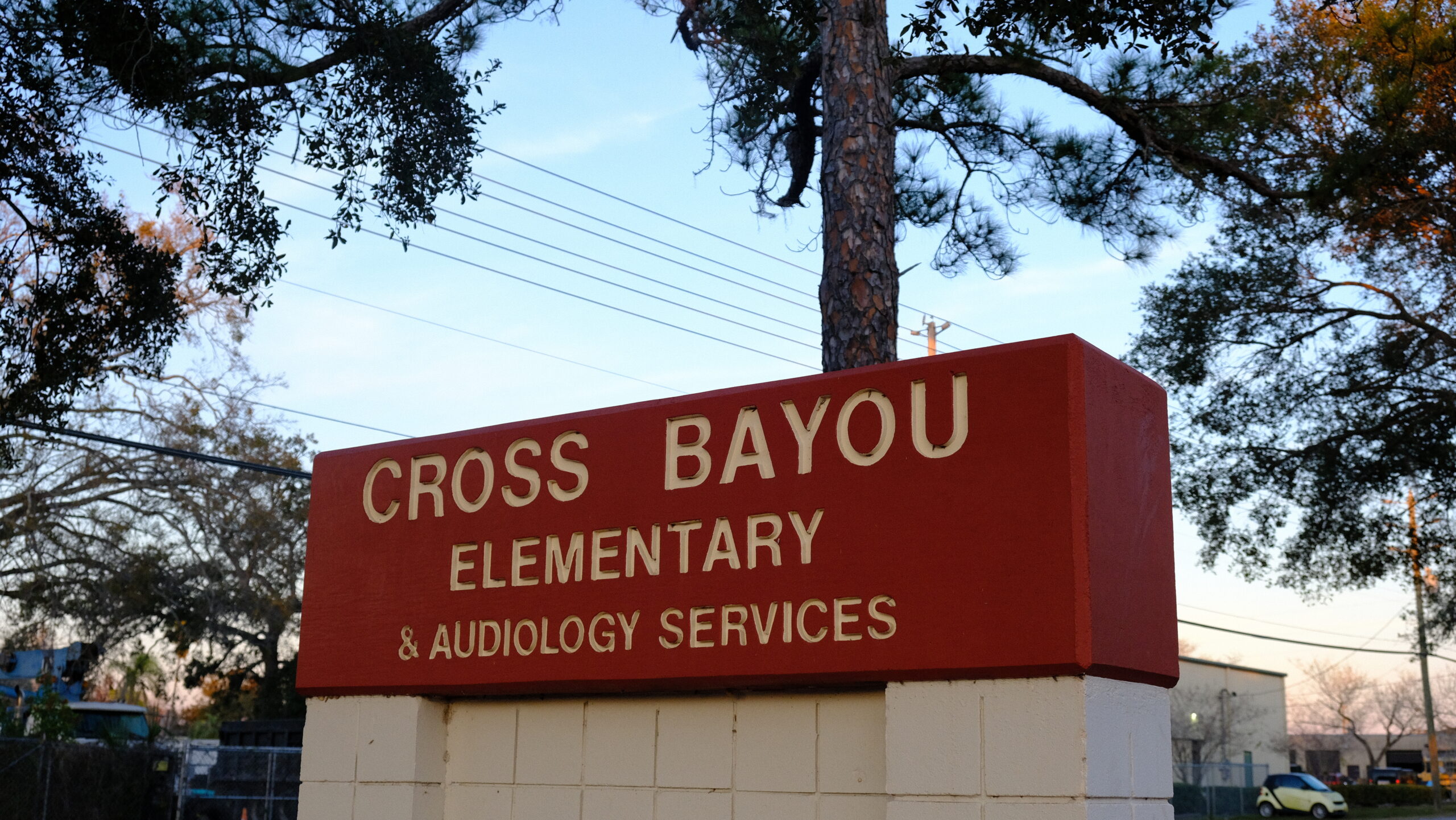
Following the school board’s 7-0 approval, Cross Bayou Elementary School will permanently close its doors after the 2025-2026 school year. As a result, the Deaf/Hard of Hearing Program (DHH) that the school houses will be transferred to Walsingham Oaks K-8.
“We’ve certainly heard from Cross Bayou Elementary School community members who are not happy with this recommendation, and we should expect that,” Hendrick said. “Our schools should be places that are loved and remembered fondly. It is my responsibility, though, and obligation to provide our families with excellent academic choices and programs while maintaining a balanced budget.”
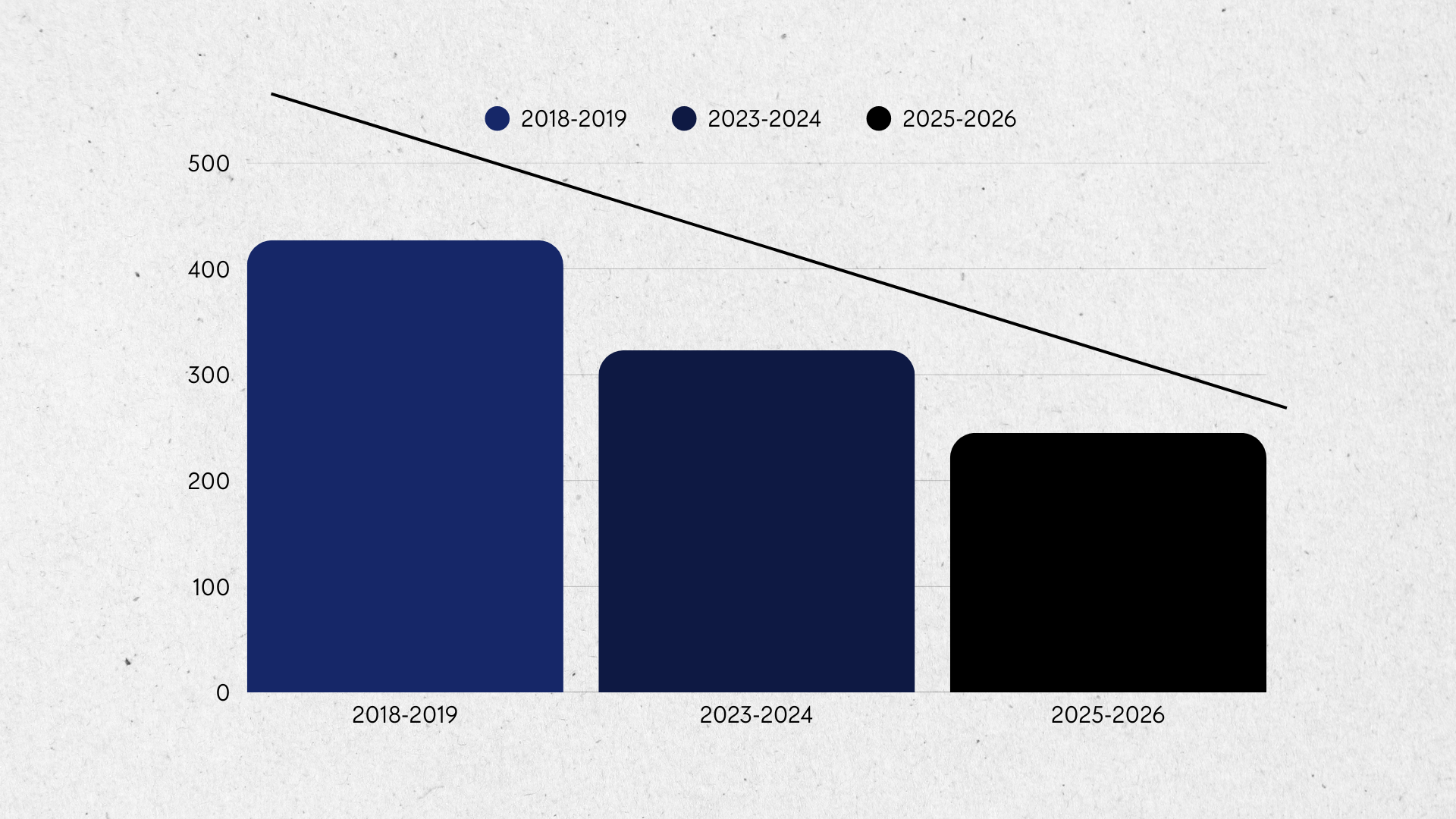
At the board meeting on Feb. 24, Hendrick said Cross Bayou Elementary School currently serves approximately 250 students in grades K-5.
“(This includes) students in the deaf and hard of hearing, or DHH program and it has a utilization of 40%,” Hendrick said.
“The current Cross Bayou Elementary School facility has over $5 million in deferred maintenance that is needed from the capital budget,” Hendrick said.
Along with this, Hendrick stated that following Cross Bayou’s closure, the property would either be sold or leased as per district procedures. This would result in an estimated annual cost saving of $3 million that could then be used to “support students and teachers.”
Still, for many families, Cross Bayou represents more than enrollment numbers and budget calculations.
“Everyone here is like a family,” Erica Fernandez, a parent of two Cross Bayou students, said. “There’s not one person in the school that doesn’t know me or my kids.”
Fernandez has had three children attend Cross Bayou Elementary for a total of nine years, with two students currently enrolled in Voluntary Prekindergarten (VPK) and fifth grade.
While Fernandez does not have a child enrolled in the DHH program, she understands the concerns that she heard from other parents about moving their children to new schools. Along with this, she feels the same sense of comfort that Cross Bayou brings to other students and parents.
Fernandez shared that one of her children is on the autism spectrum and has received speech therapy at Cross Bayou throughout his education. She said that the size of the school and the gifted services that it provides are a comfort to her and her children.
“I can drop him off and know that he’s gonna get to where he needs to go, no problem,” Fernandez said.
While Fernandez understands that at some point change “is going to happen” and that the Pinellas County School Board has to make financial decisions, she said that the decision to close Cross Bayou is “not what’s best for these students.”
“I think it’s more the students they should listen to,” Fernandez said. “They’re the ones that have to live this.”
At the school board meeting, both a current and a former Cross Bayou student spoke to board members, along with parents, to share their thoughts on the Planning for Progress Initiative.
Public comments ranged from concerns to support of K-8 school models. Along with pleas to keep current school leadership involved as transitional periods take place for schools like Oldsmar Elementary School.
Eileen Long, a Pinellas County School Board member, recognized the difficulities of making these decisions.
“This is not an easy decision, but I’m glad that at least this time, you’ve had a chance to talk and keep talking, no matter what happens tonight, we’re still here for you,” Long said.
Before Cross Bayou’s closure was finalized, Hendrick spoke about the gradual transfer of the DHH program and that “the full transition of the program will occur in 27-28 (school year), when Walsingham Oaks K-8 welcomes its first eighth grade class.”
Rosa Rodriguez, the manager of Pinellas Public Library Cooperative’s Deaf Literacy Center, works with deaf students to promote literacy. She shared that “the average high school graduate reads at a fourth grade level,” but believes that the DHH program is “life-changing” for students.
“Having resources like the ones that Cross Bayou offers, and not only in terms of education, audiology, speech pathology, you have it all in one place,” Rodriguez said. “It’s beautiful.”
However, after visiting Walsingham Oaks K-8, Rodriguez believes that moving the DHH program to a newer school is the right choice.
“I think we get attached emotionally to the building,” Rodriguez said. “So many years going there, but I don’t see that as the main force, you know, the driving force of success for the kids.”
Rodriguez also believes that by attending a K-8 school, there will be a “continuum” for the students.
Elizabeth Engelman is a parent of a former Cross Bayou Elementary School student who is deaf and uses American Sign Language to communicate. Her son was a part of the DHH program from pre-K to fifth grade, starting in 2007.
“At Cross Bayou, he was able to have access to a deaf teacher,” Engelman said. “He had deaf mentors and tutoring for the deaf, all in American Sign Language. We found Cross Bayou to be incredibly helpful and supportive.”
However, once Engelman’s son aged out of the DHH program at Cross Bayou, he moved on to Morgan Fitzgerald Middle School. During that time, her family encountered difficulties, such as some teachers not having “a lot of information about how to work with deaf children.”
“He was really overlooked because he’s the quiet kid,” Engelman said. “They were passing him, you know, just kind of getting him through.”
After a year of attending middle school, Engelman’s family made the tough decision to leave Pinellas County so her son could attend Florida School for the Deaf and the Blind (FSDB).
“We very sadly left Pinellas because we loved it here, and my husband worked here, but that was a great choice for us for middle and high school,” Engelman said.
When it comes to the decision of moving Cross Bayou’s DHH program, Engelman also believes it’s the right choice.
“It would have prevented us from having to, you know, change our whole family and move,” Engelman said. “That was a distressing situation for us.”
Reflecting on her family’s own experience, Engelman said if this were an option when her son attended Cross Bayou, they never would have left the county.
“We have all of this history of DHH programming in that school, and that’s lovely, but at the end of the day, that is just a building, and it’s about the people who staff it, and the children who attend, and that they thrive,” Engelman said.
Chairperson Caprice Edomnd expressed her “passion” for the services that the school board provides to “students with varying exceptionalities.”
Edomnd believes that transitioning the DHH program to Walsingham Oaks K-8 is “expanding opportunity and access to a group of children and families who may not have had the opportunity to have a K-8.”
Frank Biafora, who has a doctorate in sociology, is currently conducting research with Keys Consulting Firm on disengaged youth in St. Petersburg. Their goal is to find out why local youth have either dropped out of school or left the workforce, using interviews, questionnaires and engaging with Pinellas County Schools.
While Biafora understands that families being impacted by the school closures under Planning for Progress have personal ties, he notes that this decision is also driven by “finances and budgets.”
“We can only afford so much, and so much of it is based on tax dollars,” Biafora said. “So as taxes go up, we have more money to spend, the taxes go down, as fewer people are havingbabies and more people are moving away, tax base decreases. And so making these decisions are not easy.”
Hendrick said that the recommendation to close Cross Bayou is due to the current decrease in school-aged children in the county, which they expect to continue over time.
However, board member Lisa Cane shared before the vote that the school board is still working to create solutions for the children in the county.
Cane added that when facing financial constraints, “it doesn’t constrain us from possibilities as a community and as a school board to think creatively and think in a new direction that can create endless and amazing possibilities.”