By Sofia Modica
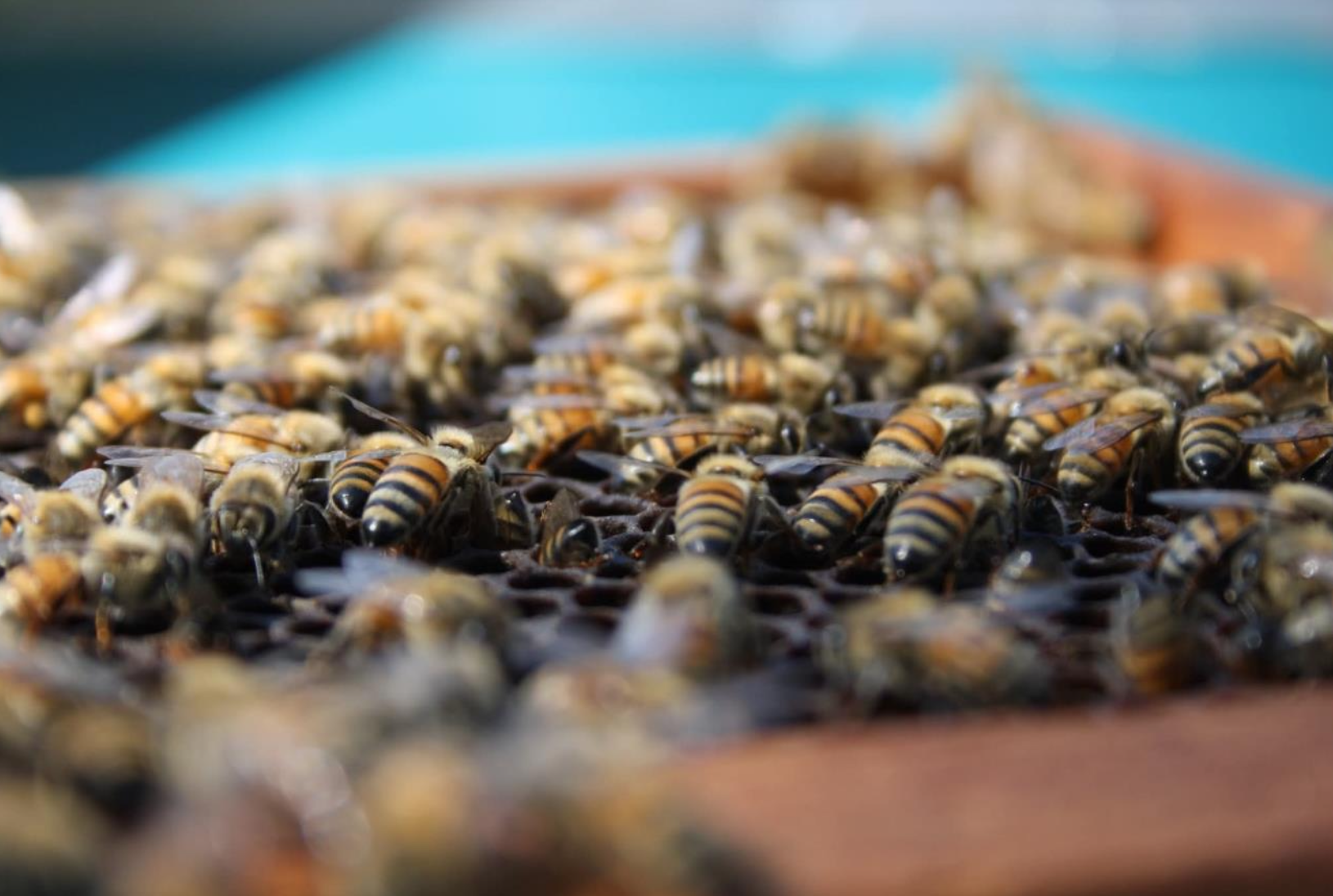
Urban beekeeping is taking root across St. Petersburg. In backyards, on unused city-owned lots and even tucked behind small businesses, local residents are keeping bees not just for honey, but for pollination, environmental education and the satisfaction of contributing to neighborhood ecosystems.
What began as a niche hobby for a handful of residents a decade ago has expanded into a community-wide movement. Beekeepers, honey sellers and sustainability experts all point to the same idea: bees are becoming part of St. Pete’s environmental identity.
Few have watched that growth as closely as Becky Dineen, longtime beekeeper and owner of A Bee’s Place. When she first joined the local beekeeping club, Pinellas Beekeeping Association, 10 years ago, it was still small.
“They were just meeting as a small group when I got started, and we probably had 20 people,” she said. “And now the beekeeping club, same club, has done phenomenal things, and we have at least 80 people or more every meeting.”
Dineen added that she’s also seen the number of registered beekeepers in Pinellas County increase exponentially in the last five years.
“In Pinellas County alone, there’s over 300 registered beekeepers,” she said.
Urban beekeeping comes with challenges – primarily finding enough space. Since St. Petersburg is densely developed, beekeepers must work within state regulations that limit hive numbers based on property size.
“The state of Florida requires you to be licensed, and then…you’re limited to the number of hives that you can have on a piece of property,” Dineen said. “You’re allowed three hives in a quarter acre or less.”
Despite her need for dozens of hives, Dineen found ways to keep her honey production local.
“One of the cities here locally allow me to put some bees on some of their property that’s not being used,” she said. “I have hives in about 20 different locations, honestly.”
Urban beekeeping aligns closely with St. Petersburg’s growing list of sustainability commitments, including its Integrated Sustainability Action Plan. These initiatives emphasize biodiversity, community gardens and localized food systems, which are areas where bees play an essential role.
“St. Pete is actually really good about it,” she said. “Even in their parks and recreation division, if they run across beehives, they’ll call beekeepers to remove them.”
Urban yards, community gardens and native plantings also benefit directly from nearby hives.
“Fruit trees are producing more, the people who are growing gardens definitely see results,” Dineen said. “Those folks that keep their yards in the Florida native flowers… are able to enjoy the bees coming and going and pollinating them.”
For many beginning beekeepers in St. Pete, their first stop is the Pinellas Beekeepers Association.
“My first thing for them to do is to actually go become involved with the club,” Dineen said. “They allow you to go into the hives and just make sure that you’re comfortable around them.”
Mentorship, she added, is another non-negotiable for new hobbyists.
“That’s always the best thing to do, is to try to go out with another beekeeper and learn how they’re doing things,” she said.
For Brooke Dixon, her beginnings in beekeeping came unexpectedly, when she learned that a client at her former job was a beekeeper. He invited her to meeting at Pinellas Beekeepers Association, and the rest was history, she said.
“I helped out with the bee association for a year and a half,” she said. “I volunteered at their events to talk to people, even though I knew nothing about this in the beginning. And I got to meet some really cool people.”
For residents who don’t plan to keep bees, Dineen said there are still easy ways to support pollinators.
“One of the biggest questions I hear from people are, you know, I don’t want to be a beekeeper, but how can I help the bee environment,” she said. “And that would be just to plant plants that the bees like… and then not to use pesticides.”
Backyards, balconies and neighborhood gardens all contribute to the larger pollinator ecosystem that makes urban beekeeping possible.
St. Petersburg’s urban beekeeping movement depends on hobbyists caring for backyard hives, educators sharing knowledge and experts guiding safe, sustainable practices.
Joseph Dorsey, an environmental sustainability researcher who studies community-based urban ecology in Florida, said the success of movements like urban beekeeping depends on collective local responsibility.
“St. Pete’s a great place for that,” he said. “And I think as long as people, you know, look at it as collective environmental stewardship… being accountable and responsible for what’s around you, both personally and collectively.”
Dixon emphasized the importance of giving back as a beekeeper.
“I am totally not in this hobby to make money,” she said. “I just like sharing the happiness. Maybe with more people getting into this, we’ll realize how important pollinators, and not just bees, are. Like, how much a concrete jungle really has affected more than just people.”
As the city continues pushing forward on urban agriculture and resilience, bees may become an even more familiar sight in neighborhood gardens and small green spaces.