By Gage Johnson
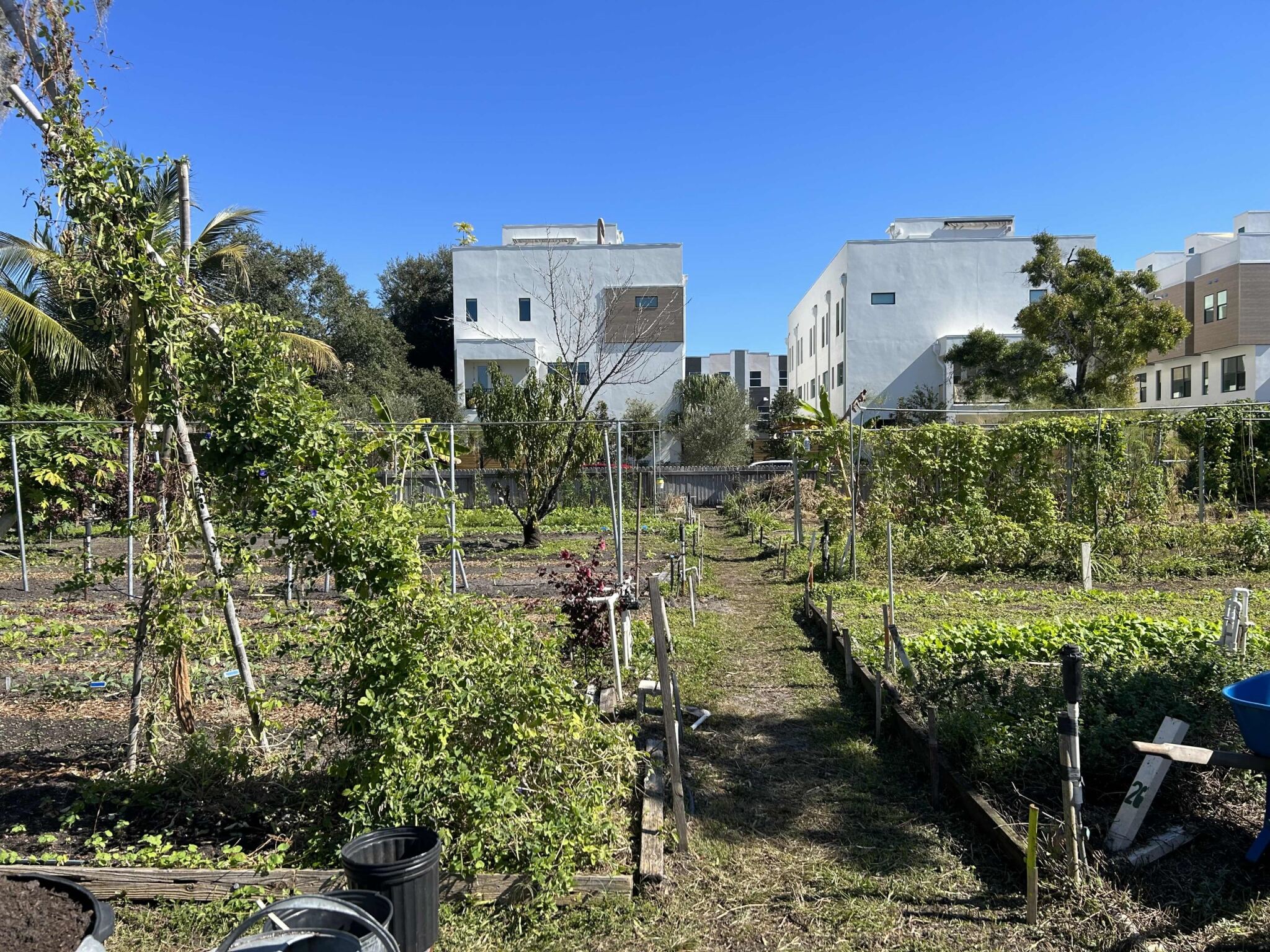
Past the ever-sprawling high-rise condominiums and storefront-lined streets of downtown St. Petersburg lies a hidden oasis that sticks out from its surroundings like a sore, green thumb.
Located in downtown St. Petersburg, 15th St. Farm is a non-profit urban educational farm that offers itself as a respite from the hustle and bustle of city life. The urban farm originated in 2010 as a therapeutic vegetable garden created to bring fresh food to residents of the Faith House, a drug and alcohol rehabilitation center.
Emmanuel Roux was at the head of this mission, and 15 years later, he is still keeping that mission alive.
“It is not just important to know where your food comes from, it is indispensable,” Roux said.
Roux’s said his goal for 15th St. Farm since its inception has been to use gardening as a way to educate a society that he feels has become too fixated on technology and not focused on the bigger picture that is the world around them.
“The contact with nature, it’s an antidote to the abusive use of technology,” Roux said.
15th St. Farm has worked to bring nature to a city that can feel disconnected from thenatural world. One way they’ve accomplished this is through collaborating with schools in order to teach these core values.
Recently, 15th St. Farm has been working with an elementary-aged student of Independent Individualized Education, a general education alternative private school most commonly referred to as Indi-Ed, in order to teach her composting and even aiding her in propositioning the city of St. Petersburg to adopt a curbside composting program.
Her mother, Ally Gilbert, has been involved every step of the way with her daughter’s composting project. Gilbert and her daughter visit 15th St. Farm every week in order to get hands-on experience with composting.
“They kind of adopted her here,” Gilbert said. “They taught her all about composting and even made her the compost manager.”
Gilbert also explained further what 15th St. Farm did specifically to get involved with Indi-Ed and to help her daughter with the composting project.
“Her idea was just composting, and we didn’t know what we were going to do,” Gilbert said. “Then, when we came here, they taught her everything about composting. They gave her a book, they wrote up a plan, they visited her school, they talked to the kids [and] they gave her all of this to be in charge of.”
As the farm continues to aid students in hands-on learning, its impact extends farther than just the classroom. That mission resonates not only with families like the Gilberts but also with the volunteers and staff who help keep the farm running.
Austin Richards, a former restaurant manager and newly part-time employee at 15th St. Farm, explained the allure of the farm to him.
“My last management job turned into more of an office job and drove me nuts,” Richards said. “It sounds ridiculous, but I enjoy working hard. I’d rather go home physically exhausted than mentally.”
Richards got involved with the gardening community after the Covid-19 pandemic, starting out by working for another urban farm named Little Tree Homestead in Gulfport. While there are members of the 15th St. Farm on its payroll, much of the work of a community garden requires volunteer work.
Richards discovered 15th St. Farm after Roux reached out to Little Tree Homestead for help to maintain the farm.
“We’re always in need of volunteers,” Roux said. “There is always a job that needs to be done.”
After losing their federal funding in 2016, Roux started creating a series of events such as dinners and cooking classes in order to generate revenue to put back into the farm.
The farm’s addition of an outdoor kitchen and seating area built in 2024 has helped allow them to facilitate these types of events better. The farm recently held a dinner event named Good Grief, designed to help people in the community process any grief they may be experiencing. These dinners are unique in their use of something called a wind phone.
“How it works, I do not know,” Roux said. “You just pick up the phone and you talk. You talk to whoever in the world you want to, dead or alive.”
Speaking on the wind phone, typically just an unconnected phone booth, is a practice that originates in Japan. It allows people to express their own grief and find solace through one-way conversations.
Another venture Roux is hoping to pursue is a deepened connection with the University of South Florida, aspiring to create a community food farm on the Tampa campus.
He has raised $200,000 in order to create a food farm on the USF Tampa campus, but has run into roadblocks convincing the school to plan and start construction of the project, he said.
He stressed the importance of not only academics but also teaching how to eat healthily and take care of your body.
“Whatever you’re learning, you should know where your food comes from,” Roux said. “It doesn’t matter how good the education is if you have diabetes because you’ve been eating junk food and you don’t know the difference between good food.”
On the horizon, Roux also plans to create a more affordable dinner event experience,specifically targeted towards students and young adults. According to Roux, these lower-cost dinners will feature a speaker to “plant seeds” in the youth that can guide them toward a healthier lifestyle.
The speaker is not the only thing that makes the event a unique dining experience. Attendees will also be expected to help with the maintenance of the event.
“Guests will set the table, serve the food, and do the dishes,” Roux said.
The experience is meant to replicate that of a meal cooked at home, and foster community through the shared domestic labor. With all the attendees helping, Roux hopes the tasks will be quick and easy.
For Roux and the volunteers who keep 15th St. Farm growing, their mission remains simple: reconnect people with the food they eat and the land that grows it. As the farm continues to expand its programs and partnerships, they hope the seeds planted will continue to take root throughout the wider community of St. Petersburg.