By Makenna Wozniak
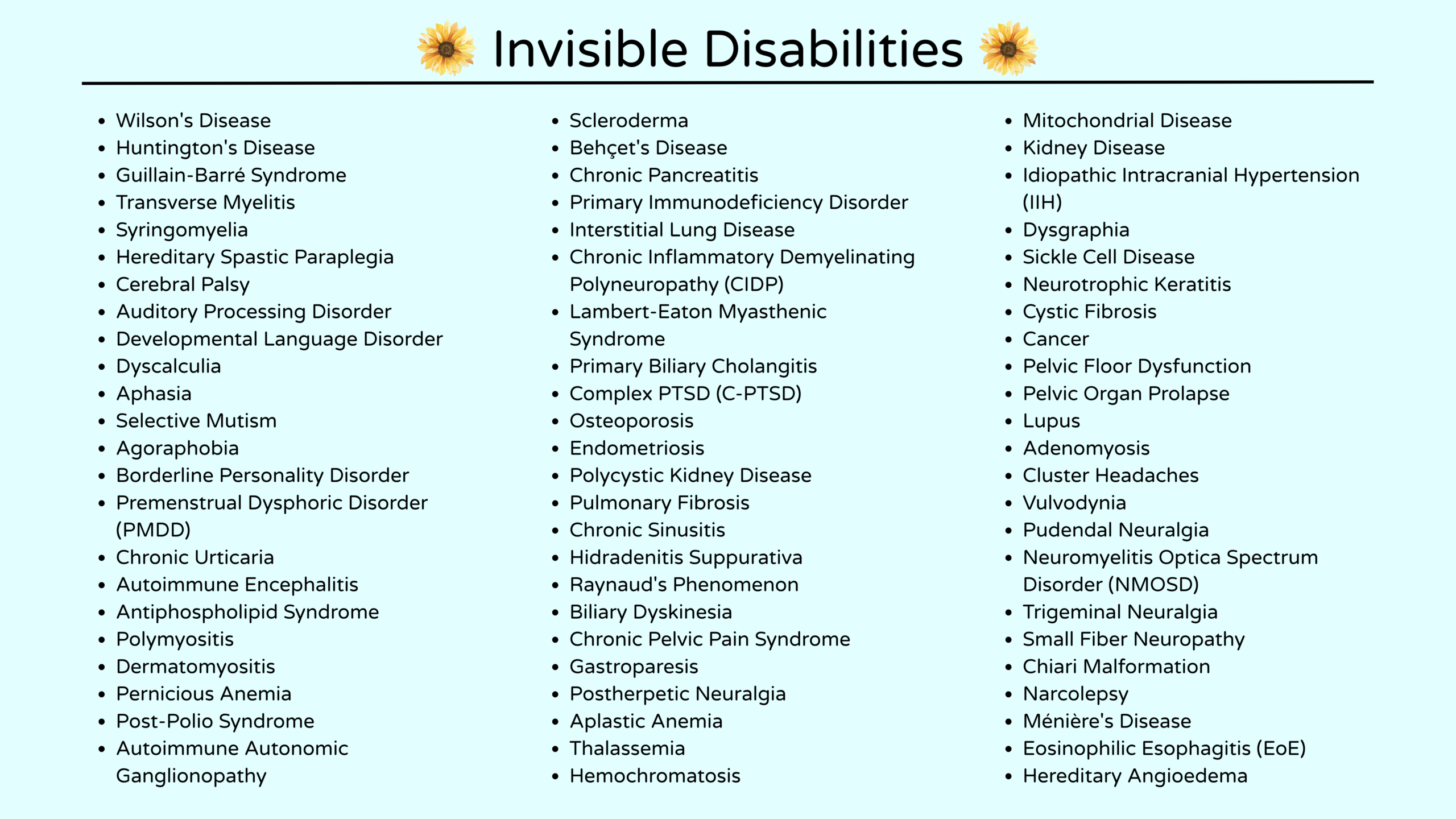
For people living with disabilities, everyday activities can come with challenges others may not see. The city and its community have been working on ways to make those individuals feel seen, heard, represented and supported.
The studies
Several studies review the stigma surrounding invisible disabilities, difficulties with accommodations and support for those struggling with the ailments.
According to a study titled “Attitudes towards Invisible Disabilities: Evidence from Behavioral Tendencies,” researchers found that invisible disabilities elicit stronger avoidance tendencies than visible disabilities.
The study notes that invisible disabilities are frequently overlooked or misunderstood despite being common. This avoidance and negative stigma add to the difficulty of being believed for a person with an ailment.
According to a study titled “Disability Level and Visibility: Associations with Unmet Academic Accommodation Needs and Attitudes toward Requesting Accommodations,” many people with invisible disabilities report gaps between what they need and receive when it comes to accommodations.
The article brings up the association between disability visibility and unmet needs involving quiet rooms, extended test time, sensory objects, or academic support.
Oftentimes, those in charge of accommodations do not understand the severity of the disability when taking into account the assignment of accommodations.
According to a study titled “When What Is Unseen Does Not Exist: Disclosure, Barriers and Supports for Students with Invisible Disabilities in Higher Education,” several students chose not to disclose their disabilities to the school, as it can create barriers to what they encounter at college.
The study brings up the issues with stigmas against disabilities in society, especially when not visible and how there is a fear of being treated differently for receiving needed accommodations.
The community’s struggles
Monica Lovelette, who has been diagnosed with dysautonomia, shared her experience with going through life with an invisible disability.
Being a young adult with health issues who goes out often presents many unexpected challenges for typical outings people wouldn’t expect.
“I always make sure I have an out, I have my car if I need to leave, I’m aware of any exits and bathrooms in case I have to leave or sit down,” Lovelette said.
Professionally, Lovelette has direct experience with difficulty at jobs and not receiving the accommodations needed to complete a shift.
“At previous jobs, a lot of them kind of ignored my needs unless I threatened to take legal action. My current job is fantastic about it. My manager and franchise owner have both looked for ways to help me and my illness in my job separately to ensure that I am able to do my job to the best of my ability, while remaining as comfortable and happy as possible,” Lovelette said.
Lovelette has extensive experience attending city events, such as Pride events. She believes that Tampa and St.Pete do better than other areas of Florida but that there is always room for improvement.
Lovelette understands that not every disease can be accommodated, but changes can still be made for inclusivity.
“I think just giving more access to different accommodations would be helpful,” Lovelette said
College student Darianna Guerrero, has been diagnosed with postural orthostatic tachycardia syndrome (POTS). She shared some of the challenges and positive experiences she has had while living with an invisible disability.
“I constantly have to listen to my body and sometimes miss out on things I really want to do,” Guerrero said.
Guerrero noted the positives with her disability and the silver lining with surrounding herself with people who understand where she is in life.
“I think what helps me the most is simply having patience and understanding from people around me. Having people who genuinely care about me, understand that I have good and bad days, and don’t make me feel guilty when I can’t do something means so much. I feel really grateful for the people in my life who support me through it,” Guerrero said.
She said accommodations have helped her across school given the specific nature of her disability.
“POTS can be very unpredictable, so having some flexibility with attendance, assignments, and other school responsibilities makes a huge difference for me,” Guerrero said.
Guerrero brings attention to the fact that many people believe that people with invisible disabilities are faking it or want special treatment.
“I think one of the hardest parts is having to explain why I need flexibility when, from the outside, I look perfectly fine. I don’t want special treatment. I just want the opportunity to continue my education and work without putting my health at risk,” Guerrero said.
Isadora Lizardo noted what life with POTS and heart blocks is like.
“I can look fine even when I’m in pain, so sometimes I feel like I have to explain myself more just to be taken seriously,” Lizardo said.
This statement is a common agreement among those with invisible disabilities.
Lizardo works in retail, a physically demanding job that can be especially challenging for someone who has difficulty standing for long periods.
“I didn’t feel very supported when I was asked for a new doctor’s note to keep wearing the shoes that help me get through my shifts,” Lizardo said.
When it comes to accommodations, Lizardo said it was specific to the occasion and location.
“Some places make it easy to ask for help, but others could do better. Even having a bench near a long line would make a big difference for me,” Lizardo said.
Lizardo also shared a similar sentiment to the others when describing what she wished people would understand about invisible disabilities.
“I’d like people to understand that I can feel OK for a little while or share something happy online and still be struggling with a chronic illness. I wish people would believe me when I say I’m having a hard time. When I need to leave work early or use an accommodation, I wish people would think twice before assuming I’m getting special treatment. They only see a small part of what I go through,” Lizardo said.
The city’s response
Raquel Pancho, the ADA coordinator with the city of Tampa, explained how the city works to improve accessibility for people with invisible disabilities.
“Individuals who live with invisible disabilities often describe a lack of understanding of their limitations, pain, complications, and restrictions that they endure,” Pancho said.
Pancho is the point of contact for individuals needing to reach out for accommodation use for city affairs and events.
Pancho described how accommodations are based on what a person requires out of a circumstance, not what their disability is linked to.
“The type of accommodation depends on the individual’s needs, the nature of the program and what may be needed so the individual can equitably participate in the program or service,” Pancho said.
She discussed the difficulties individuals with invisible disabilities have from personal experience with former coworkers.
“Their cars are often keyed/damaged because people think they are abusing use of the ADA parking spaces since they don’t “appear to have a disability.” This is just one example, but people describe stressful situations on multiple levels,” Pancho said.
Pancho agreed that oftentimes, people believe they are “faking” their disabilities, which leads to these acts of hate against them for using their accommodations to better their lifestyle.
There is training put in place for city workers to increase awareness and inclusivity for accommodations for these diseases as well.
“All new City employees participate in a mandatory training which covers invisible and apparent disability categories. Guidance is shared on inclusive and welcoming interactions,” Pancho said.
Pancho detailed changes that have been made to improve accessibility practices based on real-life experiences.
Former Mayor Buckhorn launched the Autism Friendly Tampa initiative to address the needs of autistic community members. Tampa police have also initiated a special needs registry to address communication barriers that may occur when first responders report to a scene.
“I always welcome the opportunity to meet with community members, learn how they are impacted and analyze the relationship to City Services. Individuals are welcome to attend and provide feedback during meetings with the Mayor’s Alliance for Persons with Disabilities, Joint Alliance and Autism Friendly Tampa. All City departments also welcome feedback, colleagues will often include me upon receiving concerns,” Pancho said.
What’s next
Those interviewed agreed that while accommodations are important, raising awareness about invisible disabilities is also necessary to help people feel understood and taken seriously.
Tampa is taking steps to improve accessibility, but the experiences shared by residents show there is still room for improvement. As the community continues working toward greater accessibility, listening to people with invisible disabilities and understanding their needs can help create a more inclusive environment for everyone