By Jasmin Parrado
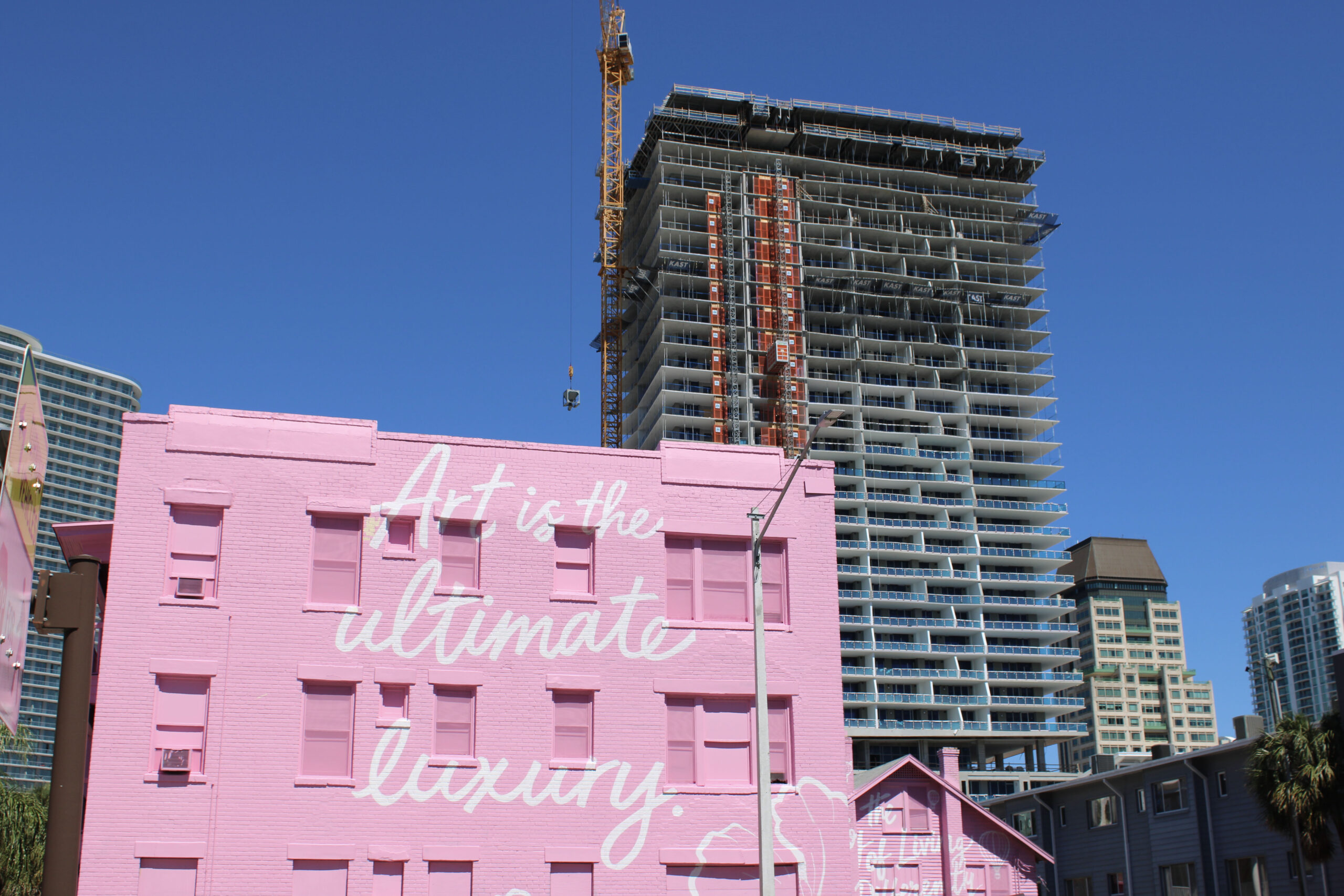
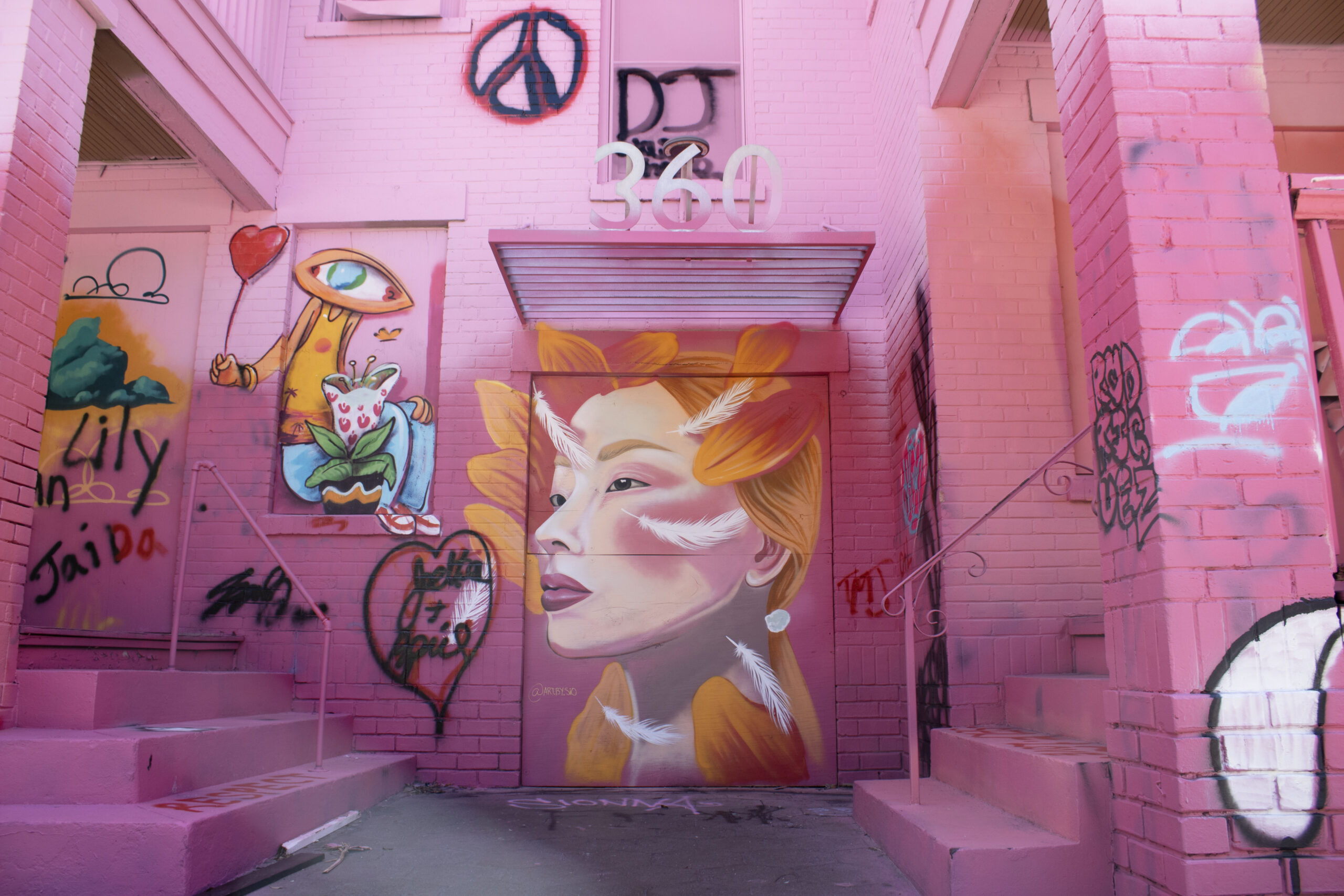
Draped in bubblegum pink and vibrant murals, downtown St. Petersburg’s historic Ventnor apartments stand out in a new art installation pitched by developers and commercial artists, with a catch—they’re set for demolition this spring.
Some local artists and designers have touted the farewell project as a way to celebrate the “City of the Arts.” But others worry that the project fails to justify the same development agenda pricing out fellow creatives.
“What makes it worse is that those steering this seem oblivious to the damage they’re causing,” Leon “Tes One” Bedore, artist and co-founder of St. Petersburg’s SHINE mural festival, wrote in a Feb. 22 Facebook post. “It’s making the arts complicit in erasure and sending our creative community straight into the buzzsaw of gentrification.”
The project was initially the marketing brainchild of Clearwater-based Valor Real Estate Development. Moises Agami, CEO of Valor, will replace the apartments—which were built in 1920 and stand more than a century later, abandoned—with a 29-story condominium tower by 2029.
But the company saw a chance to market its art-centric philosophy to the city. So, the Valor team commissioned the Vitale Brothers, a Gulfport-based commercial art studio, to paint the buildings pink and add flowers in theme with the architecture of the proposed tower.
Johnny Vitale, co-owner of Vitale Brothers and foreman of the project, liked the company’s idea. But he said he found the buildings “sterile” with just those elements, and he called other street artists in St. Petersburg to further revamp the project.
“I just told (Valor), ‘Hey, this is what I’m doing,’” Vitale said. “And I already had such a dialogue with them that they were just like, ‘Johnny, we trust you; just do it.’”
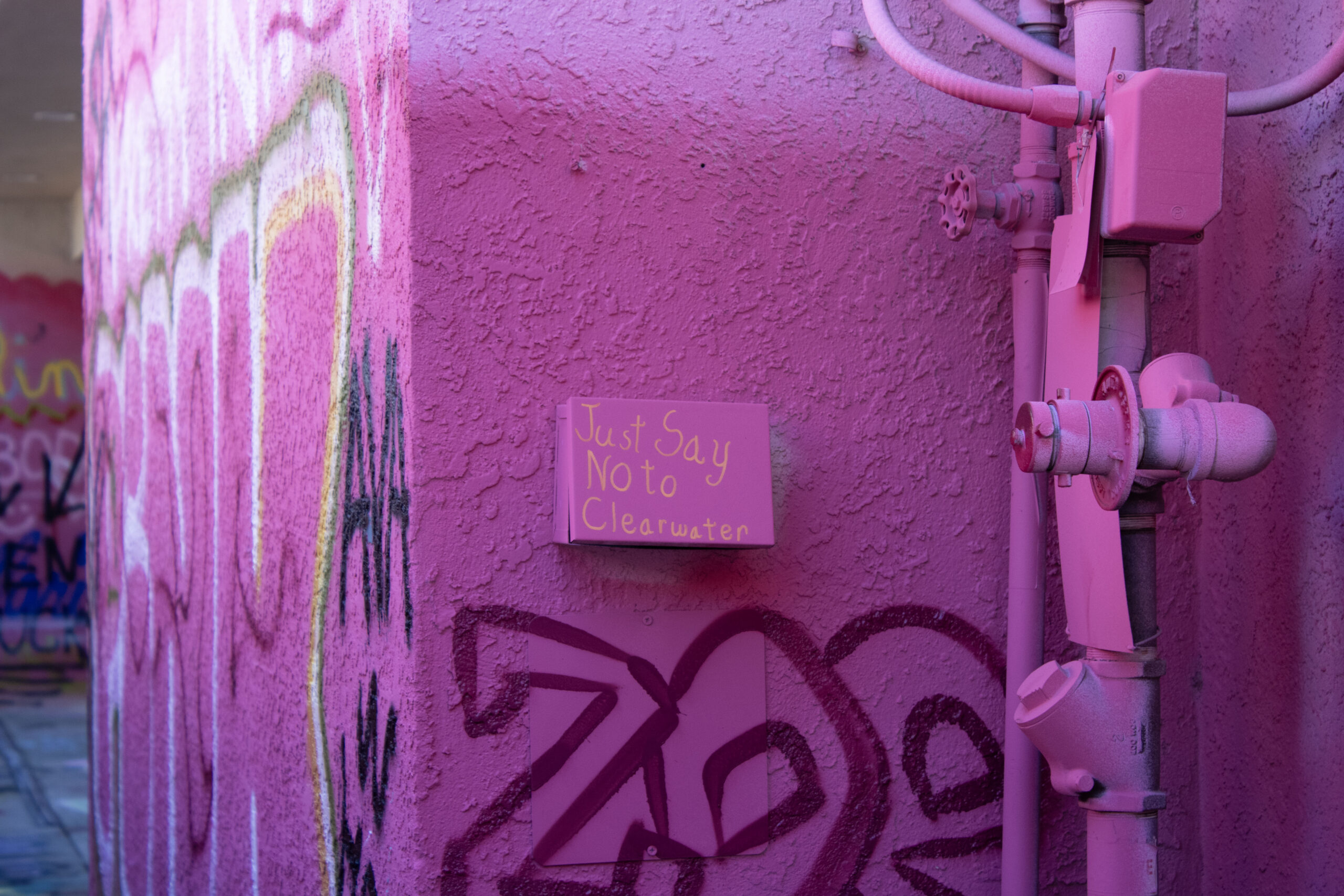
In collaboration with Vitale, more than 20 muralists showed up for the company’s “Paint it Pink” initiative throughout February and March to leave their own mark on the apartments.
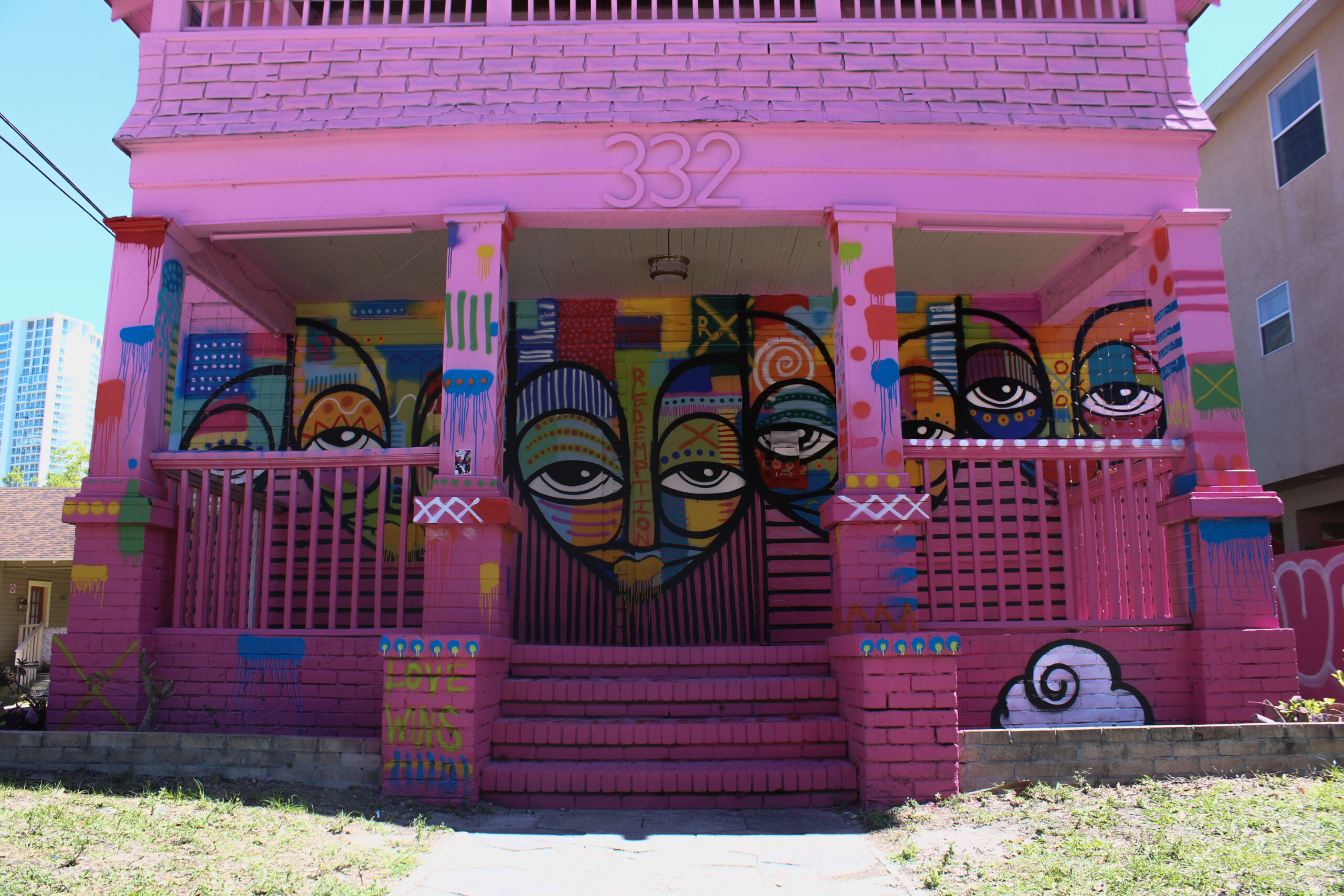
Vitale believes the project brought the art community together and was a sincere and conscious effort, despite backlash from other artists.
“None of this stuff was done without a full understanding by any of the artists of what was happening,” Vitale said. “We knew that, sure, it was going to be bulldozed down eventually, but we also had an opportunity to express our own personal artwork on buildings, to kind of salute the past and make way for the future.”
Kathy Wattman, vice president of public relations at Valor, vouched for the opportunity that the collaboration gave artists.
“Art is part and parcel of St. Pete’s character,” Wattman said. “The livelihood of many artists depends on them being able to work and share their work. And we wanted to give them an opportunity to do so, because why not? Why not share their beautiful talent?”
Vitale recalled feeling disappointed that some artists were against the project. He added that other artists, like John Gascot, co-owner of Studios @ 5663, were also concerned that Valor is spearheaded by members of the Church of Scientology, which has purchased more than 200 properties in downtown Clearwater since 2017.
Artists’ contention with development stems from how they ultimately face unaffordable living and displacement, despite their contributions to development interests and St. Petersburg’s tourism sector—both of which often benefit from the city’s arts appeal.
Brandi Gabbard, real estate broker and councilwoman who has represented District 2 in St. Petersburg for almost a decade, has seen extensive development in St. Petersburg and is aware of the discourse around the project.
With longtime expertise on infrastructure and St. Petersburg’s transformation, Gabbard believes the arts and development can benefit from the synergy seen in Valor’s project. But she emphasized that developers shouldn’t forget the long-term benefits artists deserve.
“I think that there is a lot of interest around that project, specifically because it has that nod to the arts,” Gabbard said. “But I think that it’s important to make sure that as these spaces are being created, we’re not just making sure that art has a place in these spaces, but that the artists themselves find opportunity.”
Gabbard believes that opportunity may be economic, with chances to benefit financially from art installations. Or, it could look like affordable spaces for galleries and exhibits, she said.
Vitale said he achieved the former; he decided to split earnings from the commission among all artists involved in the project.
“I could have hoarded all of this and been like, ‘This is mine and whatever, it’s just another job,’” Vitale said. “And I didn’t. I almost had a gut instinct. I was like, ‘I think the art community needs to own this—not just me.’ And when I did that, I felt pressure off of me personally, and everybody jumped in and did their best, and that’s all.”
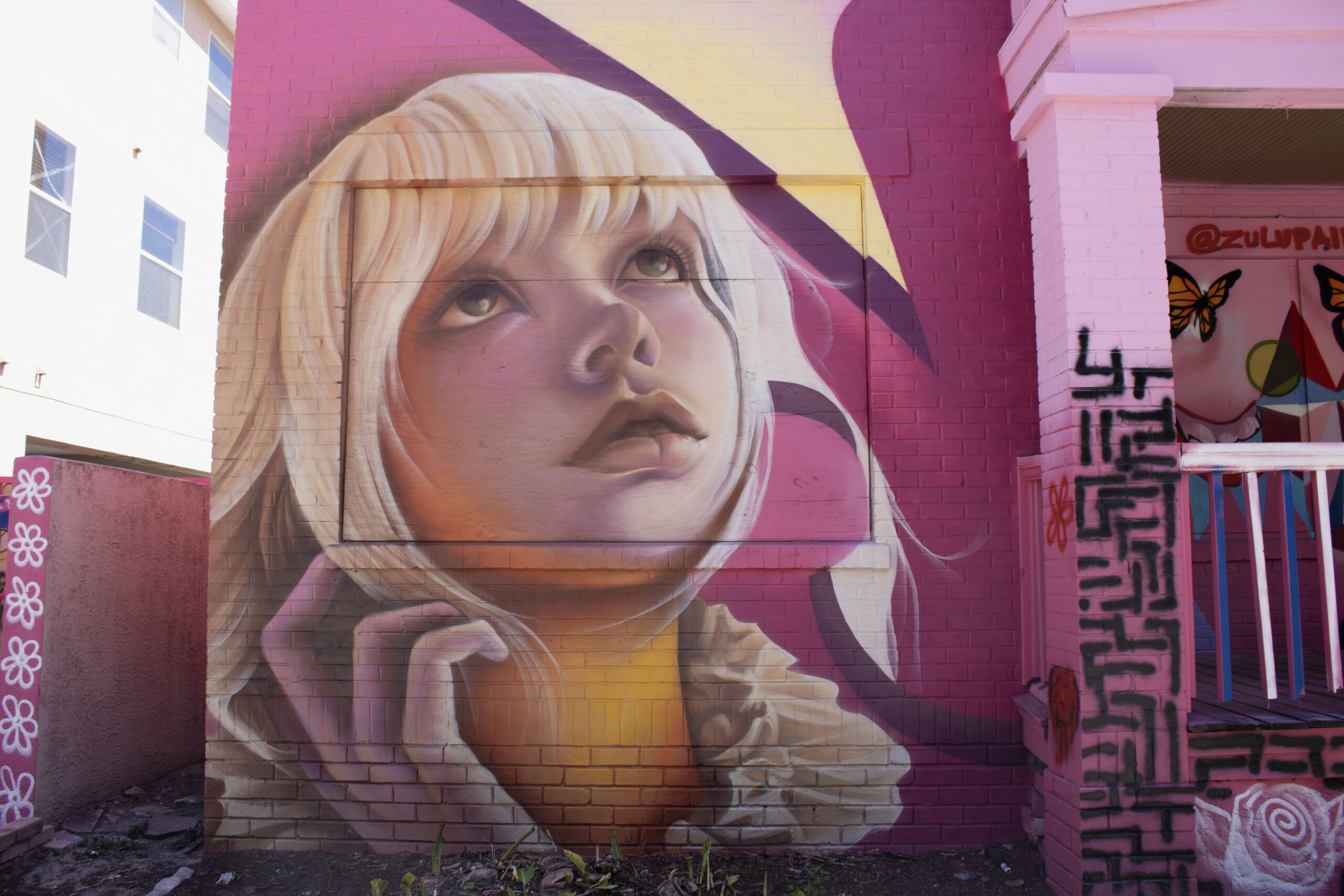
Vitale feels that the project was exemplary for future developers to look to, and the opportunity for artists to benefit financially from development is rare.
Bedore expressed that he doesn’t have any sentiments against the artists who painted over the Ventnor apartments. But he said that while he doesn’t believe public art is a direct pipeline to gentrification, he can’t stand by how Valor used it—and he’s worried it could set a disingenuous precedent.
“If this becomes a normal use of public art—to mark buildings for (demolition) and make way for more luxury condos, we damage our entire relationship with the city,” Bedore’s post read.
While Bedore said that he has no further comment, he anticipates more discourse about the apartments—and he still stands by his social media posts, which have almost 200 likes and more than 90 comments combined, with mixed opinions on the matter.
As Vitale sees it, development is inevitable—and by that token, artists should be able to benefit from it.
“If people are going to come in here and make billions of dollars off of building, everyone should be able to get a part of that, especially artists, because they’re the ones that are generally pushed out when this kind of stuff happens,” Vitale said.
In addition to their earnings, artists set up a contest for residents to vote on their favorite murals; the poll closes April 12. Vitale said winning muralists’ designs are likely to be featured on various floors of the new tower.