By Delaney Taber
Senior and disabled pets had long faced an uphill battle in shelters across Pinellas County, often waiting months or even years to be adopted. As November marked National Adopt-a-Senior-Pet Month, local organizations and community members stepped up efforts to help these animals.
Among those helping to redefine adoption was Kris Richard, a University of South Florida student from the Tampa Bay area. Richard adopted her dog, Teddy, several years ago and brought him with her when she began college at USF.
“I didn’t know how old he was when I got him,” Richard said. “But the moment I met him, I knew he was the one. I didn’t care that he wasn’t a puppy.
A familiar sight around her apartment near campus, Teddy quickly became part of Richard’s college routine. Caring for him taught her patience and responsibility while showing her how much older pets still had to offer.
“Teddy is full of energy and plays like a puppy,” Richard said. “He doesn’t act his age at all.”
Over time, Teddy has become more than just a companion. He’s been a steady source of comfort through college transitions, late-night study sessions and stressful exams.
“Senior dogs are full of love,” Richard said. “They just need someone to give them a chance.”
At the Humane Society of Pinellas, Director of Veterinary Services Nadja Inostroza explained that early medical support played a major role in helping older animals find homes.
“At HSP we run senior blood work on all cats and dogs over the age of seven,” Inostroza said. “This helps us to quickly identify illness and disease and to quickly start necessary medications or treatment plans and sometimes even provide early intervention to help slow or stop disease progression.”
She added that some chronically ill senior animals were placed in “hospice foster homes,” or “fospice,” so that they can live out their final days, months or years in a comfortable environment.
She also commented that misconceptions often created hesitation among potential adopters. The two concerns she heard most frequently were cost of care and short time left with the animal.
To ease those concerns, Inostroza described how HSP provided practical support to adopters.
“For animals on long term medications HSP will often send adopters home with a supply of said medication or a full bag of a prescription diet,” Inostroza said.
The shelter also used a “pre-adopt” system in cases where an animal needed continued medical oversight, during which the shelter continues to provide food, litter and more to the adoptive parents, along with resources on low-cost clinics.
Financial concerns varied among adopters, but Inostroza detailed how HSP worked to support each family differently.
“I believe it’s a case by case basis,” Inostroza said. “We will do our best for this human animal bond to be a success by providing as much medical information as possible and resources for the adopter to navigate if needed.”
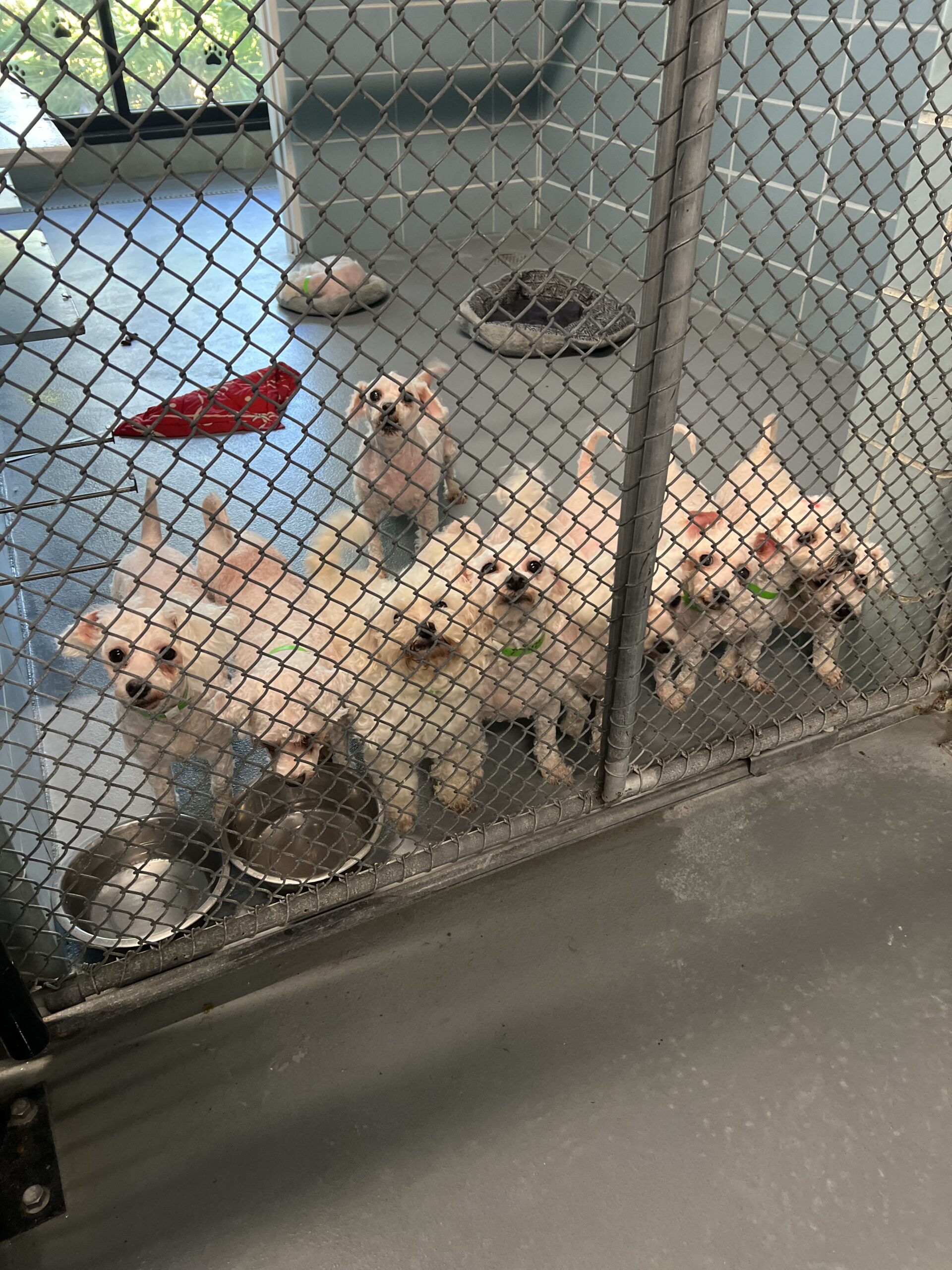
Recent transfers highlight these efforts in action. Seven senior dogs, all around eight years old, came to HSP with severe dental disease and a few had heart murmurs. Each underwent senior bloodwork and radiographs as needed and all are in the process of receiving dentals at an animal hospital that provides low-cost care.
Inostroza emphasized that these adoptions helped shift community attitudes.
“When people adopt senior pets from HSP, it really changes the way our whole community thinks about compassion and responsibility toward animals,” Inostroza said.
HSP promoted these pets through social media campaigns such as #SeniorCatSaturday and #SeniorDogSunday, as well as regular features on local TV and radio.
She also highlighted the shelter’s Senior Pet Connection program, which helps “over 200 homebound and low-income seniors stay together with their pets by relieving the financial strain of pet ownership.”
As other shelters in the area work toward similar goals, Pet Pal Animal Shelter, a private nonprofit in Pinellas County, has also seen the impact that second chances can have on aging and medically fragile animals.
Karri Head, marketing manager at Pet Pal Animal Shelter, said their team focuses on rescuing dogs and cats who might otherwise be overlooked or euthanized in crowded or underfunded shelters.
“Social media is essential for telling these animals’ stories,” Head said. “We have over 35,000 followers, so the quickest way to get them out there is through photos and videos on social media.”
Head shared a touching story about Hunter, an eight-year-old pit mix. Hunter’s owner passed away and he found himself homeless. He was a larger dog and was often overlooked.
“We took him to events, told his story on social media, spread adorable photos everywhere and even put his face on a koozie,” Head said. “Still, he was with us six months before his perfect family came in. Like a lot of people, they were hesitant about the breed, but when they met Hunter, everyone knew he was the perfect fit.”
She noted that every small effort directly helps give these animals a second chance at life.
“If you’re able, fostering is a wonderful way to help special-needs pets,” Head said. “Most of them greatly benefit from time in a home while they are being rehabilitated. Sharing posts about these animals on social media also helps us reach as many people as possible. And of course, donations are always appreciated. Our shelter is run solely on private contributions.”