By Anna Volino
On Sept. 25, the St. Petersburg City Council cast their votes to approve the renewal of the St. Petersburg Lawn Bowling Club’s three-year lease agreement at the historic Mirror Lake Recreation Complex, with the lease requiring a nominal fee of just $36 for the entire three-year period.
“This is a unique piece of property with a unique history.”
Mike Jeffries, representing the city’s Parks and Recreation Department, described the lawn bowling facility when he addressed the council Sept. 25.
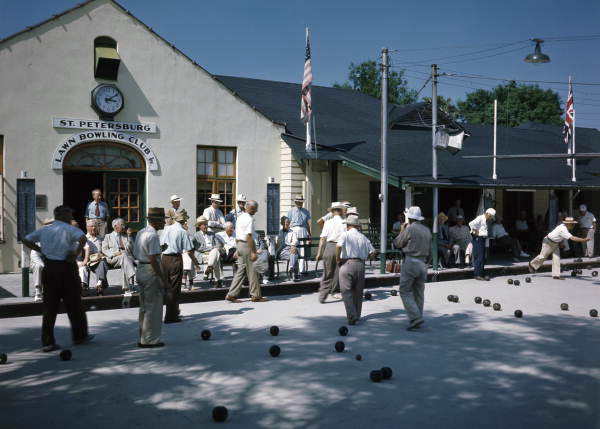
Lawn bowling is a sport where players roll weighted balls across a flat grass court. The goal is to roll your balls as close as possible to a smaller target ball. The balls are weighted unevenly on one side, causing them to curve as they roll. Players need to think about angles and how the grass will affect their shot.
“This is not your typical parks and rec club,” Jeffries told council members, noting that the city is proud to support several historic clubs throughout the community,
Making it one of the oldest lawn bowling clubs in the United States, St. Petersburg Lawn Bowling Club started in 1917. For over a century, it has been a cornerstone of recreational culture in St. Petersburg, offering residents and visitors a chance to participate in a sport with deep historical roots.
Jeffries acknowledged that the city takes community requests for increased public access seriously and stated that the lawn bowling club is addressing these concerns and working to make the facility more accessible to residents. The club currently has approximately 40 members, and a significant portion of them are seasonal residents who only live in St. Petersburg during the winter months.
Voicing her concerns about the facility’s current state and limited accessibility, community member Beth Eshler spoke out against the renewal during the council meeting.
“The center is something I drive by every day, and every day it looks run down and out of service,” Eshler said.
She emphasized that the public needs more access to the facility and expressed concern that the current condition and limited availability does not represent the city well, especially when visitors come downtown to explore the area.
“You wouldn’t know that the club was still running by looking at the outside,” Eshler said.
Club representatives have stated that they are open to welcoming new members into the organization, however they acknowledged that the club faces significant financial constraints and operates with limited monetary resources.
Unlike many other recreational facilities throughout the city that benefit from various funding sources, the lawn bowling club operates exclusively and entirely on membership fees collected from its members. The organization receives no government funding or financial support from municipal sources.
The club is currently in the process of addressing and fixing issues with its electrical system, a situation that has created limitations on public access to the facility. Without adequate and properly functioning lighting infrastructure, members of the public are unable to use the facility and participate in games during the evening hours when natural light is insufficient.
Currently, people are able to play and access the facility only on Wednesdays and Fridays beginning at 9 a.m. for a few hours during the morning. Based on these limited operating hours, the space is being utilized approximately 10 hours per week in total — which represents just 6% of the total available time throughout the week.
The City Council voted to approve the lease renewal, but they did so with a specific request and expectation for improvements to be made to the facility. As part of the approval conditions, the club will be required to provide a comprehensive update in one year’s time regarding the progress and status of facility improvements and enhancements.
Trevor Cleland, club president, was careful about speaking on the record. He noted that the city and community members are watching the organization closely, but he did offer one comment.
“We will work hard this year to bring life back into the bowling club,” Cleland said, emphasizing the organization’s commitment to revitalizing the facility and addressing community concerns.
The sport is accessible to people of all ages and fitness levels, offering gentle exercise combined with mental strategy. Its origins trace back centuries, particularly in England, where it has been a beloved pastime since medieval times. The St. Petersburg club represents a living connection to this rich tradition, having served the community continuously since its founding over a hundred years ago.
As St. Petersburg continues to experience growth and development, supporters and advocates of the club argue that preserving and maintaining historic spaces like the lawn bowling club is increasingly important and valuable for maintaining the city’s unique character, cultural heritage and longstanding traditions that have defined the community for generations.