By Carly Gonzales

Early voting began in Florida ahead of the General Election on Nov. 3, with local organizations aiding in voter awareness and education to combat misinformation and low turnout rates.
Organizations bridging the information and language gap
To combat low voter turnout and help citizens navigate election complexities, the League of Women Voters (LWV) has stepped in.
LWV serves all 50 states and the District of Columbia, with over 1 million members and over 800 local and state leagues. At the local level, the League of Women Voters of the St. Petersburg Area (LWVSPA) is a nonpartisan organization whose purpose is to increase voting participation, boost understanding of public policies, and influence voter awareness, education and advocacy.
To educate community members about upcoming elections and voting rights, LWV launched VOTE411— an online tool equipped with nonpartisan information and rules varying across counties, states and Primary versus General Elections. VOTE411 offers a plethora of resources surrounding topics like registration deadlines, voter qualifications and poll locations.
Behind these organizations are dedicated individuals who speak directly to candidates and election officials to understand the intricacies of their beliefs and campaigns

Heidi Davis is the Voter Services Co-Chair at LWVSPA. She leads VOTE411’s voter guide for both Pinellas County and the state league. Davis said VOTE411 helps voters learn more about candidates to help them make more educated decisions.
“We ask candidates specific questions that relate to the role they are running for,” Davis said. “They answer our questions in their own words. We don’t edit it; we just put it out there. For any ballot measures, amendments, or referendums, we give a synopsis to educate the people who read it.”
With VOTE411, users can check voter registration, register to vote and view ballot information about 55,988 candidates and 28,734 races. When voters enter their address here, VOTE411 allows users to view and complete a sample ballot with split-screen options, allowing voters to easily compare and contrast candidates.
VOTE411 has hotlines voters can call to seek services in English, Spanish and Arabic. Voters also have access to Asian multilingual assistance. Additionally, in 2024, VOTE411 helped more than 9.5 million people receive voting resources and information, including about 250,000 Spanish speakers.
Davis said the purpose of VOTE411’s translations is to make voting guides more accessible and comprehensible for all voters, regardless of language, but there are limitations.
“Not everything can be provided in Spanish, but we do as much as we can,” said Davis. “We don’t translate responses into Spanish because then we’re technically editing it and we could misinterpret something in translations. LWV leagues offer bilingual resources elsewhere, but here in Florida, we unfortunately don’t have the bandwidth to do that.”
The lack of translated materials highlights legal concerns regarding language barriers.
Under the Voting Rights Act (VRA), Florida must provide language assistance and translations of election-related materials in Spanish. 14 Florida counties are subject to these language requirements and U.S. Census Bureau determination, according to the Florida Department of State. The VRA prohibits discrimination based on minority status in both registration and voting nationwide. The VRA also prohibits discrimination for being blind, disabled or illiterate.
Advocates help voters overcome physical barriers
Beyond language accessibility, Davis urged the importance of early voting to bypass barriers that heighten confusion and stress on Election Day.
Early voting allows you to sit on your couch and look things up to make more educated, less rushed decisions,” Davis said. “Early voting has fewer barriers because if you’re trying to vote on your lunch break, or if you have a disability where you’re unable to stand in line for hours, that is not a great environment. Early voting is so fast and easy, and there’s usually never any lines.”
Davis said low voter turnout does not always stem from disinterest but rather underlying economic and logistical barriers outside of voters’ control.
“Some people don’t have a way to get to the polls,” Davis said. “They may not have a vehicle. They may rely on public transportation. They may not even have time off from work. These are barriers to lower-income communities—not to say that only impacts minorities, though. There are plenty of non-minorities living in lower-income areas.”
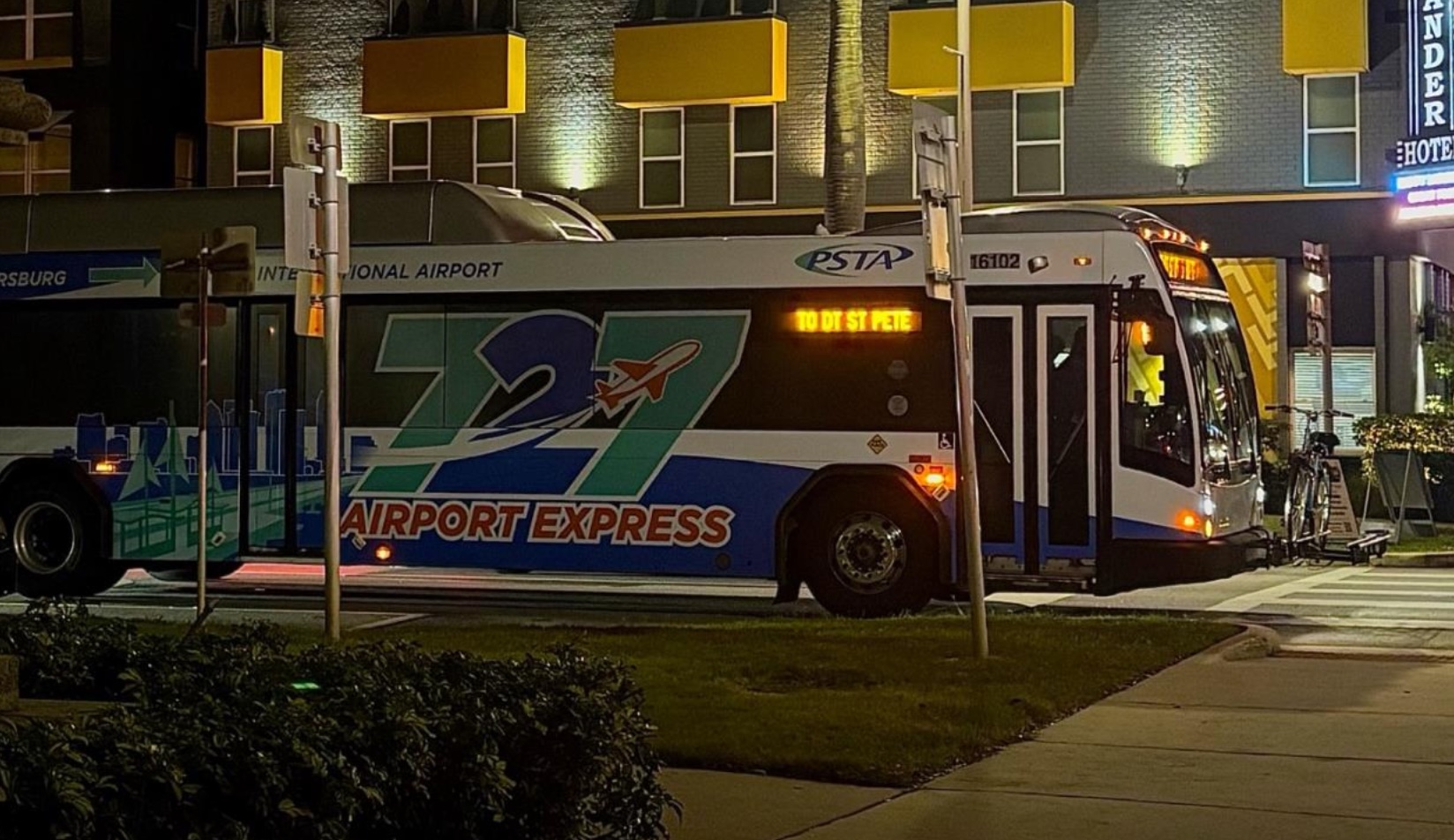
Recognizing these mobility challenges, Lyft stepped in to bridge transportation gaps. During 2025 election cycles, Lyft helped almost 4 million people travel to polling locations or voting-related events. For the upcoming General Election, if U.S. users load the code “VOTE26” into the Lyft app before Nov. 3, they get 50% off (or up to $10 off) their ride to polls. This feature accommodates car rides, bike rides and scooter rides. This offer runs from 5 a.m. to 10 p.m. local time on Nov. 3.
In addition to transportation concerns, personal bias and unexpected life disruptions can interfere with voter turnout.
“Voters sometimes have the psychological barrier of not feeling positively about a candidate and think, ‘it’s not worth me voting, my vote doesn’t count anyway,’” Davis said. “But aside from that, you shouldn’t be waiting until Election Day. Early voting is a better option, because if you put all your eggs in one basket on Election Day, that’s risky. Because what if there’s a hurricane or torrential rain? What if you’re sick or someone in your family is sick?”
Nonprofits empower young and first-time voters
Rock the Vote (RTV) is a nonpartisan, nonprofit organization working to empower and educate voters. RTV offers voting information about all 50 states, helping voters understand ballot information, check voter registration status and contact elected officials.
RTV uses its program, Tech for Civic Engagement, to spread voting information and make the election process seamless. Tools include tracking ballots, requesting absentee ballots and checking voter registration status. Tech for Civic Engagement offers translated resources in 13 languages: Bengali, Chinese, English, Hindi, Ilocano, Japanese, Korean, Spanish, Tagalog, Thai, Urdu and Vietnamese.
Kenny Sandoval-Bushur is a senior advisor at RTV. He previously worked for the White House as a Senior Advisor in the Office of Public Engagement under the Biden Administration. He also worked as Deputy Chief of Staff for the White House under the Obama Administration.
Sandoval-Bushur said voting urgency should be placed on both experienced and new voters because it otherwise creates the illusion that voting only occurs later in life.
“Voting and democracy is not a ‘wait your turn’ kind of thing,” Sandoval-Bushur said. “Telling young voters ‘you’re the future’ absolves the responsibility of doing the work now. It inherently says ‘now is not your time,’ and now is their time. Young people must understand that, yes, they will inherit the future, but they are very much a part of the present.”
To promote long-term civic engagement, Sandoval-Bushur urged young voters to receive grace and patience rather than pushback and judgment.
“The biggest barrier for young voters is that they are new voters,” Sandoval-Bushur said. “It’s like trying to drive a car for the first time. Participating in something new, especially when rules are different from state to state, is really tough. Especially if they are constantly getting yelled at by old people saying, ‘you don’t do enough’ and ‘the decline of democracy is your fault.’”
To help boost young voter turnout, the Students Learn Students Vote Coalition (SLSV) is working to create lasting change. SLSV is a nonpartisan organization that collaborates with universities, local leaders and community organizations to boost voting awareness across college campuses.
SLSV has a program called “Campus Takeover of the Civic Holidays.” The Civic Holidays celebrate National Voter Registration Day, National Voter Education Week, Vote Early Day and Election Hero Day.

Jada Onaghinor is the Program and Development Manager at SLSV.
“The Civic Holidays are nonpartisan calls to action that help walk communities through the pillars of voter engagement,” Onaghinor said. “It empowers students by equipping them with the necessary information to be confident, lifelong voters.”
Since 2018, Campus Takeover of the Civic Holidays has helped make webinars, policymakers, voting toolkits and customizable social media graphics accessible across 1,962 college campuses in all 50 states, the District of Columbia, Puerto Rico and Guam. Campus Takeover of the Civic Holidays offers sample scripts for college campuses to recruit volunteers and partnerships across businesses, nonprofits and election leaders. They also offer non-English resources, training recordings and event planning ideas.
Onaghinor said these resources equip college campuses with the proper tools to help students register to vote, develop voting plans and understand ballot information.
“Ballots should not be a pop quiz,” Onaghinor said. “SLSV wants to make democracy fun, celebratory and normalized across college campuses. Because let’s be honest, democracy is not the sexiest topic.
Onaghinor said low voting turnout for students is not because of disinterest but rather systemic barriers and the unique challenges college brings.
“Students might not have a car to drive to polls,” Onaghinor said. “They might have class on Election Day. They might attend a campus where polling locations have been removed. We need transparency and clarity to empower students in their own advocacy. Students deserve support in navigating barriers and challenges that make them hesitant about voting.”
To help address economic and transportation concerns, SLSV equips college campuses with Uber Eats vouchers for food, Lyft codes for transportation and mini-grants to cover travel from campuses to polls. Campuses interested in receiving this aid must apply using this submission form.
Election officials work to restore public trust
Beyond language barriers, age dynamics and transportation concerns, an overarching factor of voter turnout is distrust in voting systems.

Gerri Kramer, the Chief Communications Officer at the Hillsborough County Supervisor of Elections Office, said voting frustration is fueled by disapproval of candidates.
“The biggest challenge we face in every election is that there are winners and losers, and nobody likes to lose,” Kramer said. “Sometimes people think there must have been something wrong with the election instead of thinking their candidate lost. We try to let people know about the safeguards in place to provide an accurate vote count. All votes are cast and tabulated. Ballots are put into an audit system to check that tabulations are accurate.”
To challenge cynicism, Kramer said community engagement is imperative.
“We need to reach everybody in Hillsborough County that is 18 or older,” Kramer said. “When we talk to voters directly and answer questions, those groups of people can then talk to those in their spheres. That seems to be most effective because you are much more likely to trust information you get from friends, family and peers than from government agencies or somebody you don’t know.”
The impact of distrust in government is substantial, as during the 2024 General Election, the U.S. Democracy Center estimated 4.7 to 5.7 million more voters might have voted if they had strong
confidence in candidates.
Kramer urged the privilege of being able to vote and encouraged voters to participate in all elections.
“I think it’s important that people participate and have the opportunity to elect representatives in our government,” Kramer said. “It’s the foundation of who we are as a country. We want to be the best place in America to vote.”
Criticism is not only inflicted towards candidates but towards the lack of voting locations too. There are only seven early voting locations servicing Pinellas County. The current population of Pinellas County is 971,780.
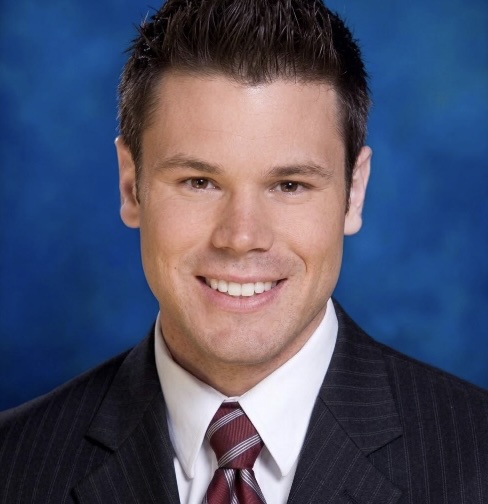
Dustin Chase, the Director of Communications for the Pinellas County Supervisor of Elections Office, challenged complaints regarding the lack of early voting locations.
“People misunderstand voting data and think if you put up new early voting sites, more people will vote,” Chase said. “But the data doesn’t play out like that in Pinellas County. I wish more people understood that their efforts for getting new early voting sites would be better spent if they encouraged those same people to cast ballots by mail.”
As of Oct. 29, Pinellas County had 52,030 early voters and 147,043 mail ballots for the upcoming General Election on Nov. 3.
Instead of early voting sites, Chase’s concern is voters not researching ballot information before voting
“The biggest voting barrier is lack of education,” Chase said. “When voters rely on one source, they choose to not learn for themselves and instead blame others—that’s a barrier. Even when voters do seek out information, confirmation bias still comes into play. That’s dangerous.”
To combat misinformation, Chase urged the importance of directly speaking with community members to reach individual spheres of influence. For Chase, the goal of these discussions is not to tell voters how to vote but why to vote.
“I want Florida voters to exercise whatever voting method they feel most comfortable with and will actually execute,” Chase said.
Ultimately, election workers and advocates share the goal of removing obstacles between voters and voter turnout.